Dr Zia Ul Haque
There is nothing more important than peace within and peace without. This is what the great Quaid-i-Azam, the Founder of Pakistan, had said in the early years of the newly independent state. Unfortunately, the succeeding leadership did not understand the underlying message of Quaid, and hence, the concept of peace, as well as its manifestation, remains elusive.
Peace, as defined by early Western theorists, was understood to be the absence of war. However, Quaid’s vision of peace was far more expansive than the Western concept of peace. Remember, Pakistan was created to be an Islamic state where Muslims of the sub-continent could practice their religion without fear of religious persecution. Not only Muslims, but all faiths, would have the liberty to practice their religious rituals without fear of interference and in a peaceful environment. This is also what Allah dictated in the Quran, Surah Al-Kafiroon. “You have your way (religion), and I have my Way (religion).” [109: 6]
To serve their political and economic interests, Western theorists deliberately linked peace with security, allowing it to be used as a lever to generate profits. While peace should be a fundamental right of all living beings, it has instead become a rare commodity. Since we accepted peace as a rare commodity, it has a price. Perhaps, in today’s realist world, peace is the most precious commodity for which any person, group, or state will be more than willing to pay any price.
Therefore, once peace was linked with security, it was concluded that peace would have a price, particularly in the present-day international system under the realist paradigm. To ensure security in the traditional paradigm, one had to accumulate power so that it could ward off any threats to the state’s security, the people’s security, and the regime’s security.
Since the powerful intended to make a profit by providing peace under the umbrella of security, they started to tax people and invest in the state’s security architecture. People were either forced to pay for security in the name of peace or did so voluntarily, and hence peace came at a price.
Since peace was of great interest to all, individuals, society, and the state, the people outsourced it to state institutions, and hence, the professional armies were formed at a cost. Therefore, even if the early definition of peace is taken to be the absence of war, people will still have to pay the price for the preparation of war, which has its own cost in all dimensions.
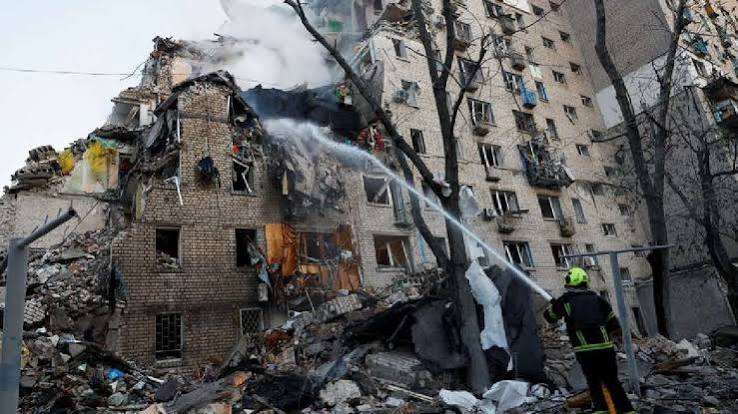
Adhering to the Western concept, states go to war to maintain and sustain peace with their neighbours and beyond. Interestingly, the cost of war extends beyond the price of peace, as states often impose additional taxes on their people during the war period. Moreover, the wars do not cost materially only; they also come with deaths, destruction, and devastation (D3). The other aspects include psychological disorders, emotional disturbances, and personal losses.
My question is open to all segments of society, the rulers, and the ruled. If peace were a fundamental right, why are people asked to pay for it? Why has peace been linked to security? If it were necessary, then why is war necessary to maintain peace when it is a foregone conclusion that wars do not solve the problems but create new ones?
Going back to the basics, Allah outlines the concept of deterrence in the Quran [8:60]. Once we have concluded that peace comes at a price and war has its own cost, then why should we always go to war to ensure peace, which in turn creates new problems?
My argument is that states are double-charging their people in the name of peace. One to provide security, and then to go to war to bring peace. A paradoxical situation for the people, as this is how states, or so to speak, regimes generate revenue, first by creating a fear of peace, then by creating a security architecture, and finally by going to war to create new problems. Perhaps, this is the most profitable business of the state led by the ruling elite across the globe.
Unfortunately, this is an unending game planned and executed by the powerful to maintain and sustain their power, and interestingly, its price is paid by the people who do not even understand what they are paying for. Because neither do they get peace nor security, they pay so dearly for it.
The question remains, can we avoid being trapped in this game of price for peace versus the cost of war? Yes, only if we have sincerity of purpose. In my view, it is possible.
The writer of this article has authored four international books: Nuclear Deterrence and Conflict Management Between India and Pakistan, South Asia Needs Hybrid Peace, Understanding Sun Tzu and the Art of Hybrid War, and Diplomacy and Deterrence.”