DLP Report
PESHAWAR
The Khyber Pakhtunkhwa government has proposed 23 new agriculture projects for 2026-27 to raise farm productivity, expand the use of modern technology, improve water efficiency and strengthen climate adaptation.
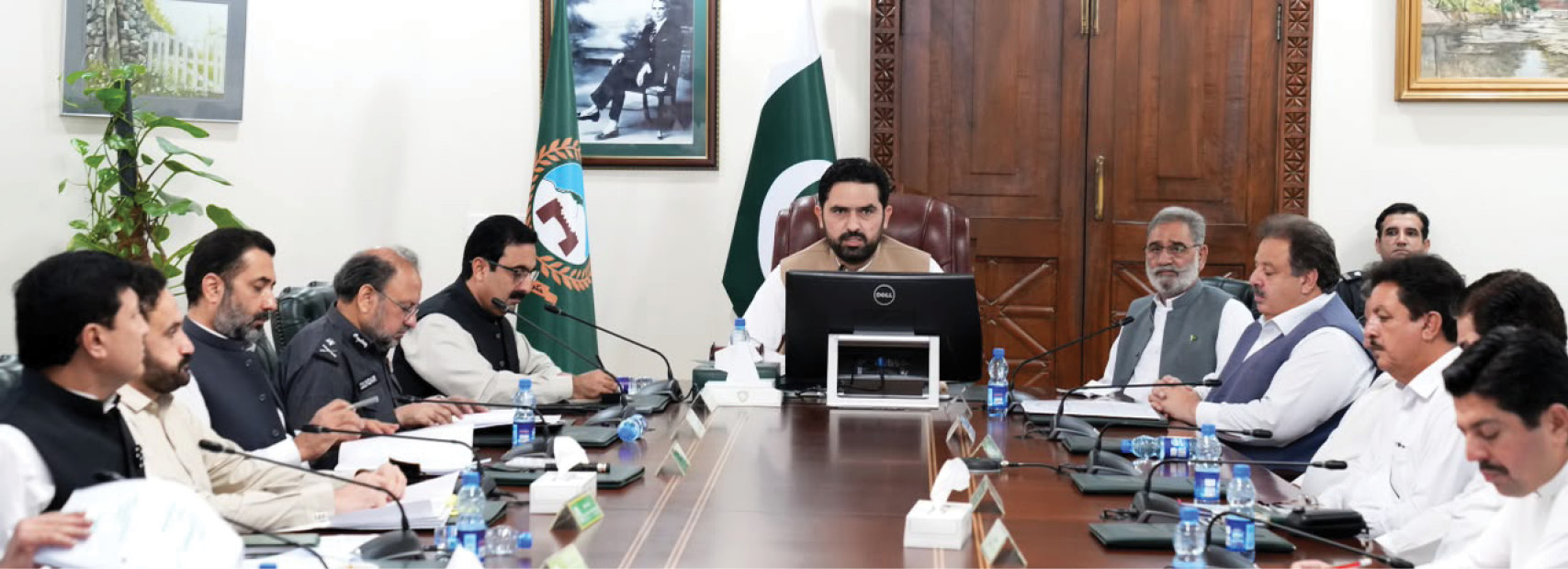
Adviser to the Chief Minister on Agriculture Mian Muhammad Umar said the schemes under the Annual Development Programme and Accelerated Implementation Programme were aimed at bolstering the rural economy and creating opportunities for farmers, particularly in the merged districts.
He was speaking at a review meeting of the Agriculture Department’s ADP on Monday, a handout said.
The meeting was attended by Secretary Agriculture Dr Muhammad Bakhtiar Khan, Special Secretary Agriculture Parvez Khan, and directors general of various wings.
According to the statement officials of the department briefed the adviser that 16 projects under the ADP and seven under the AIP would be launched in the merged districts.
Proposed initiatives include introducing advanced farm machinery, installing solarised tubewells and groundwater management systems, promoting biological pest control, and conducting feasibility studies for cold-chain infrastructure to reduce post-harvest losses.
The plan also covers expansion of olive cultivation, strengthening of virus-free seed potato production, establishment of a tissue culture laboratory for Dhakki dates, and upgradation of germplasm resource centres.
To develop human resources, the government has proposed interest-free loans for agriculture graduates, scholarships in agricultural sciences and internship programmes.
Other measures include setting up a Mountain Agricultural Research Centre in Lower Dir, promoting temperate horticultural crops, estimating greenhouse gas emissions from agriculture, improving crop estimation systems, developing command areas of small dams, and expanding smart irrigation projects.
A major scheme titled “Protection of Vulnerable Agricultural Land through Land Stabilisation Structures in Khyber Pakhtunkhwa” has also been proposed to address climate change and land erosion.
Under the project, 1,150 land stabilisation structures will be built across the province, including the merged districts, to protect farmland from erosion, rainwater runoff and declining soil fertility.
Additional projects target women farmers in the merged districts, promotion of small businesses, cultivation of high-value crops and seasonal vegetables in Tirah Valley, establishment of a Tribal Agricultural Research Centre, and promotion of honey production.