The Pakistan-Saudi Arabia-Türkiye defence agreement places Islamabad at the heart of an emerging regional security architecture
By Dr Muhammad Shahid
ISLAMABAD: The signing of the Makkah Joint Defence Agreement between Pakistan, Saudi Arabia and Türkiye marks an important moment for regional security and for Pakistan’s growing strategic relevance across the Muslim world.
Signed in Makkah by Prime Minister Shehbaz Sharif, Saudi Crown Prince Mohammed bin Salman and Turkish President Recep Tayyip Erdoğan, the agreement establishes a principle of collective deterrence under which an armed attack against one member would be treated as an attack against all.
For Pakistan, the pact is more than another defence understanding. It recognises the country’s military capability, strategic experience, defence industry and long-standing security ties with both Riyadh and Ankara.
The three countries bring complementary strengths. Pakistan contributes military professionalism, operational experience and strategic capability. Türkiye adds advanced defence technology and a rapidly growing defence industry. Saudi Arabia brings financial strength, political influence and significant defence resources.
Together, they form a potentially powerful combination of military expertise, technology and economic capacity.
Pakistan’s strategic value
Pakistan has maintained close defence relations with Saudi Arabia for decades. Pakistani military personnel have trained Saudi forces, while the two countries have developed deep institutional links between their armed forces.
Pakistan’s relationship with Türkiye is equally significant, encompassing military cooperation, training and defence production.
The Makkah agreement therefore does not create these relationships from scratch. It brings established bilateral partnerships into a wider institutional framework.
For Islamabad, this is an important diplomatic gain. Pakistan is increasingly being recognised not simply as a South Asian state, but as a country capable of contributing to security across the Gulf, Middle East and wider Muslim world.
A bridge between regions
Pakistan occupies a unique geopolitical position linking South Asia, Central Asia, China, the Arabian Sea and the Middle East.
It also maintains important relations with China, Saudi Arabia, Türkiye, the Gulf states and Western powers. This network gives Islamabad strategic flexibility and allows it to act as a bridge between regions rather than becoming dependent on a single bloc.
The new defence framework strengthens that position.
For decades, much of the Gulf’s security architecture depended heavily on external powers. The new trilateral arrangement suggests that leading Muslim states increasingly want greater responsibility for their own security.
Pakistan is well placed to contribute to this shift.
Military capability as Strategic capital
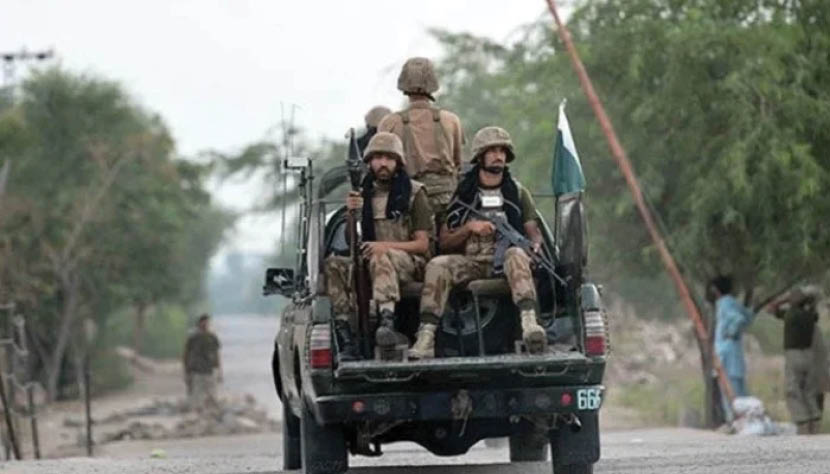
Pakistan’s principal strength in the alliance is its military experience.
The Pakistan Armed Forces possess extensive knowledge of conventional warfare, counterterrorism, border security, intelligence operations, military planning and peacekeeping.
Pakistan has also developed considerable expertise in training foreign armed forces and building military institutions.
These capabilities give Islamabad substantial strategic capital. A defence pact becomes credible only when political commitments are supported by operational capability, and Pakistan brings precisely that dimension to the framework.
Its institutions could play an important role in future training, exercises, planning and military coordination.
The agreement also offers opportunities for Pakistan’s defence industry. Cooperation with Türkiye’s advanced defence sector and Saudi Arabia’s investment capacity could encourage joint production, technology partnerships and exports.
Pakistan already manufactures aircraft, armoured vehicles, missiles, small arms and naval equipment. Greater cooperation could help expand these capabilities while reducing dependence on external suppliers.
Deterrence and stability
Pakistan’s strategic deterrent capability also adds weight to the partnership.
As the only Muslim-majority nuclear-armed state, Pakistan occupies a unique strategic position. However, the agreement should not automatically be interpreted as extending a Pakistani nuclear umbrella to other members.
Its significance lies primarily in the broader deterrent effect created when three influential states formally link their security interests.
The message is clear: aggression against one partner could carry wider consequences.
Handled responsibly, such an arrangement could strengthen deterrence and contribute to stability rather than confrontation.
Economic and industrial opportunity
The benefits for Pakistan could extend beyond security.
Closer defence cooperation may generate investment, technology transfer, joint ventures and greater access to international markets.
A combination of Saudi financing, Turkish technology and Pakistani manufacturing capacity could create a competitive defence-industrial partnership.
For Pakistan, this could support technological self-reliance, exports and domestic industrial development.
The country’s relatively competitive production costs and skilled military-industrial workforce could make it an attractive location for joint projects.
Expanding Pakistan’s diplomatic space
The agreement also broadens Pakistan’s diplomatic profile.
Islamabad has often been viewed internationally mainly through the lens of South Asian security. The Makkah pact demonstrates that Pakistan also has an important role in Gulf and Middle Eastern affairs.
This wider relevance can strengthen Pakistan’s diplomatic influence.
A country that maintains productive relations with Riyadh, Ankara, Beijing, Washington and other regional capitals enjoys greater strategic room for manoeuvre.
Pakistan’s ability to maintain multiple partnerships has long been an important diplomatic asset. The new framework can reinforce that advantage.
A defensive partnership
The agreement has been presented as defensive rather than directed against any particular country.
That approach serves Pakistan’s interests.
Islamabad benefits most from a framework that strengthens deterrence without unnecessarily drawing it into regional rivalries.
Pakistan can therefore contribute to ensuring that the partnership remains focused on defence, stability and cooperation.
Its experience in managing complex relationships with major and regional powers gives it an important role in maintaining balance within the alliance.
From Pact to institution
The future importance of the agreement will depend on implementation.
Collective-defence arrangements gain credibility through practical cooperation, including regular military consultations, joint exercises, secure communications, defence-industrial projects and coordinated planning.
Pakistan is well positioned to help shape these mechanisms.
Its military institutions possess decades of organisational experience and have worked extensively with foreign armed forces through training, exercises and peacekeeping missions.
This institutional depth could become one of the foundations of the new framework.
Pakistan’s strategic opportunity
The Makkah agreement should therefore be viewed in Islamabad as a major strategic opportunity.
It can help Pakistan deepen defence cooperation, attract investment, expand technological partnerships, strengthen its defence industry and enhance diplomatic influence.
More importantly, the pact reflects recognition of Pakistan’s wider strategic value.
Saudi Arabia brings economic power and regional influence. Türkiye contributes technological and industrial strength. Pakistan brings military capability, strategic deterrence and decades of security experience.
That combination has the potential to reshape regional security cooperation.
For Pakistan, the larger message is clear: Islamabad is no longer merely responding to changes in the regional order. It is increasingly helping to shape them.
–Ends
About writer: Dr Muhammad Shahid is a media analyst and journalist based in Islamabad. He can be approached at: shahid152001@yahoo.com