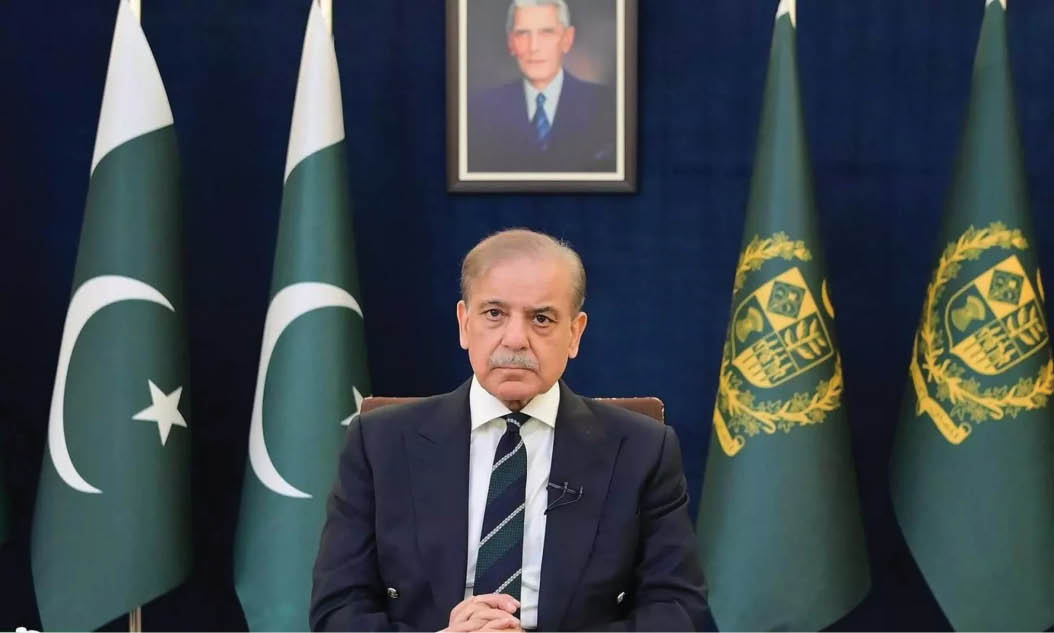
Prime Minister Shehbaz Sharif has warned Pakistan is posting the largest budget deficit in its history as international financial institutions remain wary of the country’s political conditions. He has accused his predecessor of economic mismanagement and that his government will do its best to put the economy back on track. That is easier said than done. In result of political stability, Pakistani currency clawed back from record lows continued as the rupee made more dents in the US dollar for the fourth session, powered mostly by the political change and bets the stalled International Monetary Fund (IMF) loan will be revived soon.
According to the State Bank of Pakistan (SBP), the local currency closed at Rs181.02 against the greenback in the inter-bank market, gaining 0.11%. The rupee has maintained a downward trend for the last 11 months. It has lost 18.88% (or Rs28.75) to date, compared to the record high of Rs152.27 recorded in May 2021. With a fresh rise of 0.11%, the Pakistani rupee has depreciated by 14.90% (or Rs23.48) since the start of the current fiscal year on July 1, 2021, data released by the central bank revealed.
The currency market took positive cues from the press conference held by the former finance minister and PML-N leader Miftah Ismail a day earlier. Traders also cited optimism after the newly elected Prime Minister Shehbaz Sharif signalled on Monday his intent to fix the economy and improve ties with the US, India, and China.
Moreover, assurance from SBP Governor Reza Baqir that engagement with the IMF remains strong both for the finance ministry as well as for the central bank helped the rupee gain further.
We are quite confident that quite soon we will be able to put the delay behind us and soon announce the good news of completing the next tranche for the IMF. It is worth mentioning that out of the total IMF package worth $6 billion, the country has drawn $3 billion so far. Currency dealers believe that with the political stability the concerns about stalling of the IMF programme and hence, the financing of the funding gap now seem to have eased.
Economists say the Imran government was ousted by inflation. Over the past two years, due to the economic impact of the coronavirus among other things, Pakistanis saw the price of essential goods go up more than 15 per cent, a historic high. That led to the State Bank of Pakistan raising its policy rate last week by 250 basis points to 12.25 per cent, the biggest increase in years. The Central Bank said the measure was necessary because of “a deterioration” in the outlook for inflation and the global tension, especially the Russian war in Ukraine and of course the standoff between Imran Khan and the opposition. The political tension in the country was pushing the inflation higher, the Bank said.
Its statement said last week’s wrangling between Imran Khan and his opponents “contributed to a 5 per cent depreciation in the rupee.” It also pointed to pressure from a sharp drop in foreign currency reserves. Reserves held by the central bank dropped by $728 million to $11.3 billion by April 1, compared with $16.2 billion on March 4, the bank said. Pakistan is therefore, as the Central Bank clearly said, in dire need of a pause in the political tussle. The country cannot afford more of this tension.
There is some sort of clarity today, which will obviously help in assuring international institutions such as lending bodies and credit agencies of the country’s ability to stand by its financial commitments. But for the long term, Pakistan needs a viable, substantial and realistic reform programme to bring the economy back on track and rein in spiralling inflation.