Mubina Murad
A Kurdish woman who had travelled to Tehran, Iran’s capital, to see her relatives. When MASHA AMINI, (commonly known as JINA), was out and about in the city, the police arrested her for breaching Iranian law by not donning a headscarf. Nobody knows what happened when she was being taken to the location where the authorities “instruct” people on how to wear the proper hijab. When AMINI’S family members next saw her, she had passed away.
The protests, which started in Tehran, have now spread to the majority of Iranian cities and villages. They come from different social backgrounds and races and are primarily led by young people. A number of factors have contributed to the simmering turmoil in Iran, not the least of which are the economy’s dire state and the nation’s extended exposure to international sanctions. Numerous examples of remorseless nepotism by Iranian officials have also left many feeling demoralized.As demonstrated by their refusal to respond to the family’s questions about what happened to Jina, it is far from the first time Iranian authorities have left an unnecessary death unresolved. Her loss makes me think of the 176 individuals who lost their lives when Ukraine International Flight 752 was shot down in January 2020 by an IRGC direct missile. Also initially denying any participation in the catastrophe directly, the Iranian regime
Amini’s family refused to follow a government order to bury her hastily at night and not pursue the case further, which is the main reason why her death has come to symbolize current Iranian unrest. Instead, he spoke out about his daughter’s passing, urging people to support all Iranian women, not just his daughter.
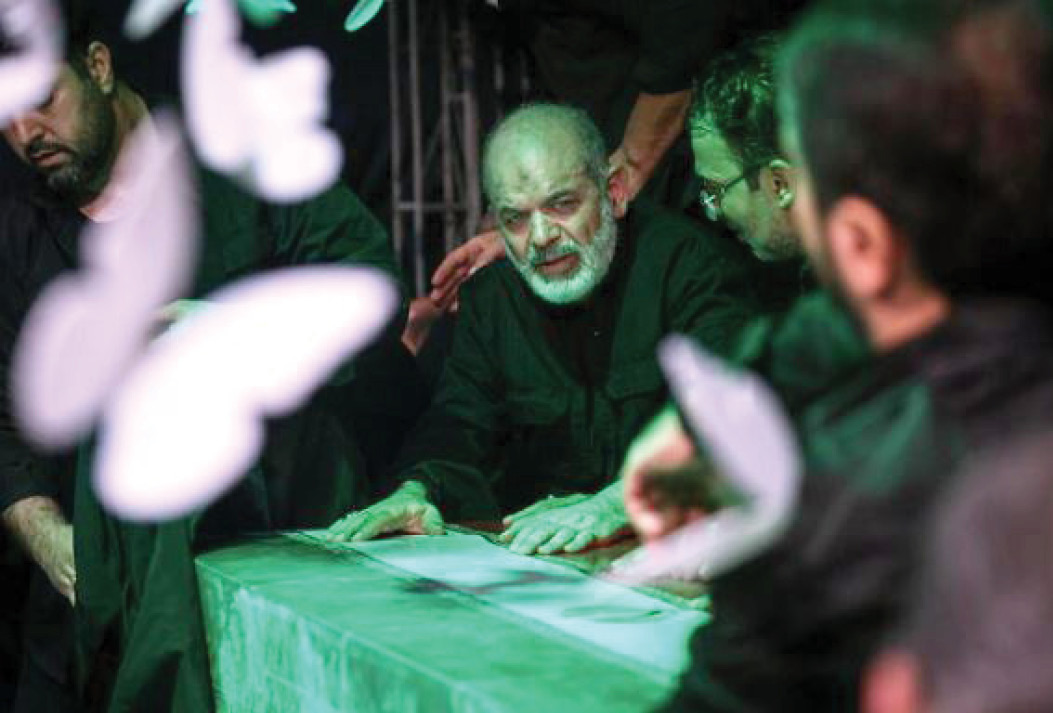
On Amini’s father call people came out from all over the world to protest against this. Women in Amini’s hometown removed their scarves during her funeral and chanted “Women, Life, Liberty” (or “Jin, Jiyan, Azadi” in Kurdish) with the men. These protests served as the catalyst for the current protest movement, which quickly swept across the country.
It is a practical assumption given that enforcing the hijab also makes for superb political theatre in an era when politics, from the United States to everywhere else, has largely become about performance. Similar to the resurrected Afghan Taliban in Kabul, Iran’s conservative circles can take a glimpse at the ladies present in the country’s public spaces and instantly feel a sense of authority.Islamophobic politicians from parties like Marine Le Pen’s National Rally in France and Narendra Modi’s BJP in India aim to outlaw the wearing of the headscarf and appeal to an uninformed and self-serving concept of secularism or Hindutva supremacy. In a similar vein, they are seeking power highs.
No Nation, including Iran, Saudi Arabia, France, India, or the United Arab Emirates, has the right to dictate what women should wear or not. Every woman has the right to live her life according to her terms.
It looks that Iranians from all different ideologies and areas are uniting against the regime for the first time. Although many who support the dictatorship in the West try to characterize the demands as only addressing the mandatory hijab, the demonstrations have become much more. This advocacy is also growing internationally.
Iran’s unofficial lobbyists in the United States have had little success in even reaching the White House, in contrast to past instances, such as the widespread protests that occurred throughout Iran in 2009. President Biden’s national security advisor Jake Sullivan, a former adviser in the Obama administration, has revealed that the White House was initially made to believe that “if America spoke out, it would weaken the Iranian demonstrators, not boost them.” The White House seems to have learned from its past mistakes.This time around, the Biden administration has responded to the Iranian protests very differently, starting with a more forceful, motivating approach. Undoubtedly, individuals and groups with Iranian ties try to change people’s attitudes, but so far their efforts have been unsuccessful. Due to the unprecedented unanimity and clarity of the demands of the Iranian people, there is an increase in international support for the demonstrations while the voice of the Islamic government in the West is losing ground.
The demonstrators have received support from the whole Iranian diaspora, particularly the greatest populations of Iranian immigrants residing in the United States, Europe, and Canada. These populations now feel empowered to seek regime change rather than just reform, despite the fact that the Iranian government’s harsh restrictions and sanctions for regime critics including those outside of Iran have previously discouraged them.
Despite this internal and domestic opposition, the administration is stepping up its efforts. Iran’s Islamic government is suppressing demonstrators who are dispersed across the country as they become more frequent. At least 76 people have perished so far. The crackdown has already had a substantial impact on domestic internet connectivity, so there are concerns that things may get worse.
Although there have been crackdowns, this wave of protests has already demonstrated that it is remarkably inclusive and unified. People of various social strata, ages, religious affiliations, and ethnicities are participating in the demonstration, and they have shown persistence and tenacity in the face of the regime’s armed men. If Iranian citizens are able to continue their protests over the next time, the Tehran government will find it difficult to thwart a revolution rather than just a protest.