ISLAMABAD
Crude oil prices decreased more than one percent on Wednesday as poor economic data from China offset the impact of geopolitical tensions. As of 1255 hours GMT, Brent, the international benchmark for two-thirds of the world’s oil, shed $1.23 (-1.57 percent) to reach $77.06 a barrel. Similarly, the West Texas Intermediate (WTI), the main oil benchmark for North America, went down by $1.33 (-1.84 percent) to $71.07 a barrel.
Brent ended last week lower by 0.60 percent, falling to $78.29 a barrel from $78.76 a barrel on a week-on-week, while WTI closed last week down to $72.68 from $73.81 a barrel, registering a weekly decline of 1.53 percent. Both benchmarks shed more than 10 percent in 2023 on a year-on-year basis.
On the other hand, the price of Russian Sokol decreased by $0.48 (-0.67 percent) to $71.24. Arab Light prices witnessed a decrease of $0.54 (-0.69 percent) to reach $78.16 a barrel. Similarly, the price for Opec Basket decreased to $79.17 a barrel with a dip of $1.01 (-1.26 percent). The OPEC Reference Basket of Crudes (ORB) is made up of Saharan Blend, Girassol, Djeno, Zafiro, Rabi Light, Iran Heavy, Basra Light, Kuwait Export, Es Sider, Bonny Light, Arab Light, Murban and Merey.
Oil fell as economic growth in China, the world’s second-largest crude user, slightly missed expectations, raising concerns about future demand. China’s economy in the fourth quarter expanded by 5.2% year-on-year, missing analysts expectations and calling into question forecasts that see Chinese demand fuelling 2024 global oil growth.
Still, China’s oil refinery throughput in 2023 rose 9.3 percent to a record high, indicating elevated demand even if it lagged some analysts’ expectations. Other signs of steady Chinese demand have also appeared.
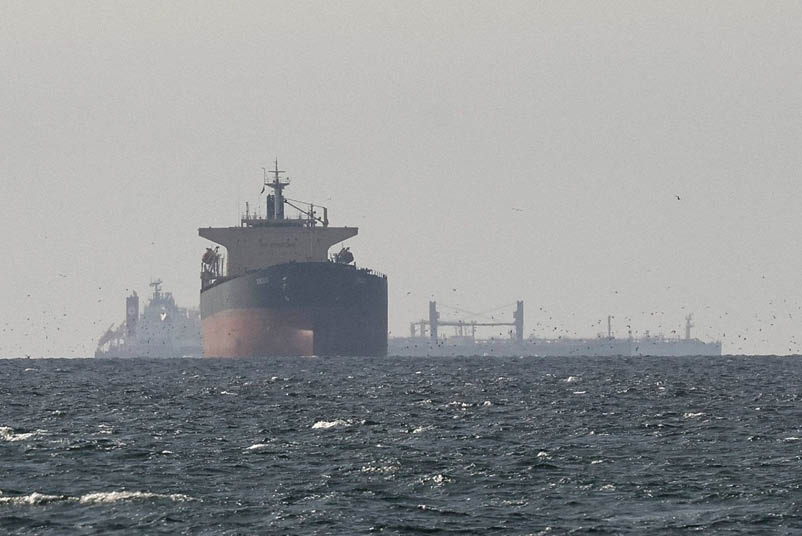
The ongoing naval and air conflicts in the Red Sea have not been enough to support oil amid China’s poor data, despite increased concerns about tankers having to pause or reroute, increasing shipping costs and slowing deliveries.
According to analysts, oil prices may be lower this year compared with 2023 on greater crude supply from some producers and weaker demand growth in China, the world’s second-largest economy. They said increasing production in countries such as the US, Iran, and Venezuela, as well as slower economic growth in China, has resulted in a more bearish outlook for oil markets.