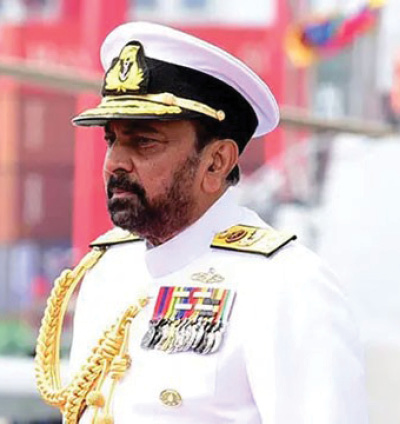
Dr Zafar Khan Safdar
Numerous internal and foreign sources of conflict continue to affect Pakistan. Extremism and intolerance of diversity and dissent have grown, fuelled by a narrow vision of Pakistan’s national identity, and are threatening the country’s prospects for social cohesion and stability. Pakistan’s political changes are marked by polarization, volatility, and economic fragility, with violence becoming a potential option due to its weak economy and climate change-induced vulnerability.
In Pakistan, a nation with a diverse population of cultures, languages, and ethnicities, national integration is particularly important for the stability, advancement, and prosperity of its people. It is especially significant for Pakistan since it promotes harmony, solidarity, and a sense of common identity among many cultures and ethnic groupings. National objectives, ideology, religion, language, culture, societal values, justice, leadership, and equity have extreme effects on the degree of cohesion, which solidify and boost optimism for a rewarding populace.
Pakistan’s history is a series of initiatives aimed at achieving socio-political and national unity. The All-India Muslim League led the way in advocating for an independent Muslim state, believing that Islam would unite the multiethnic and multilingual Muslim community. The founding fathers displayed a remarkable level of unity, cohesion, and a strong sense of purpose. The post-independence phase saw Pakistan emerge as an ideological state, despite suffering and loss of life and property. Pakistan had profound political, social, and economic transformations between 1947 and 1971 that started impacting the country’s identity and cohesion. Establishing the new government with many hostile borders was difficult with division of assets, water crisis, refugees settlement, forceful annexation of princely states by India, language problem, early demise of the founding fathers, constitution-making, political crisis, defense of boundaries, and huge economic issues. The erstwhile tribal regions and North-West Frontier province (todays Khyber Pakhtunkhwa) including Balochistan were less developed than the Punjab and Sindh. Variations in per capita income, quality of life, unemployment led to disparities that knocked down the national cohesion of the country.
The first Constituent Assembly framed the ‘Objectives Resolution’ in 1949, declaring Pakistan a Federation and affirming no law against the spirit of the Quran and the Sunnah. However, the Constitution was dissolved in 1954, and the Constitution was abrogated in 1958. The Constitution Commission framed another Constitution in 1962, providing for a Presidential form of Government. The promulgation of the 1973 Constitution was a significant step towards fostering national cohesion, which enshrines a comprehensive Bill of Rights, protects minority rights, incorporates Islamic principles, establishes a federal system of government, grants province autonomy, promotes democracy, and outlaws discrimination on the basis of caste, sex, race, religion, or place of birth.
The national cohesiveness and security dynamics of the country were impacted by the nationalisation policies, declaring Ahmadis as Non-Muslims, Agri, industrial and Land reforms, and political persecution of Bhutto. The political instability was at the edge when Sindi nationalists demanded Sindu-Desh and Pukhtoons of erstwhile FATA and NWFP called for independent Pakhoonistan. National cohesion was enhanced through refugee settlement, Kashmir issue and 1948 war, Objective Resolution, discovering Natural Resources, Urdu as National Language, National Anthem, efforts towards framing the constitution, 23 March as Pakistan Day, launching of PTV, Green Revolution in agriculture and industrialization, and the 1965 Indo-Pak war.
The radicalization era of General Zia-ul-Haq marked by regional, sectarian, and ethnic divides in Pakistan, heightened political instability with economic disparities, increased violence between sects, and the rise of the Taliban in Kabul and recognition by Pakistan. The US and allies lacked interests in Pakistan after dismemberment of the USSR. With the restoration of Democracy, national cohesiveness was encouraged, and infrastructure development led to national integration. Pakistan faced US economic restrictions after the nuclear tests in May 1998 but the level of national cohesion was remarkable.
The enlightened moderation to contemporary era (2000 to date) saw the democratic landscape eroded with political, economic, religious, and social unrest, followed by the Kargil war. The events of 9/11 brought Pakistan to limelight from economic depression to progression, religious radicalization, and enlightened moderation and devolution of power. The era marked by exponential growth of private media, cultural progression, women emancipation, social and digital connectivity.
Between 2002 and 2009, the military carried out different security operations impacting national cohesiveness. Separatist sentiment escalated following the 2006 assassination of Baloch leader Akbar Bugti and action against extremist forces of Lal Masjid in 2007. The TTP grew and became a significant security danger during this time. Former Prime Minister Benazir Bhutto’s assassination had detrimental effects on political stability and unity. The government achieved a smooth transition of power in the 2013 general elections, strengthening democratic stability and national cohesiveness. The National Action Plan (NAP) was introduced in response to the Army Public School assault in 2014, focusing on counter-terrorism measures. The Zarb-e-Azb and Raad-ul-Fasaad Operations helped restore national security and sovereignty in North Waziristan and Swat. The country flourished economically, politically, and socially from 2013-2018. The 18th Amendment aimed to resolve provinces’ concerns and encourage regional autonomy, solidifying national cohesion. The nation demonstrated remarkable national cohesion and integration after the APS Peshawar terrorist attack and major military operations. However, political polarization in 2018 led to societal fissures, intolerance, digital divide, and populism, leading to the 5/9 incident. The 9th May incident solidified the nation against anti-state elements. Despite political instability, polarization, social and economic disparities, and policy inconsistencies, the nation has shown remarkable resilience during crises. Its hight time that Pakistan must prioritize inclusive policies, equitable resource distribution, and a shared national identity that respects diversity at both government and grassroots levels. A united and integrated Pakistan stands to benefit from the strengths and contributions of all its diverse constituents.
The writer is Ph.D in Political Science, and visiting faculty at QAU Islamabad. His area of specialization is political development and social change. He can be reached at zafarkhansafdar@yahoo.com and tweet@zafarkhansafdar.