Zaman Bajwa
Each year, on the 10th of December, we celebrate International Human Rights Day without being aware of the fundamental rights of human beings. This Universal Declaration of Human Rights, drafted in 1948, serves and empowers all human beings as well as speaks regarding the protection of their dignity without discrimination. Today, this charter is as relevant as in 1948 and is recorded as the most translated declaration of the United Nations. Historically speaking, as with the advent of globalization, the international world has observed a paradigm shift from international security to human security in order to avoid another great war. With this, the very concept of human rights came into practice. The great wars in history spoke of significant human loss due to world wars between central power states. Now, the irony is that, even with this declaration in practice, human rights are compromised, as in Gaza, Ukraine, and Kashmir. Now, the players have been changed, and instead of major powers fighting with each other, the oppressors are targeting innocents in weaker states. Now, the question arises whether that compromise of human rights in Gaza, Ukraine, and Kashmir is a failure of this declaration or not.
This year’s theme of the UN human rights campaign focuses on the notion “Our rights, our future, right now,” that every human deserves the safeguard of rights and a future, but the reality is quite the opposite. The painful reality is that International organizations are unable to hold people accountable for human rights violations in Gaza, Ukraine, and Kashmir. Despite creating a universal foundation, the UDHR’s implementation is contingent upon major powers’ political will and the effectiveness of international organizations like the UN. In these three areas, humanitarian considerations are frequently subordinated to geopolitical goals, allowing offenders to act without repercussions. The international community is even silent on the genocide in Gaza at the hands of Israel; the idea of addressing their rights feels like a distant dream. It is a moral failure that no one is discussing Gaza. The rights of its citizens are a severe humanitarian crisis rather than a theoretical matter. Basic rights including access to clean water, healthcare, education, freedom of movement, and the right to live and have a future, are denied. The people of Palestine are in despair as a result of bombings and military operations that have destroyed houses, schools, and hospitals. Gaza’s suffering is presented as too complicated, too divisive, or too remote to address; discussions about human rights frequently focus on politically expedient subjects. This selective empathy exposes a harsh reality: for many, the rights of Palestinians in Gaza are not only at the bottom of the list but are not mentioned at all.
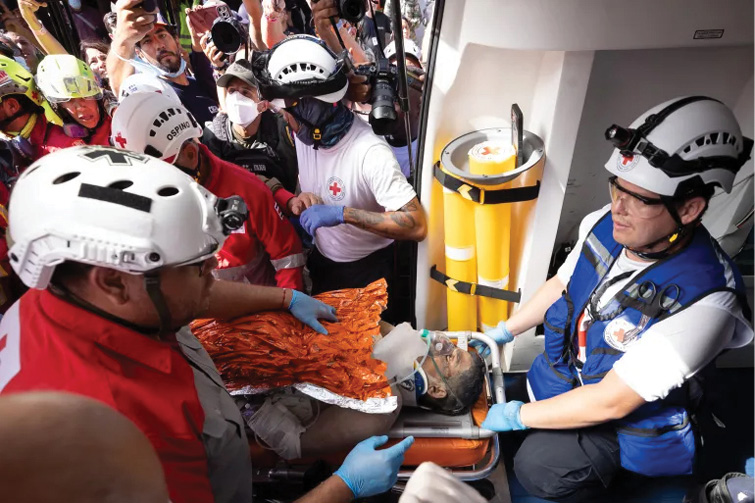
Talking about figures, according to the UN Human Rights Chief, 130 Palestinians have been killed per day in Gaza over the last ten months, resulting in 40,000 Palestinian deaths. Over 65,000 people have been wounded, and many more are still missing beneath the debris. The United Nations reported that as of October 2024, 1.9 million people had been displaced in Gaza by Israeli forces. The populace is now without access to essentials, including food, water, and medical care, due to the massive damage to critical infrastructure, including hospitals, schools, and water systems.
Another major battlefield is the Russia- Ukraine conflict, where human rights violations are immensely increasing. Since the beginning of the conflict, there have been serious human rights abuses of civilians on both sides. According to Human Rights Watch, August, September, and October alone witnessed hundreds of civilian deaths in 2024; September was one of the bloodiest months, with many people killed as well as wounded. Attacks have affected children and vital civilian infrastructure, such as power stations, in addition to a large number of older people, making the humanitarian catastrophe worse as winter draws near. There have been several reports of public personnel, activists, and civilians being targeted. These atrocities are still being documented by the UN and human rights organizations, but there is still no accountability. This November marked the 1000th day of the Russia-Ukraine conflict, which has caused unprecedented agony, with hundreds of thousands of people murdered and over 14 million displaced.
Now let us talk about Kashmir; following the revocation of the region’s special status in August 2019, human rights violations in Jammu and Kashmir have increased. According to Human Rights Watch, with more than 1,346 habeas corpus petitions filed since 2022, arbitrary detentions under the Unlawful Activities (Prevention) Act (UAPA) and the Public Safety Act (PSA) have increased dramatically. Internet shutdowns, some lasting more than 500 days, disrupt daily life, and journalists are subjected to intimidation, arrests, and systematic repression. At least 27 journalists have been imprisoned under severe legislation. In addition to rising violence against minorities and government policies seen to be changing the region’s demography, extrajudicial executions, and enforced disappearances are still frequent. Laws like the Armed Forces (Special Powers) Act (AFSPA) continue unpunished despite worldwide criticism, exacerbating the humanitarian disaster in the area. There have been more than 11,000 documented incidences of sexual assault and systematic torture in Kashmir, including brutal beatings and electrocution. Access to vital services has been negatively hindered by movement restrictions, such as curfews following the 2019 status revocation.
In a nutshell, the “Our Rights, Our Future, Right Now” theme of 2024 highlights how vital it is to take immediate action in order to defend and promote human rights across the world, not only theoretically but practically as well. We must understand how human rights may be used to address today’s issues and guarantee that everyone’s rights are recognized and preserved, paving the way for a future marked by equality, justice, and peace. This paper calls for coordinated action to stop such injustices and is consistent with the need to address human rights breaches in war areas like Gaza, Ukraine, and Kashmir. As Martin Luther King said, “A right delayed is a right denied”.
The writer is Islamabad-based Human Rights Activist and Freelance Journalist. He tweets @Zamanbajwaa