Wajih Abbasi
The centrality of the United States of America in the present-day world is such that any change in Washington has ramifications all over the world. It impacts every country – friend, foe or neutral alike.
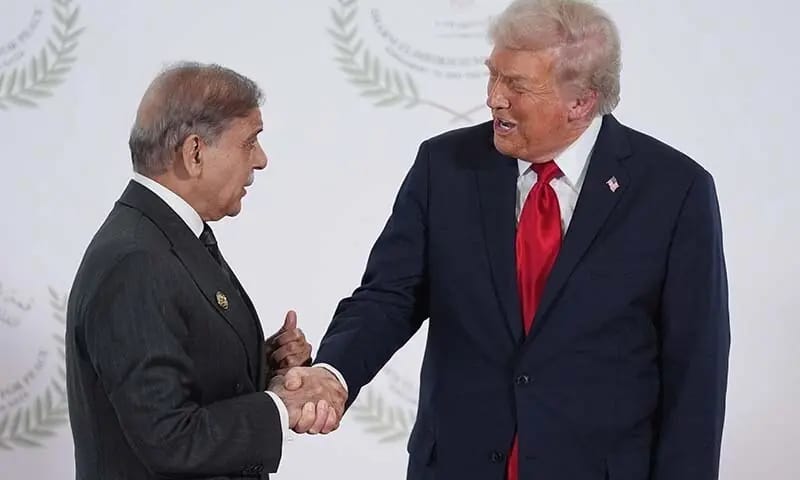
Pakistan with its long-term relationship with the US, sometimes very close, sometimes distanced but never adversarial is influenced by any change in Washington. The impact on Pakistan like all over the world will be greater when the change in Washington is as monumental as second coming of Donald Trump as the President of the United States. By the way this is for the second time in US history that a US President who lost after first term in office came back later in a subsequent election. This feat was last accomplished by Cleveland in 1893.
Despite seeing ups and downs throughout seventy-five or so years of their relationships, Pakistan and the United States always enjoyed good relations. However, what is conspicuous in these relations is the fact that though Pakistan from day one wanted good relations with the United States and wanted to be an ally but that desire was not as strong in Washington. From Truman to Trump India was the first choice for all US governments and it remains so. Therefore, Pakistan, without nostalgia will have to make its policies with the fact in mind.
Pakistan was taken in as an ally and given economic and military aid only when either India was not willing to play that part and/or sided with the opposing parties as during the cold war and later during Soviet intervention in Afghanistan or when there was no alternative to gaining Pakistan’s support for promotion of American interests as during the second Afghan war which started after 9/11 attacks.
Whenever the United States saw an opening for it in New Delhi it grabbed the opportunity with both hands without much regards to the Pakistani sentiments or interests.
Just after the independence of Pakistan and India, the United States wanted India to join the anti-communism alliances but later refused to do that and instead developed close cooperation with the Soviet Union. It did not formally join the Warsaw Pact as not doing so allowed New Delhi to simultaneously play role as leader of Non Aligned Movement, which in itself tilted towards Moscow.
India joined the Warsaw Pact in its refusal to join the Japanese peace talks and subsequent Japanese Peace Treaty. It refused to support the Western Alliance in Korean War and did not join the policies aimed at containment of communism while Pakistan joined all those efforts.
Though Pakistan did receive substantial and much needed economic and military aid including military hardware for the support but Washington did not take much time in coming to Indian support when it asked for the same after its border skirmishes with China in 1962. All Pakistani protests that the weapons being supplied to India for possible fight with China will be used against not against the communist giant to the north but Pakistan fell on deaf ears. To add insult to injury the United States sanctioned Pakistan as the war broke out between Pakistan and India in September 1965.
Policy or placing one type of sanctions or the other and lukewarm US relations with Pakistan touching borders of animosity continued in one form or the other till Soviet intervention in Afghanistan in 1979. Again the US needed Pakistan to take Vietnam’s revenge from Moscow. Again Pakistan, though for substantial reasons of its own, obliged and both the countries enjoyed best of relationship during next ten years. It is pertinent to mention that these were the years when Pakistan was undergoing worst times in its history with regard to personal, political and religious freedoms.
The honeymoon ended before the withdrawal of last Soviet soldier from Afghanistan. The United States not only stopped almost all economic and military aid for Pakistan but also imposed new sanctions and stopped delivery of weapons and ammunitions including 40 F-16 aircrafts for which Pakistan has had already paid.
The cycle of lukewarm relations between the two countries and imposition of one after the other sanction by the United States on Pakistan continued till fateful day of 9/11. After the terrorist attacks, the United States again needed Pakistan to punish the Taliban administration and in Afghanistan and wipeout Osama Bin Laden and his Al-Qaeda network. Thus a new episode of warmth in Pak-US relations started during which military and aid flew towards “Non NATO Ally”, military hardware was transferred and sanctions were lifted. The honeymoon lasted for more than a decade. However, differences soon crept in. The United States increasingly believed that Pakistan was playing double game with it. It believed that Pakistan was behind the scene supporting the Taliban fighting US and allies as well as the US supported government in Afghanistan.