DLP Report
ABBOTTABAD
Environmental scientists have called for urgent action to prevent the further depletion of the groundwater table in Abbottabad amid an ongoing five-month drought and rising water demand.
Experts stressed the need to shift towards utilizing surface water as an alternative to over-extraction of underground reserves.
“There is an urgent need to tap into alternative resources like surface water from the Galiyaat mountains, which is currently being wasted,” said Dr. Muhammad Bilal, Head of the Environmental Sciences Department at COMSATS University Abbottabad.
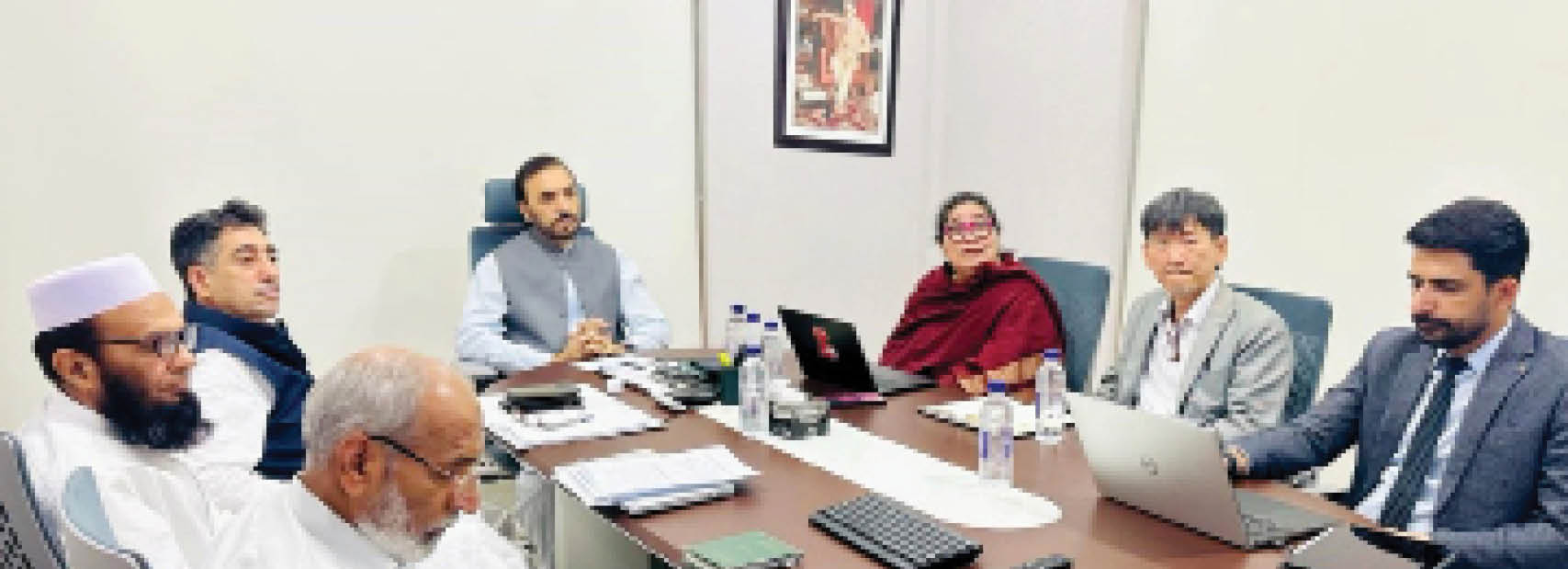
Dr Bilal, along with faculty members and students, visited the Asian Development Bank-funded under-construction Water Treatment Plant in Abbottabad to gain insights into the role of modern technology in sustainable water management.
Prominent among the delegations were Associate Professor Dr. Nadia Riaz, Professor Dr. Zulfiqar Bhatti, lecturers, and students.
The visit was organized as part of a water awareness initiative by the Water and Sanitation Services Company (WSSC) Abbottabad. During the visit, Chief Engineer Mohsin Shehzad, WSSC spokesperson Umar Swat, and Resident Engineer Said Afsar briefed the delegation on the increasing water scarcity in Abbottabad due to climate change.
“Unpredictable weather patterns, rising temperatures, rapid population growth, and shrinking water sources have made efficient water management more urgent than ever,” said Engr. Shehzad.
The delegation was informed that the Supervisory Control and Data Acquisition (SCADA) system would be integrated starting from the intake point till the consumer end into the project.
This system will enable real-time monitoring and control of water flow from the source to treatment facilities, storage tanks, and ultimately to consumers, ensuring efficient distribution, reduced wastage, and improved quality standards.
This would be a state-of-the-art water treatment plant that will be equipped to handle high turbidity levels up to 1000 NTU, significantly improving water clarity and safety for public consumption.
Experts emphasized that tapping into surface water sources is a more sustainable and cost-effective solution compared to excessive reliance on rapidly depleting underground reserves.
To prevent further water wastage, the delegation urged citizens to avoid illegal water connections, which not only disrupt supply but also lead to contamination.
Additionally, they advised the public to construct ground storage systems instead of relying on pressure pumps, which can cause contamination and create inequitable water distribution.
“The crisis of clean water is real, and every drop counts. We must adopt sustainable practices, invest in modern water treatment technologies, and most importantly, change our mindset towards water conservation,” said Dr. Bilal during the briefing.
The faculty and students from COMSATS University appreciated the initiative and stressed the need for greater public awareness on water conservation.
“With growing urbanization and climate-induced water challenges, such infrastructural advancements are crucial to ensuring a reliable and clean water supply for future generations,” said Dr. Riaz.