LANDIKOTAL
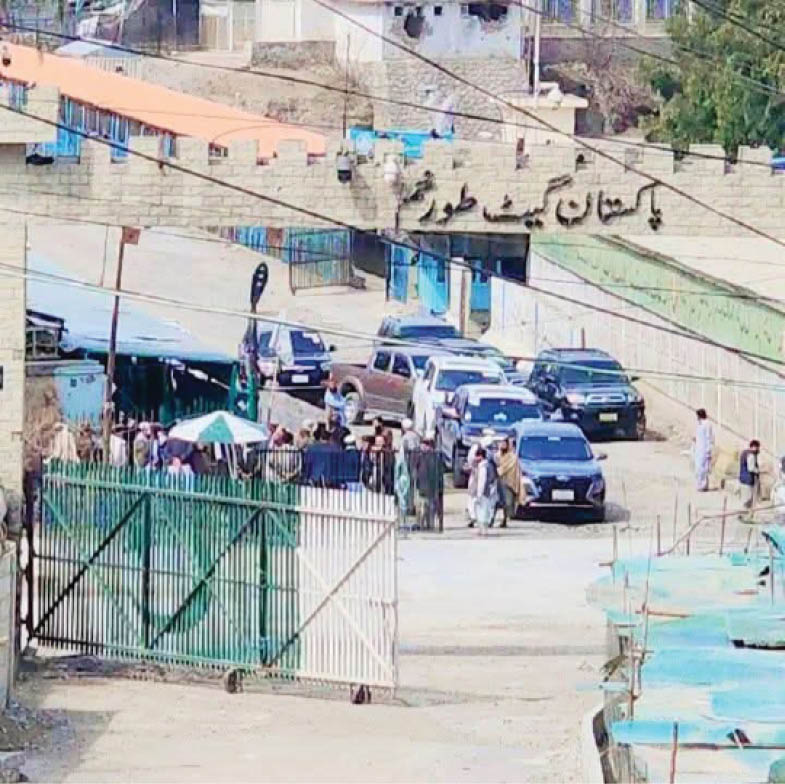
Negotiations between Pakistani and Afghan jirgas to resolve the 19-day-long Torkham border standoff collapsed after the Afghan delegation walked out, citing Pakistan’s lack of seriousness and the unilateral expansion of its delegation from 17 to 70 members, official sources said on Thrusday.
They said the dispute began nearly three weeks ago when Afghan forces started constructing structures inside Pakistani territory near the Torkham border. Pakistan objected to the construction, leading to rising tensions and the suspension of trade and cross-border movement. The closure has caused severe disruptions to businesses and travelers on both sides.
To resolve the issue, both countries formed jirgas four days ago, comprising tribal elders, business leaders, and officials. In the first meeting held two days ago, both delegations agreed to a ceasefire and further dialogue to address the controversial construction and restore border operations. The ceasefire has been upheld since the initial talks.
After consulting Afghan authorities in Kabul and Jalalabad, the Afghan jirga, led by Afghan Chamber of Commerce Chairman Younus Mohmand, returned to the Torkham border on Monday for a decisive round of negotiations. The meeting was expected to determine the next steps for reopening the border and resolving the territorial dispute.
However, upon arrival, the Afghan delegation was surprised to find that Pakistan had expanded its delegation list without prior consultation. Instead of the agreed-upon 17 members, Pakistan presented a list of 70 individuals, many of whom the Afghan side considered irrelevant to the negotiations.
Frustrated by the sudden change, the Afghan jirga waited for two hours but ultimately decided to leave without holding talks. They returned to Kabul, expressing their disappointment with Pakistan’s jirga approach and accusing it of undermining serious negotiations.
Younus Mohmand criticized Pakistan’s actions, stating that the addition of unrelated individuals reflected a lack of seriousness in resolving the dispute. He emphasized that the Afghan delegation was willing to negotiate but not under conditions that compromised the credibility of the talks.
Pakistani jirga leader and Federation of Chambers of Commerce advisor Sayed Jawad Hussain Kazmi acknowledged the Afghan concerns, admitting that the expansion of the delegation had not been communicated properly. He explained that Pakistan had originally submitted a list of 17 members, but another list with over 50 additional names was unexpectedly sent to the Afghan delegation on Monday morning.
Kazmi stressed that the Torkham border dispute is a critical issue affecting trade, economic stability, and diplomatic relations between the two countries. He reiterated that dialogue remains the only way to resolve the matter and assured that efforts would continue to bring the Afghan jirga back to the negotiation table.
Despite the setback, Kazmi said that Pakistani officials remained in contact with their Afghan counterparts throughout the day. However, by the time communication was reestablished, the Afghan delegation had already reached Kabul, making it difficult for them to return to Torkham on the same day.
The Torkham border remained closed, causing financial losses to traders and hardships for thousands of travelers stranded on both sides. Business leaders and economic experts warn that prolonged tensions could severely impact Pakistan-Afghanistan trade relations, which are already fragile due to past border closures.
Both governments are now under increasing pressure to resolve the crisis swiftly. Pakistani officials have vowed to persuade the Afghan delegation to resume talks, expressing optimism that negotiations will restart soon and lead to a peaceful resolution of the dispute.