Lebanon
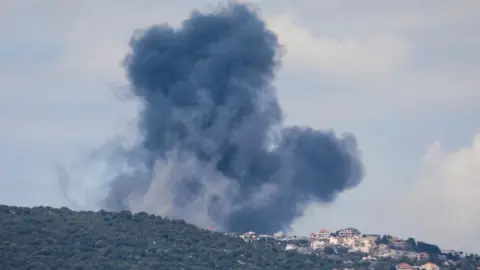
Israel has carried out the most intense air strikes on Lebanon in nearly four months, after several rockets were fired from Lebanon into Israel for the first time since a ceasefire came into effect in November.
The Israeli military said it had hit dozens of rocket launchers and a command centre belonging to Hezbollah, the Iranian-backed militia and political group, in southern Lebanon.
Lebanon’s health ministry said two people, including a child, were killed and eight injured in the strikes.
Hezbollah said it had not carried out the rocket attack into Israel. Lebanon said an investigation has been launched.
Saturday’s attack came days after Israel reinforced its offensive against Hamas, a Hezbollah ally, in Gaza.
The Israeli military said it had intercepted three rockets in the northern Israeli town of Metula, and there were no reports of casualties.
The Lebanese military said it had dismantled “three primitive rocket launchers” in the south, and the country’s defence minister said an investigation had been launched into the attack.
Hezbollah, the main armed group active in Lebanon, said it had not carried out the attack, and that it remained committed to the ceasefire that ended 14 months of conflict in Lebanon.
This is the worst violence since the fragile ceasefire, brokered by the US and France, came into effect.
Under the terms of the deal, the Lebanese military would deploy thousands of additional soldiers to the south of the country to prevent armed groups from attacking Israel.
Hezbollah was required to remove its fighters and weapons, while the Israeli military would withdrawal from positions occupied in the war.
But Israel has carried out nearly daily air strikes on what it describes as Hezbollah targets, and has indicated that attacks will continue to prevent the group from rearming.
The Israeli military is still occupying five locations in southern Lebanon, in what the Lebanese government says is a violation of the country’s sovereignty and a breach of the deal.
Israel says the Lebanese military has not yet fully deployed to those areas, and that it needs to remain at those points to guarantee the security of its border communities.
Saturday’s attack on Israel will put even more pressure on the Lebanese government, and probably be used as an example by Israel that the Lebanese army does not have full control of southern areas, where Hezbollah has traditionally had a strong presence and support.
Lebanon’s President Joseph Aoun, who came to power in January, has said only the state should have arms in the country, in what is seen as a reference to Hezbollah’s arsenal.
On Saturday, he condemned “attempts to drag Lebanon into a cycle of violence”, while Prime Minister Nawaf Salam said the escalation carried the “risk of dragging the country into another war”.