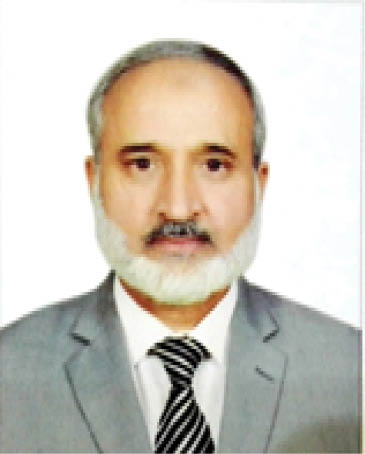
Muhammad Mushtaq Jadun
Article 4 of constitution of Pakistan provides undeniable right to every citizen in respect of life, liberty, body, reputation, property and that no action, detrimental to these aspects shall be taken except in accordance with law. Thus security of life and liberty is a fundamental right as enshrined in Article 9. Principles of policy Article 38, provides that the state shall secure wellbeing of the people and provides basic necessities of life such as food, clothing, housing, education and health.
Besides, the armed forces shall, article 245, under the direction of Federal Government, protect against the external aggression or threat of war and subject to all acts in aid of civil power when called upon to do.
Great Social Philosopher Ibne Khaldun believed that primary duties of a state are to maintain order through exercise of power and implementation of laws. He emphasized the importance of a strong ruler and the concept of “Assabiyah” in maintaining a state’s powers and longevity.
Social and economic wellbeing hinges upon peace and security, otherwise the citizen shall remain in grip of fear. Economic development without peace and security; shall remain fragile.
No state and citizen can enjoy fruits of economic development without peace. Security, justice and social wellbeing have remained the main pillars of any state. No state, and for these very reasons the princely states, some five hundred plus in Colonial India, were known for exemplary peace and security. Barring few dozens, rest of the rulers of these princely states hardly focused on social wellbeing of its subjects. Rather there were states without a single health or educational facility. Still the citizens, and few are still alive, of such princely states of Pakistan, remember exemplary peace and justice with nostalgia. While the quality of justice in some Princely States remained questionable but it used to be prompt. In our case, it is delayed injustice.
The Quran, in Surah Quraish, reminds the Quraish, and by implication, all the Muslims that Allah gave them food in hunger and bestowed upon them peace from fear.
For these very basic reasons the States always consider rape, robberies and decoities with murders as a threat to the very existence of State. Reasons being that in these heinous crimes human dignity, life and property of citizens is at stake.
Surah Al Maida (verse 33) prescribes stringent punishments for “Fasad Fil Arz” (mischief i.e. disturbing public peace and tranquility). These punishments include (a) death, or crucifixion or cutting of their hands and feet on the opposite sides or exiled from their land. These verses apply to those who wage war against Islam and the state, and spread mischief.
In our case it is the state, government, Parliament and the Council of Islamic Ideology to declare a mischief as “Fasad Fil Arz”. Depending upon severity of mischief one of the punishments, as mentioned in verse 33 of Surah Al Maida, can be inflicted. As regard to exile in land, it used to be “Zillah Badari” or expulsion from district under Maintenance of Public Order but is now limited, as per case law, no permanent resident of a district can be expelled.
Our scorecard of governance, as per governance indices, is dismal. In none of the governance indices ranging from World Justice Project (140/142), to Transparency International (133/180), World Democracy Index (124/165), Human Resource Index (164/193), Governance Index (129/142), Pakistan is in an enviable position. Worst is Environmental Pollution Index with a score of (179/180). Climate change would further accelerate the degradation process, of environment.
In all the cited surveys focus, main dimension and indicators are justice, order and security, accountability, fundamental rights, the rule of law and regulatory mechanisms. Administration of justice through formal courts, in such a society, is costly process with inordinate delays. Mismanagement and corruption means more complaints, and redressal lies through Quasi-Judicial forums and alternate dispute resolution. Poor governance means more complaints and grievances in regard to public service delivery.
Formal adjudication through courts is a costly and long drawn process. Remedy lies in creation of quasi-judicial forums and tribunals, such as Provincial and Federal Ombudsmen, Income tax, Environment, and Insurance Tribunals, Right to Information and Right to Services Commissions.
The writer is an Ex-PAS Public Servant, Currently Advisor to Federal Ombudsman, Regional Office Peshawar.