Islamabad
Pakistan’s decisive victory in the recent conflict with India has reinvigorated the nation with a renewed spirit of determination, resilience, and unity. By thwarting the enemy’s malicious designs, Pakistan has reaffirmed its unwavering commitment to protecting its sovereignty and national security at any cost.
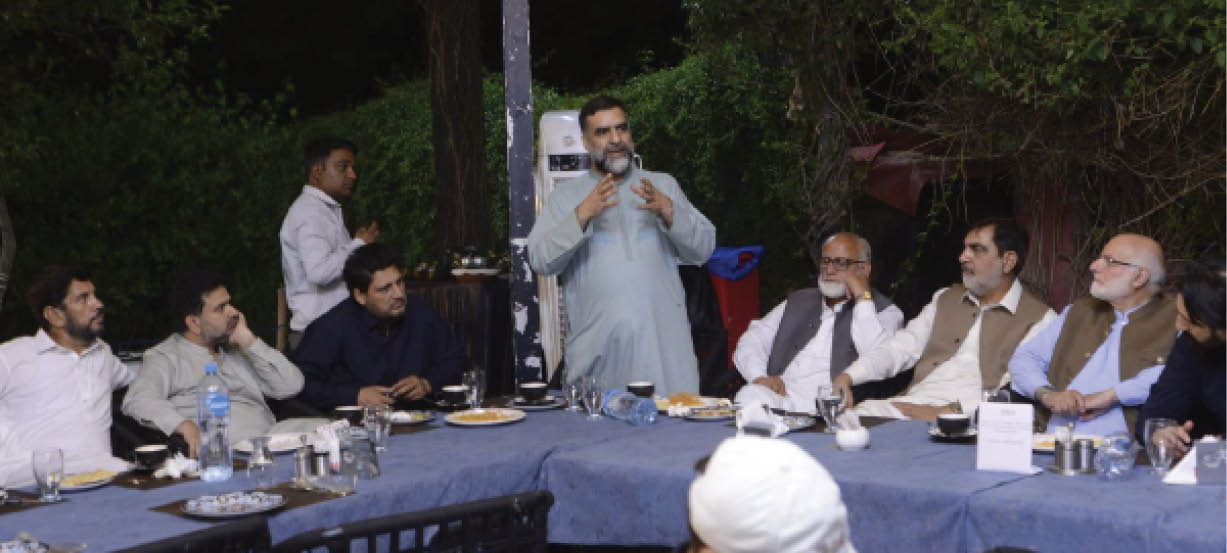
Speakers at a dinner hosted in Islamabad by Altaf Ahmad Bhat, Chairman of Jammu and Kashmir Salvation Movement (JKSM) and senior leader of the All Parties Hurriyat Conference, in honor of overseas Kashmiri leaders, stressed that this military triumph must also be leveraged diplomatically. They emphasized the need for Pakistan to mobilize special delegations to global platforms—including the United Nations, OIC, European Union, and key world capitals—to expose India’s real intentions and human rights violations in Kashmir.
Delegates should be given comprehensive briefings to present irrefutable evidence of Indian aggression, border violations, and humanitarian abuses to the international community. The dinner was attended and addressed by several notable figures, including the President of Tehreek-e-Kashmir Europe, Muhammad Ghalib; President of Tehreek-e-Kashmir UK, Raja Fahim Kayani; Chairman of Jammu and Kashmir Salvation Movement, Altaf Ahmad Bhat; President of World Kashmir Freedom Movement, Muzammil Ayub Thakur; General Secretary of Kashmir American Welfare Association and Finance Secretary of Voices for Justice in Kashmir, Chaudhry Shoaib; former member of Kashmir Council, Farhat Mir; President of Business Forum Azad Kashmir, Sardar Imran Aziz; senior Hurriyat leader, Sheikh Abdul Mateen; Abdul Hameed Lone, and other prominent community figures including Professor Sajjad Qamar, Malik Azhar, Irshad Hussain, Senior TV Journalist Ali Raza Alvi, and Raja Bashir Usmani, Editor Daily Ghaznavi senior journalist Aqeel Ahmad Tareen, Editor Kashmir Post Mohiuddin Dar, Shafiq Butt, Sardar Azeem, engineer Hammad Mir, and Ahtisham Mir were also in attendance.
Addressing the event, President of Tehreek-e-Kashmir Europe Muhammad Ghalib stated that despite its clear defeat, India continues to resort to deceitful propaganda and conspiracies. He emphasized the urgent need for national unity and collective responsibility to counter India’s disinformation campaigns — particularly on social media, where fabricated news is being spread to distort the truth and mislead the international community. He lauded the Pakistan Armed Forces for their decisive victory and a befitting response to Indian aggression, which not only protected the nation’s sovereignty but also uplifted the morale of the entire nation. Ghalib further underscored that only a well-coordinated and strategic narrative at diplomatic, media, and grassroots levels can effectively dismantle India’s false narrative and expose its real agenda before the world.
Chairman JKSM Altaf Ahmad Bhat emphasized that without a just and lasting resolution to the Kashmir issue, peace in South Asia will remain elusive. He urged the international community, especially the United Nations, to fulfill its promise of granting Kashmiris their right to self-determination. He appealed to U.S. President Donald Trump to play a constructive role in resolving the Kashmir issue by the aspirations of the Kashmiri people to ensure sustainable regional peace.
Highlighting the critical role of Kashmir’s rivers, Bhat pointed out that the recent war has revealed how vital water resources are to Pakistan and how the country is vulnerable to Indian water aggression due to its control over rivers originating from occupied Kashmir. He stressed that until Kashmir is liberated, Pakistan will remain susceptible to Indian blackmail over water flow.
Chairman JKSM Bhat further added “By the grace of Almighty Allah, we have achieved a decisive military victory, gained political leverage, earned diplomatic support, and succeeded on the media front. It is now the solemn duty of our political, military, and diplomatic leadership to preserve and build upon this momentum. The focus of any future negotiations must shift from temporary matters like water disputes to the core issue — a just and lasting resolution of the Kashmir conflict. Only when Kashmir attains its freedom and becomes an integral part of Pakistan will the vision of Pakistan’s completion be truly realized — and, God willing, the rivers that originate from Kashmir will naturally and rightfully flow to us.”
President Tehreek-e-Kashmir UK Raja Fahim Kayani remarked that Pakistan now has an unprecedented opportunity to assert its diplomatic, moral, and ideological superiority. If Pakistan proactively engages with global public opinion, it can effectively expose India’s long-standing hegemonic policies and gross human rights violations in Kashmir. He highlighted India’s alarming attempts to weaponize water as a tool of aggression by diverting and damming rivers in violation of the Indus Waters Treaty—posing a grave threat to Pakistan’s agriculture and environmental security.
He further stressed the need for a unified and collective approach for the Kashmir cause, involving both the diaspora and the base camp in Azad Jammu and Kashmir (AJK). While it is often said that international media doesn’t support the Kashmir narrative, the reality post–August 5, 2019, tells a different story. When the diaspora in the UK, Europe, and the USA mobilized in large numbers, major international media outlets not only covered the protests but also published numerous articles on the Kashmir issue. However, the unfortunate trend is that whenever the movement gains momentum, efforts tend to relax rather than intensify. This lack of sustained push prevents the struggle from reaching its rightful conclusion.
Kayani also called for urgent political and media reforms in AJK. He emphasized the need for international-standard newspapers—such as Dawn and The Express Tribune—to operate from AJK in English, French, and other globally significant languages, along with credible social media platforms.These efforts should be supported and institutionalized by the AJK government. Additionally, he recommended creating academic pathways by supporting students from AJK and Pakistan to pursue higher education, including PhDs, in Russia, China, Latin America, and Europe. Such academic investment would produce informed voices capable of powerfully advocating the Kashmir cause at the international level.
Former Additional Chief Secretary AJK Farhat Mir detailed India’s recent projects to alter the flow of the Jhelum and Chenab rivers, noting the serious consequences for Pakistan’s agricultural economy. He warned that if India continues these policies unchecked, Pakistan could face irreversible environmental and economic damage.
President of World Kashmir Freedom Movement Muzammil Ayub Thakur stated that the Pakistani nation is now fully aware of the strategic significance of Kashmir’s water resources. If Indian water aggression is not curbed, it could become the trigger for a larger conflict in the region. He added that India’s military failure and diplomatic isolation have reignited global attention toward the Kashmir dispute.
Chaudhry Shoaib, General Secretary Kashmir American Welfare Association and Finance Secretary Voices for Justice in Kashmir said that Pakistan’s victory has brought renewed hope and strength to the people of occupied Jammu and Kashmir. This military success has reignited a fresh wave of resistance among the Kashmiri youth, who have once again taken to the streets with renewed fervor, demanding their right to freedom. However, he emphasized that much more needs to be done on the international front. There is an urgent need to intensify diplomatic efforts and mobilize global opinion to raise the Kashmir issue more forcefully at international forums. Sustained engagement with global institutions and influential nations is essential to expose Indian atrocities and secure lasting support for the just cause of the Kashmiri people.
President Business Forum AJK Sardar Imran Aziz declared that India’s defeat proves it cannot suppress the legitimate aspirations of the Kashmiri people through force. The spirit of resistance remains alive and unbreakable in the valley.
APHC Leader Sheikh Abdul Mateen called on international institutions including the UN and OIC to take immediate action to resolve the Kashmir issue, warning that failure to do so could lead to a catastrophic war in the region.
Professor Sajjad Qamar concluded by saying that the Kashmir conflict is not just a bilateral issue between Pakistan and India but affects the lives of 1.5 billion people in South Asia. The global community must treat this as a priority issue and act urgently to facilitate a peaceful and just resolution.