Omar Shahkar
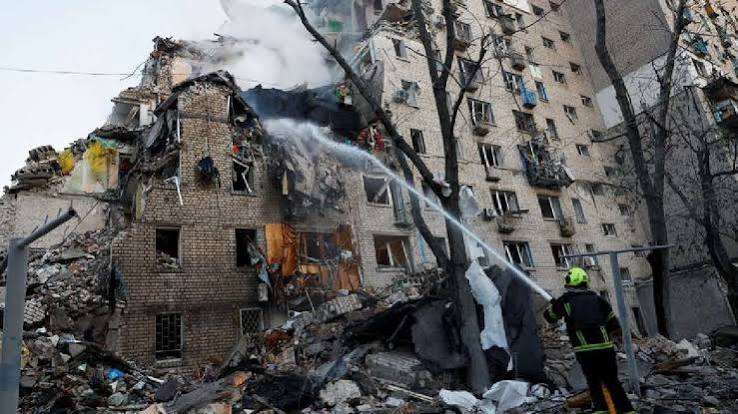
A shaky ceasefire has been maintained along the Pakistan–India border following days of violent air battles, missile strikes, and drone assaults. Many in the world community feel that the two countries narrowly missed a “nuclear war”.
There are numerous reasons to believe that the Indian government’s choice to attack Pakistan has backfired on New Delhi in ways that are yet unknown.
First, the three-day military exchange appears to have resulted in a noticeable shift in popular confidence in Pakistan. The incident revealed Pakistan’s willingness to endure blows and respond with much greater ferocity.
This incident has united the Pakistani nation, people, and political parties across the board. Pakistan has demonstrated amazing solidarity in the face of India’s onslaught, despite going through a difficult political period in recent years.
Second, Pakistan’s military has gained more popularity than ever before. Over the last few years, Pakistan’s internal politics have given its powerful army a controversial image. However, that is no longer the case. People and political leaders across the board are more aware than ever that they must bolster their armed forces, as India, Pakistan’s eastern neighbour, poses the greatest threat to the country’s sovereignty.
Furthermore, there was tremendous international pressure on Pakistan to avoid retaliation against India. The military leadership overcame these constraints and responded, sending a message to the Indian government that it would not allow it to declare war on Pakistan without serious consequences.
Third, the idea of India imposing a “new normal” on Pakistan has suffered a tangible setback. From the Indian government’s standpoint, any terrorist act in Kashmir will be met with attacks in Pakistan. However, this approach is likely to have backfired for New Delhi’s planners. Pakistan may have responded to India’s new normal with its own huge counterattack, known as the “new normal plus”, which targeted Indian cities, airbases, command centres, supply locations, and several military sites in Jammu and Kashmir.
Fourth, Pakistan has achieved a significant diplomatic victory in the current military conflict with India. There is a sense in Islamabad that its mature manner of dealing with issues, such as requesting an impartial probe into the Pahalgam incident, remaining calm in the face of India’s provocations, and acting only in self-defence, has garnered it worldwide respect.
More importantly, the US position in this issue has been viewed as supporting Pakistan over India. For example, President Donald Trump has reaffirmed his offer to intervene between India and Pakistan to resolve the Kashmir dispute, bringing the topic to the world stage after many years. Pakistan has always sought third parties to be involved in resolving the Kashmir dispute with India. It would, consequently, be thrilled with Trump’s offer.
Furthermore, Trump has pledged to enhance commerce with India and Pakistan. This could provide respite to Pakistan’s commercial and economic predicament. US Secretary of State Marco Rubio declared that the Indian and Pakistani governments have “agreed to start talks on a broad set of issues at a neutral site”. This essentially indicates that the two sides might begin talking in the next weeks about a variety of topics, including the Indus Waters Treaty, terrorism, and Kashmir, among others.
Fifth, India must recognise that during this crisis, it was confronted with Pakistan and China jointly, not only Pakistan. The significant aerial losses inflicted by Pakistan’s Air Force on the Indian Air Force, including Rafale planes, employing Chinese fighter aircraft and equipment, should serve as a stark signal to New Delhi.
Finally, India’s pronouncement that any terrorist attack in Kashmir will now be considered an “act of war” is a dangerous stance. It is worth noting that India has yet to arrest the attackers involved in the Pahalgam attack. The two sides now have the opportunity to engage in dialogue. And Trump has taken the responsibility for it. Let’s see how the wind blows.
The writer is a freelance columnist.