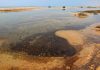
A drone video exposed what the state could not; or would not. As murky wastewater from a lakeside hotel seeped into the blue mirror of Attabad, it wasn’t the voice of a local activist or an environmental report that triggered state action. Quite interestingly, it was a viral post by a British vlogger. Within days, the resort was partially sealed, fined, and thrust into public disgrace. That this was what finally pushed the government into motion is as damning as the pollution itself.
However, the real scandal is not a hotel’s sewer line. It is the institutional collapse that allowed it to be laid in the first place. In the northern belt of Pakistan, from Hunza to Murree, the landscape is being re-engineered at unprecedented speed yet without any vision. Mass tourism is being promoted without infrastructure. And in valley after valley, legality is treated not as a framework but as an easily-removable obstacle. Where state writ should safeguard ecological thresholds, it now enables their transgression: through silence, complicity, or both.
Gilgit-Baltistan, which hosted nearly 1.4 million tourists in 2019 alone, produces tens of thousands of kilograms of waste per day during peak season, only a fraction of which is treated. In most settlements, sewage drains directly into rivers or is left to stagnate in porous septic tanks near lakeshores. Forests have been cleared to make way for concrete hotels that lack basic compliance. Meanwhile, glacial lakes are ringed by buildings erected without geological assessments, despite Pakistan being one of the most climate-vulnerable countries on Earth.
It should be a crime to dismiss this as mere ignorance or overlook the deeply entrenched political economy. Developers linked to local power brokers acquire land with impunity. Zoning laws, where they exist at all, are unevenly enforced or casually amended. Environmental impact assessments are either perfunctory or waived entirely. Local voices that protest these patterns are dismissed as anti-progress. If and when state intervention does arrive, it often targets the weakest violators while shielding the most egregious ones behind a facade of legal ambiguity.
The rhetoric of “tourism promotion” now functions as a shield–invoked to justify everything from deforestation to shoreline encroachment. But growth is not development if it erodes the very foundation it relies on.
Hunza is no backdrop. It is a living, fragile system of culture, water, geology, and memory. The same is true of Swat, of Skardu, of every valley now being prepped for short-term spectacle. If Islamabad does not urgently enforce environmental limits and shift from spectacle-driven projects to resilient, long-term planning, the consequences will be neither marginal nor reversible.
With luck, the drone’s eye will be remembered not just for what it revealed, but for what it forced us to confront: a clear view of a region in peril, and a long-overdue reckoning with the cost of our neglect.