Dr Qaisar Rashid
An adage gripping the United States (US) is that if President Donald Trump praises you publicly, do not forget to look into the mirror. Figure out the flaws and shortcomings rendering you praise-worthy (read, exploitable).
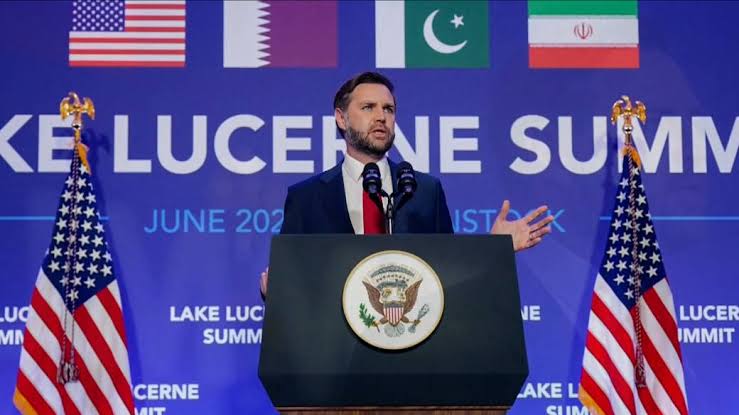
Sparing moments from his hectic schedule (overseeing wars in two regions and persisting with the migrant policy), Trump hosted a meeting over lunch with Pakistan’s Field Marshal Asim Munir, unaccompanied by senior Pakistani civilian officials, in the White House’s Cabinet Room on 18 June. However, two peculiarities were apparent. First, Trump did not host Pakistan’s Prime Minister to pay heed. Second, Trump was not known for listening to counterpoints.
After the meeting, before the media, when Trump said that Pakistan knew Iran better, there was no need to feel inflated. Just forgive the pun. Replace Iran with Afghanistan. Of course, Pakistan’s proclaimed strategic depth had been Afghanistan, and not Iran. Pakistan may be concerned about the ongoing war consuming Iran, but Pakistan knows Afghanistan better than Iran.
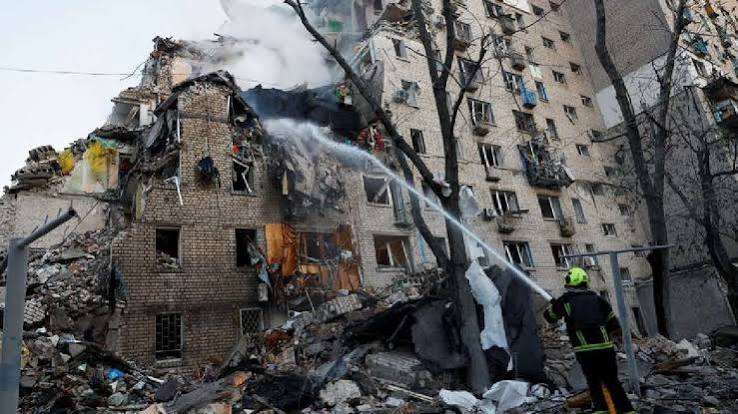
Ask Pakistan’s Defence Minister Khawaja Mohammad Asif, who told the international media the other day that Pakistan fought the dirty proxy war for the US (and Great Britain) against the former Soviet Union, and had been facing the consequences for thirty years. The war was not fought in Iran but in Afghanistan. By the way, this statement of Asif, tantamount to bad-mouthing, helped Pakistan diminish the recent conflict with India to just four days. The statement presaged the agony that Pakistan needed to be rescued. Reportedly, Saudi Arabia salvaged Pakistan. Nevertheless, the reduced version of the former Soviet Union exists as Russia, fighting against Ukraine, a proxy of Western Europe. Interestingly, the proxy formula is still functional, utilising different actors. A decade later, Ukraine’s defence minister would be found taking a leaf out of Asif’s statement. Certainly, proxies harbour similar grudges against their patrons.
Pakistan’s nuclear capability would remain safe so long as Pakistan keeps on doing two things: first, it remains in the western bloc; and second, it stops supporting jihadis. Iran deviated from these two principles and is now in the eye of a storm, though Iran is still not a nuclear- capable country. Pakistan has no standing to talk to Iran to come to terms with Israel. Pakistan’s history of mediation ends with Afghanistan, and not Iran. Nevertheless, instead of resorting to the regional level, Pakistan needs to practise the art of mediation first domestically. Negotiate to placate Dr Mahrang Baloch, and become a certified mediator.
It was the Abraham Accords of 2020 that divided the Arab world into two halves: supporters and opponents. Meant for Arab-Israel normalisation (establishing full diplomatic relations), the accords drew relevance from sharing the common prophet hierarchy. The accords were meant to achieve peace and stability between signatory countries. The accords were to expand in number to bring more signatory parties agreeing to peace with Israel. In the context of the Greater Middle East, Pakistan was presumably supportive of the accords (at the behest of Saudi Arabia), whereas Iran was in the opposite camp. Pakistan could be one such signatory; however, Iran opposed the accords, declaring them not only detrimental to the Palestinian cause but also as creating an anti-Iran alliance in the region. Iran made a counter-move called Mwada, which tried to include Arab countries into its fold of influence and exclude Israel. The consequent tug of war contributed to the attack of Hamas – a known proxy of Iran – on Israel in October 2023.
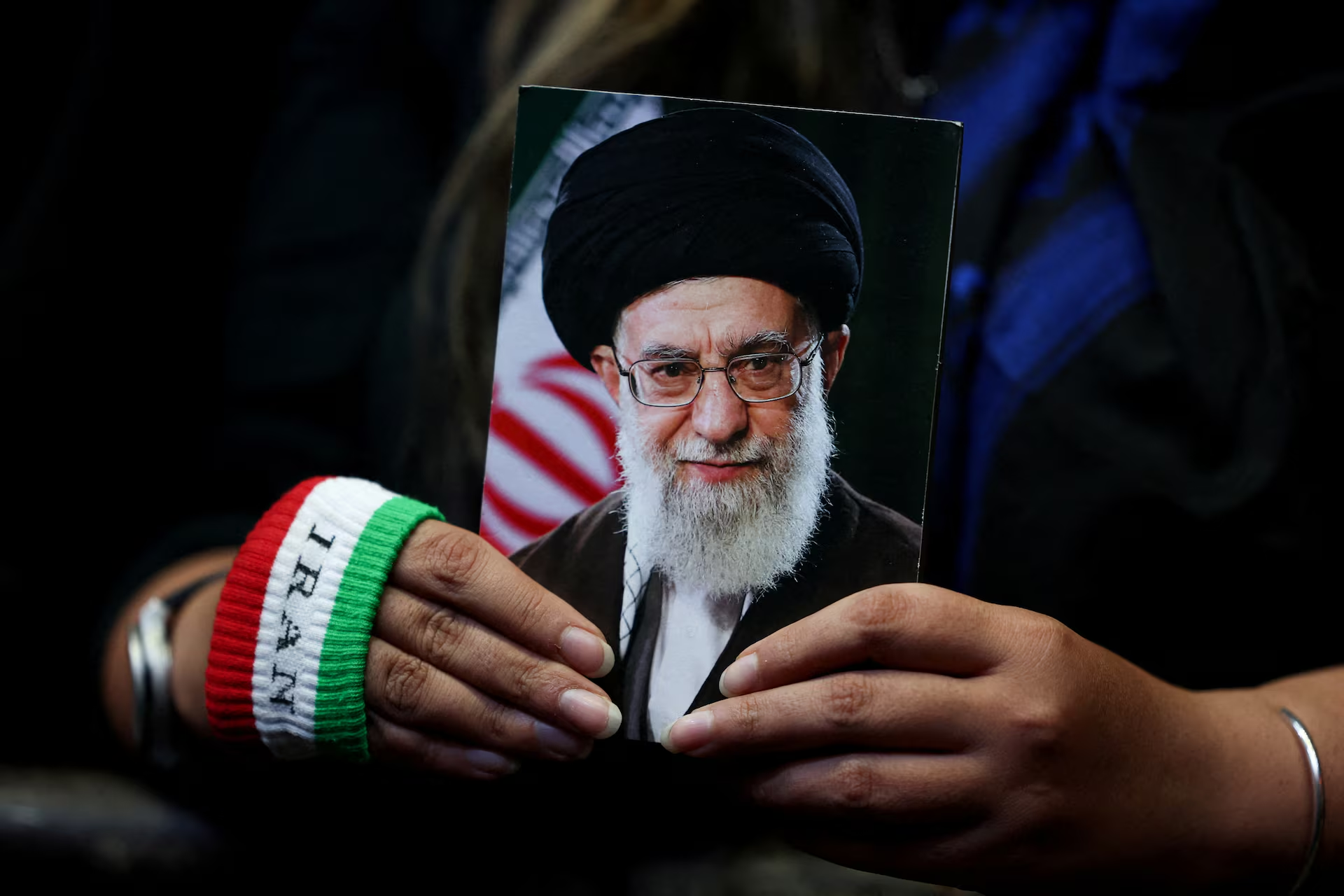
Trump believes that the future of the Middle East rests with the numerical expansion of the Abraham Accords, even at the cost of subduing Iran. Without defeating Iran thoroughly, Iran’s proxies cannot be overpowered. Furthermore, Iran cannot be overwhelmed if its bunkers, which have been shielding nuclear centrifuge facilities, weather Israel’s strikes. In a way, the rise of the accords hinges upon the collapse of Iran’s nuclear-protecting bunkers. Trump demands Iran’s unconditional surrender so that Iran cannot sabotage the accords overtly or covertly in future. It is now Iran’s choice whether or not to get its nuclear- protecting bunkers busted. By the way, the help of Pakistan’s Field Marshal is required to control unrest in Pakistan in case the jihadis heat up the streets on signing any such accord. That is it.
By making Pakistan’s Field Marshal his guest, Trump laid bare a paradox. On the one hand, Trump is on a self-imposed mission to condemn and change the ruling Iranian non-democratic clergy-based regime, whereas on the other hand, Trump preferred to host Pakistan’s Field Marshal over Pakistan’s elected civilian Prime Minister. To elaborate, in Iran, Trump is trying to introduce democracy of Western style which could listen to the voice of the people. However, simultaneously, Trump deigns to respect Pakistan’s democracy and Prime Minister. Pakistan’s Field Marshal should also have thought twice about his deed. Nevertheless, it is known that India has refused to accept thirdparty mediation on Kashmir.
By holding a closed-door meeting sans the presence of the media, Trump sent a wrong signal to the Pakistanis. That is, the preference of the US was not an elected civilian government but the military high command of Pakistan. This was the wrong way to approach Pakistan. It is unfortunate that the US still sees Pakistan as a country surviving in the Cold War, when relationships with the military reigned supreme. Pakistan’s north-west suffered gravely owing to this kind of US–Pakistan convergence. People in Khyber Pakhtunkhwa bandy about a saying: wars in the neighbourhood and dollars in international banks are sisters.
Regrettably, Pakistan has proposed the name of Trump for the Nobel Peace Prize for defusing the Pak–India conflict. In fact, former PM Nawaz Sharif deserves credit for such a prize for initiating peace with India through the Lahore Declaration of February 1999.
The writer is a freelance columnist. He can be reached at qaisarrashid @yahoo.com