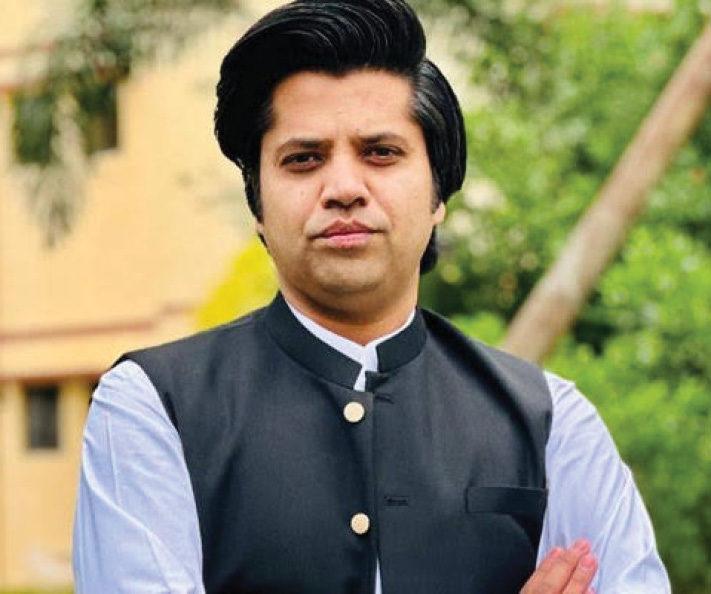
Anjum Nisar warns entire business community gearing up for a nationwide agitation
Islamabad
Mounting anger is sweeping through Pakistan’s industrial and trade sectors as the Businessmen Panel (BMP) of the Federation of Pakistan Chambers of Commerce and Industry (FPCCI) sharply criticized the Federal Board of Revenue’s refusal to withdraw controversial tax measures, particularly the arrest powers granted under new income tax laws.
In a forceful statement on Sunday, BMP Chairman Mian Anjum Nisar warned that the entire business community, backed by all major chambers and associations, is gearing up for a nationwide agitation if the government fails to reverse the “anti-business” steps and continued enforcement of e-invoicing and harsh cash transaction penalties.
He said that the authorities have chosen a confrontational path at a time when the economy is still recovering from years of instability, high inflation, currency depreciation, and shrinking purchasing power.
According to him, empowering the Federal Board of Revenue (FBR) to arrest taxpayers on mere allegations of fraud, without due judicial process, violates the fundamental principles of justice and commercial trust.
Mian Anjum warned that if these draconian powers are not repealed, it will become nearly impossible for the business community to cooperate with the tax administration. The use of coercive instruments to force compliance will only lead to distrust, fear, and ultimately the collapse of whatever formal economic activity remains.
He said the entire industry, including textile, retail, manufacturing, services, and even the export sector, is disturbed by the growing interference of tax authorities in day-to-day operations, particularly the mandatory deployment of FBR staff in factories, the compulsion of e-invoicing, and restrictions on cash dealings.
He emphasized that businessmen across the country are not against documentation or reform, but such changes must be introduced through consultation, confidence-building, and reasonable timelines.
Forcing compliance through fear will not only hurt genuine tax filers but will also discourage new entrants into the tax net, which is contrary to the stated goals of broadening the base.
He echoed similar concerns, stating that the new rules introduced under Section 21 of the Income Tax Ordinance are impractical and insensitive to ground realities. He pointed out that small and medium enterprises (SMEs), which form the backbone of Pakistan’s economy, often rely on partial cash dealings due to supplier terms, payment cycles, or banking limitations in remote areas. Penalizing 50% of such expenses by treating them as income is an unfair and illogical step that could wipe out profitability for small businesses and retailers.
He added that the inclusion of provisions that disallow purchases from suppliers not registered under the National Tax Number system further complicates supply chains and encourages informal transactions rather than reducing them. He warned that such clauses will backfire, leading to evasion, under-invoicing, and a surge in informal trade rather than promoting transparency.
He said that the business community has made repeated attempts to engage the government with workable proposals. However, the response from tax policymakers remains rigid and unaccommodating. He said the Finance Bill was passed without adequately addressing industry’s core concerns, and if the government continues to ignore the voice of the business community, they will have no option but to take the protest route. He warned that a nationwide agitation cannot be ruled out if the authorities continue on the same path.
The BMP leaders expressed dismay over the fact that while businesses are striving to stay afloat amid rising input costs, energy shortages, and weak demand, the government has opted to further burden them with compliance threats. They noted that industries are still reeling from the consequences of inflation and high interest rates, and instead of creating an enabling environment, the state has decided to pursue policies that appear more focused on penalization than facilitation.
Mian Anjum Nisar stressed that the business community has always stood by the state in times of crisis, be it during natural disasters, global shocks, or pandemics, but this one-sided approach is breaking that trust. He called on Prime Minister Shehbaz Sharif and Finance Minister Muhammad Aurangzeb to immediately intervene and suspend the implementation of these harsh fiscal clauses. He proposed forming an independent advisory committee comprising senior private sector representatives to work with FBR on sustainable reforms that ensure revenue growth without disrupting commerce.
He warned that time is running out and the mood in business circles is rapidly shifting toward confrontation. Chambers and associations from Karachi to Peshawar are in constant communication, and if the government does not move to de-escalate the situation, industrial strikes, shutter-down protests, and legal challenges may soon follow. He noted that already the frustration is visible on the ground and that FPCCI’s platform is under immense pressure from all sides to take decisive action.
The BMP also expressed concern over the lack of clarity on how new clauses will be implemented, and how tax officials will be trained to distinguish between genuine operational expenses and fraudulent transactions. The risk of misuse and harassment is too high, they warned, adding that tax officers should not be granted unchecked powers without oversight.