Partition’s genesis
PESHAWAR
Encapsulated in the Two-Nation Theory, the vision of Quaid-e-Azam Muhammad Ali Jinnah, had laid the ideological foundation for Pakistan and continues to shape its national identity nearly eight decades after independence.
This theory, which underscored the distinct religious, cultural, and social identity of Muslims in the Indian subcontinent, had not only challenged the concept of a united Indian nationalism but also steered the political movement that led to the formation of Pakistan on August 14, 1947 on the world map.
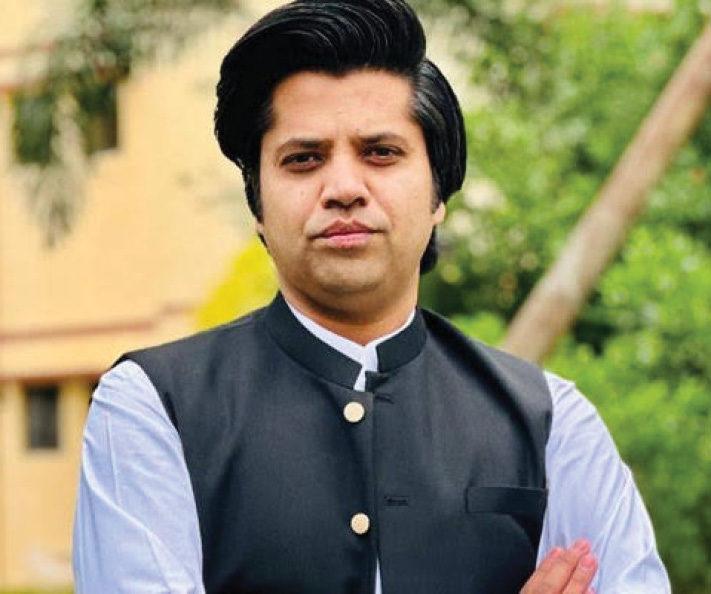
Speaking to APP, Professor Dr. Muhammad Naushad Khan, former Vice Chancellor of Islamia College University Peshawar, said the Two-Nation Theory was “the guiding light for millions of Indian Muslims,” enabling them to achieve their legitimate right to freedom.
“Quaid-e-Azam, Dr Allama Muhammad Iqbal and Sir Syed Ahmed Khan steadfast support for this universally accepted principle made it the cornerstone of the Pakistan Movement,” he said.
The ideological roots of the Two-Nation Theory can be traced back to the mid-19th century. Dr. Naushad noted that the wounds of the 1857 War of Independence were still raw when the Hindi-Urdu controversy erupted in 1867, sowing deeper divisions between Hindus and Muslims.
“In Banaras, Hindu leaders began a linguistic campaign to replace Urdu with Hindi and the Arabic script with Devanagari. This cultural confrontation not only alienated the Muslim community but also disillusioned early advocates of Hindu-Muslim unity,” Dr. Naushad remarked.
Sir Syed Ahmad Khan, once a proponent of Hindu-Muslim harmony, changed his outlook following this dispute. His experience during the controversy led him to emphasize the separate identity of Muslims and their need for educational, economic, services and political empowerment through the Aligarh Movement.
As tensions between the two communities intensified, leaders and thinkers began articulating the distinctiveness of Muslim civilization in the subcontinent.
Great poet philosopher Dr. Allama Muhammad Iqbal, in his historic 1930 address at the All-India Muslim League’s annual session in Allahabad, explicitly called for a separate Muslim state in northwestern India effectively giving political shape to the Two-Nation Theory.
“Later, in his correspondence with Quaid e Azam Muhammad Ali Jinnah from 1936 to 1938, Dr Allama Muhammad Iqbal reinforced the idea of a separate homeland for Muslims, grounded in religion, authentic and cultural identity,” Dr. Naushad explained.
Quaid-e-Azam Muhammad Ali Jinnah, who had once worked with the Indian National Congress, gradually distanced himself from the idea of a united Indian nationalism after sering hatred and prejudices of hindus against muslims.
Facing fierce opposition, including from Muslim leaders allied with the Congress and religious scholars from Deoband, Quaide e Azam held firm in his belief that Hindus and Muslims were “two nations” with incompatible ideologies and ways of life.
“The Quaid’s rejection of Congress leadership offers and his refusal to dilute the Muslim cause proved decisive. His unwavering commitment ultimately positioned the All-India Muslim League as the sole representative of Indian Muslims,” said Dr. Naushad.
The three historic visit of legendary Quaid-e-Azam to Khyber Pakhtunkhwa had played a pivotal role in galvanizing support for the Pakistan Movement. His speeches and engagements in the province energized the local population and Muslim League workers.
In the 1946 provincial historic elections, the All India Muslim League won overwhelming support, solidifying its status as the true voice of Indian Muslims.
“Following that landslide victory by Muslims League, the independence movement became unstoppable,” said Dr. Naushad. “This was the turning point where the two nations theory translated into irreversible political momentum.”
With continued peaceful political struggle, the historic Pakistan Resolution passed on March 23, 1940, became reality within just seven years.
On August 14, 1947, Pakistan emerged as a sovereign state for the Muslims of South Asia—a nation built on the ideological framework laid by the Two-Nation Theory.
“14th August is not just Pakistan’s Independence Day,” Dr. Naushad emphasized, “it is the day when Muslims of the subcontinent secured a homeland to live with dignity, religious freedom, and cultural pride.”
Even today, the legacy of the Two-Nation Theory and Quaid-e-Azam’s advocacy remains central to Pakistan’s national discourse. It serves as a historical reminder of the sacrifices and ideological clarity that led to the birth of a nation.
“The story of Pakistan’s creation is incomplete without understanding the significance of the Two-Nation Theory,” Dr. Naushad concluded.
“It was more than a political slogan but a deeply rooted conviction, one that changed the course of history.”