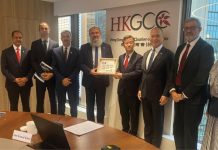
Anjum Nisar stresses Phase II can lower production costs and open new export markets
ISLAMABAD
The Federation of Pakistan’s Chambers of Commerce and Industry’s Businessmen Panel (BMP) has called on the government to use the second phase of the China-Pakistan Economic Corridor (CPEC) as a springboard for green industrialisation, arguing that only a pivot to sustainable production can deliver long-term economic growth.
In a statement issued on here today, BMP chairman Mian Anjum Nisar said the government must weave renewable energy, low-carbon technologies and environmentally responsible manufacturing into every new corridor project if Pakistan wants to cut its import bill, improve competitiveness and protect the environment.
FPCCI former president noted that CPEC’s initial focus on infrastructure and energy has created a platform for deeper industrial cooperation with China. Now, they said, Phase II offers a strategic opportunity to integrate green finance, eco-friendly industrial parks and modern supply chains.
“Pakistan has already benefited from Chinese investments in renewables, solar panels and electric vehicles, but these gains need to be expanded and systematised,” the statement read. “The world’s buyers are increasingly putting a premium on sustainability. If our industries lag behind, we risk losing export markets. This is about making Pakistan a credible player in the 21st century global economy.”
Anjum Nisar said CPEC must not be treated as merely an extension of roads or power plants but as a vehicle for transforming how Pakistan produces and consumes energy. “High energy costs, tariff volatility and dependence on imported fuels are strangling our manufacturing sector,” he said. “Phase II should prioritise renewable power, energy-efficient technologies and green Special Economic Zones. This would not only reduce Pakistan’s carbon footprint but also stabilise energy costs and give our exporters a competitive edge. A green industrial base also makes it easier to meet the strict environmental and social standards that are now prerequisites for entering European, North American and Middle Eastern markets.”
He warned that inflationary pressures—rising fuel, electricity and raw material costs—are squeezing factories, pushing up consumer prices and undermining export competitiveness. Unless production becomes greener and more efficient, he cautioned, Pakistan’s manufacturing base will struggle to survive global shocks. “Green industrialisation is not an environmental fad but an economic necessity to shield our industries from external shocks and rising costs,” Anjum said. “
If we keep producing the old way, our cost of doing business will stay among the highest in the region and we will keep losing orders to countries like Vietnam, Bangladesh or Turkey which are embracing greener supply chains.”
The BMP leader urged the government to announce targeted incentives such as tax breaks, subsidised green finance and preferential treatment for companies embracing sustainable practices. They called for the creation of dedicated green industrial zones under CPEC Phase II, where clean energy, water recycling, waste management and eco-friendly supply chains are standard. Such special zones, they argued, would attract foreign direct investment, technology transfer and help build value-added exports. “We are not just asking for relief,” the statement said. “We are offering a roadmap to make Pakistan a manufacturing hub for clean technology components, renewable energy equipment and low-carbon goods which the world is demanding.”
According to BMP chairman, integrating green finance into CPEC’s framework—through green bonds, debt-for-nature swaps and concessional funding windows—would enable Pakistan to tap into China’s rapidly evolving climate finance ecosystem. Policymakers were also urged to coordinate across ministries to align industrial, energy, trade and environmental policies and to introduce clear regulations and standards for green technologies, streamlined approvals and capacity building for both workers and investors. The Panel said this alignment will reduce uncertainty for investors and accelerate project implementation.
Anjum Nisar emphasised that Pakistan’s private sector is ready to commit investment and innovation but government support is essential. “Investors must be confident that regulatory risk is low and energy policies stable. We need subsidies or grants for first movers and a clear policy roadmap with minimum renewable energy shares in SEZs and mandatory efficiency standards,” he said.
“There is a real appetite in our business community to shift to solar, wind, electric transport and circular manufacturing, but the state has to provide the enabling environment.”
He added that CPEC’s green industrialisation potential also means job creation at home. “Green industrial zones can become incubators for thousands of small and medium enterprises producing components, materials and services for the new economy,” Anjum said.
“This would lift incomes, create decent work and give our youth a future in high-tech, environmentally responsible industries rather than in low-wage, low-skill sectors.”
The BMP chief said that Pakistan has an opportunity to reposition itself from a commodity-based economy to a value-added, technology-driven one. With climate change already affecting agriculture and supply chains, adopting low-carbon pathways would also strengthen national resilience.
“It’s no longer possible to separate economic policy from climate policy,” the Panel said. “CPEC Phase II can be the bridge between the two if we take the right decisions now.”