WASHINGTON D.C
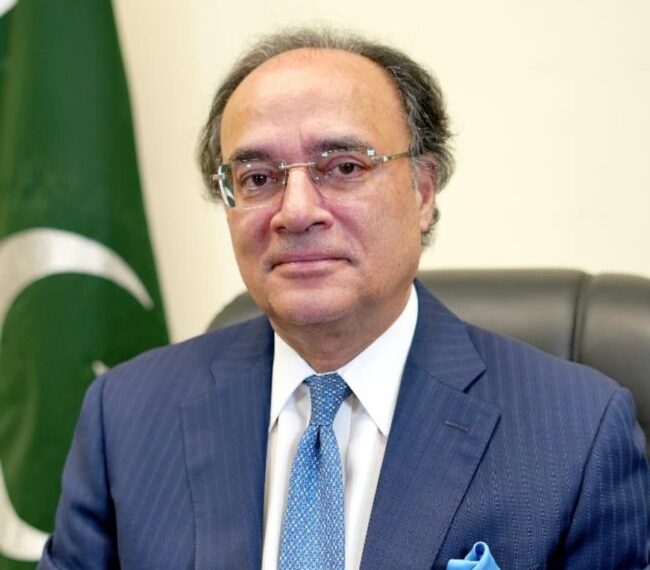
Federal Minister for Finance and Revenue Senator Muhammad Aurangzeb continued his high-level engagements on the second day of the IMF-World Bank Annual Meetings, holding a series of pivotal meetings with officials from the U.S. government, the International Monetary Fund (IMF), the World Bank, the Saudi Fund for Development (SFD), and leading international investors.
The Finance Minister held a productive meeting with Mr. Emory Cox, Special Assistant to the U.S. President for International Economic Relations; Mr. Ricky Gill, Senior Director for South & Central Asian Affairs; and Mr. Pierre Yared, Acting Chair of the Council of Economic Advisors at the White House.
Recalling his recent interactions with U.S. Commerce Secretary Howard Lutnick and USTR Ambassador Sarah Greer in July, the Minister emphasized the need to translate the emerging consensus on trade into a broader economic partnership. Discussions focused on leveraging investment opportunities in energy, minerals, agriculture, technology/IT, and digital assets. He also acknowledged appreciation for U.S. condolences over recent flood-related losses in Pakistan.
Senator Aurangzeb also met H.E. Sultan Abdulrahman Al-Marshad, CEO of the Saudi Fund for Development (SFD), where he reaffirmed the strategic partnership between Pakistan and the Kingdom of Saudi Arabia. He thanked the SFD for the Saudi Oil Facility and sought further collaboration on key infrastructure projects including the Hyderabad–Sukkur Motorway (M-6), Main Line-1 (ML-I), skills development, and IT infrastructure.
He welcomed the SFD’s assurance of support for Pakistan’s digitalization agenda.
In a constructive meeting with Mr. Nigel Clarke, Deputy Managing Director of the IMF, the Finance Minister acknowledged the IMF’s appreciation of Pakistan’s program performance and reaffirmed the government’s resolve to sustain the trajectory of stability and reform. He thanked the IMF for its support in the second review of the Extended Fund Facility (EFF) and the first review of the Resilience and Sustainability Trust (RST), expressing hope for an early Staff-Level Agreement (SLA). He also acknowledged conveyed gratitude for IMF’s condolences over recent flood-related losses.
In his address at the G-24 Ministers & Governors’ Meeting, the Finance Minister highlighted the macroeconomic stability achieved by Pakistan, which is underpinned by structural reforms in taxation, energy, and state-owned enterprises (SOEs). He also emphasized the importance of regional trade corridors and global cooperation on climate change.
The Finance Minister also engaged leading institutional investors at a roundtable hosted by Jefferies International. He briefed participants on Pakistan’s economic outlook, fiscal and monetary developments, external sector dynamics, and ongoing IMF engagement. He outlined major reforms in taxation, energy, and privatization, as well as the Government’s tariff policy for boosting exports. The session concluded with an interactive Q&A with investors.
In a meeting with Mr. Ousmane Dione, Regional Vice President for MENAAP at the World Bank, Senator Aurangzeb reaffirmed the Government’s commitment to the effective implementation of the newly launched Country Partnership Framework (CPF). He informed that a comprehensive implementation plan had been developed with full buy-in from provincial governments. He stressed the need to optimize Pakistan’s access to available IDA windows and requested support for a long-term flood mitigation program under the CPF to strengthen climate resilience.
In a significant meeting with Mr. Ahmed Abdelaal, Group Chief Executive Officer of Mashreq Bank, and its senior management, the Finance Minister celebrated the long-standing partnership between Pakistan and the globally acclaimed financial institution. The Minister expressed confidence that Mashreq’s formal entry into the market will serve as a catalyst, strengthening Pakistan’s financial ecosystem and driving innovation. He extended congratulations to the management on the bank’s successful commercial launch and reaffirmed the government’s unwavering commitment to fostering a supportive policy environment for the long-term growth and success of Pakistan’s financial sector.
The Finance Minister also participated in the Mission Agri-Connect: Farms, Firms & Finance for Jobs dialogue, where he underscored agriculture’s central role in Pakistan’s economy. He advocated for reduced government intervention in procurement and price controls, while calling for support mechanisms such as subsidized financing, first-loss guarantees, and uncollateralized credit for farmers. He emphasized the need for greater private sector investment in cold chain logistics, warehousing, and value addition in horticulture. He praised the World Bank’s 10-year CPF for its strong focus on climate resilience and decarbonization, echoing President Ajay Banga’s call to adopt proven models from other successful jurisdictions.