Mehar Rehman Ali
The Pakistan Navy has long been regarded as the guardian of the nation’s maritime frontiers, protecting the country’s sovereignty across the Arabian Sea. Yet, its mission transcends warfare and deterrence. The Navy’s humanitarian vision-anchored in duty, compassion, and service-has positioned it as a force for peace, stability, and human welfare both at home and abroad. Whether responding to natural disasters, rescuing those in distress at sea, or contributing to global peacekeeping efforts, the Pakistan Navy continues to demonstrate that true strength lies not only in arms but in humanity.
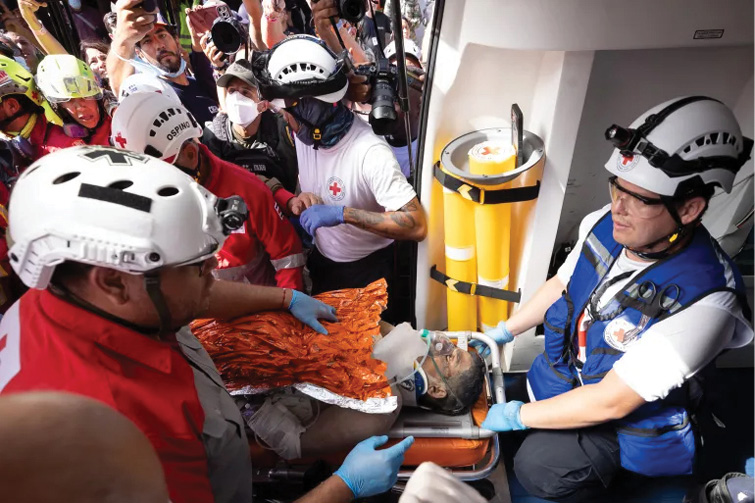
Pakistan’s coastline, stretching over 1,000 kilometres, is home to countless fishermen and coastal communities that depend on the sea for survival. The unpredictable nature of the ocean, coupled with seasonal storms, often exposes these communities to grave danger. The Pakistan Navy’s Search and Rescue (SAR) operations have saved innumerable lives over the decades. Naval Aviation units, equipped with helicopters and maritime patrol aircraft, routinely conduct surveillance to monitor vessel safety. When distress calls are received, swift rescue teams are dispatched-often braving harsh weather and rough seas to bring people to safety. The Navy also collaborates with the Pakistan Maritime Security Agency (PMSA) to ensure the security and welfare of seafarers within Pakistan’s Exclusive Economic Zone (EEZ). These efforts not only reflect the Navy’s professional excellence but also its unwavering commitment to humanitarian service.
Throughout Pakistan’s history, the Navy has played a vital role in responding to national emergencies and natural disasters. From earthquakes to floods and cyclones, the Navy has consistently been among the first institutions to mobilise for relief operations.
During the 2005 earthquake, naval personnel set up emergency camps in devastated areas, providing food, shelter, and medical care to displaced families. In the 2010 and 2022 floods, naval teams rescued stranded civilians, restored communication lines, and delivered essential supplies to remote regions cut off by rising waters. The Navy’s hospital ships and medical units treated thousands of patients, often operating in difficult terrain where no other service could reach. Similarly, when Cyclone Phet (2010) and Cyclone Nilofar (2014) threatened Pakistan’s coastal areas, the Navy carried out timely evacuations and coordinated with civil authorities to mitigate damage. Such operations highlight how the Navy stands not only as a shield in war but as a pillar of relief in times of peace.
Recognising the growing importance of humanitarian readiness, the Pakistan Navy has institutionalised Humanitarian Assistance and Disaster Relief (HADR) operations as a core part of its mission.
The Navy’s fleet now includes vessels equipped for disaster response-capable of delivering medical care, clean water, and emergency supplies to disaster-stricken coastal or island regions. Specialised HADR units conduct regular drills to ensure rapid mobilisation during crises. These efforts are not confined to Pakistan alone; the Navy has extended humanitarian assistance to regional neighbours in need, strengthening goodwill and maritime diplomacy.
For instance, Pakistan Navy ships have delivered relief goods to war-torn Yemen, drought-hit African coasts, and flood-affected Sri Lanka, reflecting Pakistan’s commitment to global humanitarian principles.
The Navy’s humanitarian outlook extends beyond the nation’s borders. Through active participation in multinational maritime coalitions such as Combined Task Force 150 and 151, Pakistan Navy ships help ensure safe and secure sea lanes in some of the world’s most volatile waters. These operations have saved commercial crews from pirates, protected humanitarian convoys, and ensured the free flow of global trade through the Indian Ocean.
Pakistan’s naval officers have also contributed to United Nations Peacekeeping Missions, promoting peace and stability in conflict-affected regions. Their professionalism, discipline, and compassion have earned global respect, enhancing Pakistan’s reputation as a responsible maritime nation.
A shining example of the Navy’s humanitarian diplomacy is the Multinational Exercise AMAN, held biennially in Karachi. AMAN, meaning “peace” in Urdu, brings together naval forces from across the world under the slogan “Together for Peace.” Beyond enhancing naval interoperability, the exercise focuses on disaster response, maritime security, and humanitarian collaboration. Through shared drills and dialogue, AMAN fosters mutual trust and cooperation-proving that unity at sea can pave the way for peace on land.
While ships, submarines, and aircraft define the Navy’s military power, it is the human spirit of compassion that defines its soul. Every sailor who rescues a life at sea, every officer who delivers food to flood victims, and every medical team that sets up a relief camp represents the heart of the Pakistan Navy’s mission-to serve humanity with honour and integrity.
The Navy’s humanitarian operations remind the world that maritime power is not only about control of waters, but also about the protection of lives. In every rescue, every relief effort, and every peacekeeping act, the Pakistan Navy carries forward a legacy of courage guided by empathy.
The writer is a freelance columnist.