For much of the past two decades, US policy in South Asia rested on an assumption that was rarely questioned. India was the partner of consequence, and Pakistan, a problem to be managed. That framework has not disappeared, but recent months have definitely exposed its limits. In Washington, there is a growing recognition that old hierarchies no longer describe regional realities with sufficient accuracy.
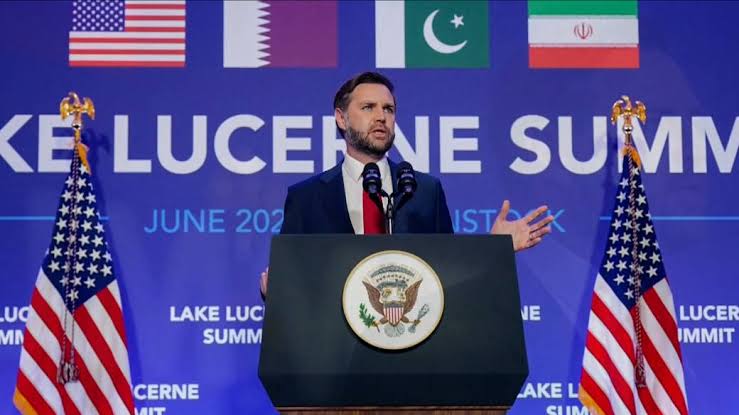
Pakistan’s re-engagement with the United States has been quiet rather than theatrical, shaped less by slogans than by transactional cooperation and steady signalling. Counterterror coordination has resumed without public drama. Diplomatic channels that had narrowed have reopened. Even the tone of official commentary has shifted. When a sitting US president publicly praises Pakistan on several occasions, it clearly marks a significant shift away from the longstanding language of suspicion that has characterised bilateral relations. This change did not occur in a vacuum. India’s political trajectory, increasingly shaped by majoritarian impulses, has complicated the narrative of democratic exceptionalism that once insulated it from scrutiny. At the same time, its regional posture has yielded mixed returns. For Washington, accustomed to seeing South Asia through binary lenses, the recalibration has been overdue. Pakistan’s brief, albeit intense confrontation with India earlier this year appears to have sharpened that reassessment. The episode underscored an aspect often overlooked in foreign capitals: Islamabad’s capacity for discipline and control in moments of stress. That mattered because it reinforced a perception of institutional coherence–a quality Washington values even when it disagrees with policy choices. The renewed engagement has inevitably drawn attention to Pakistan’s security establishment. High-level military-to-military contacts, long a feature of the relationship, have regained prominence, and recent gestures from Washington suggest a willingness to rebuild operational trust. The approval of an upgrade package for Pakistan’s F-16 fleet reflects this pragmatic turn. Nor is Pakistan’s role being reconsidered solely within a South Asian frame. American officials increasingly view Islamabad as a useful interlocutor in a wider arc stretching from the Gulf to Central Asia. Conversations touching Gaza, Iran, and regional stability have included Pakistan as an active participant. That inclusion should be understood as an opportunity rather than alignment, an opening rather than a guarantee. For Pakistan, this moment carries both promise and risk. History offers ample warning against mistaking access for influence or goodwill for permanence. External interest is most durable when anchored in internal credibility.
Economic reforms and institutional balance at home will ultimately determine whether renewed attention translates into lasting leverage abroad. Still, it would be disingenuous to deny that a threshold has been crossed.
The notion that Pakistan could be indefinitely marginalised has lost its force. All in all, 2025 has unsettled settled assumptions in Washington and Delhi alike. Moments like this are rare. They are also fleeting. Celebration, therefore, should be measured, grounded in awareness that partnerships endure only when underwritten by consistency and reform. Pakistan has been accorded space. How it uses it will decide whether this episode becomes a turning point or another brief correction in a long, uneven relationship.