Shahzeb Amin
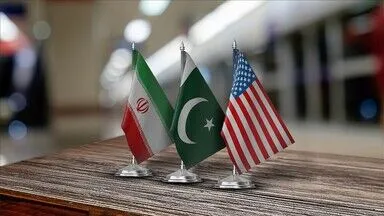
In the world we find ourselves in, the international system increasingly demands certainty. Not clarity of purpose, but clarity of alignment. States are expected to signal loyalty loudly and often. Thus, foreign policy is no longer judged by outcomes or coherence, but by proximity to power. Those who refuse to declare allegiance are quickly labelled ambiguous. Those who engage broadly are accused of hedging. Pakistan, by choosing strategic autonomy over rigid alignment, has found itself subjected to precisely this framing.
Yet this interpretation misses the point entirely.
Pakistan’s contemporary foreign policy reflects not indecision, but evolution. It marks a departure from alignment-driven diplomacy toward a more measured, interest-based approach consistent with middle-power statecraft. In an era of shifting centres of influence and economic uncertainty, this posture is not only rational, it is sustainable.
Historically, Pakistan’s external engagements were often shaped by necessity rather than choice. Strategic partnerships brought short-term leverage, but they also narrowed diplomatic space and constrained policy flexibility. Over time, the costs of over-dependence became evident. Policy cycles were tied to external priorities, and foreign policy was seen as more reactive than autonomous.
Today’s global environment is markedly different. Power is dispersed across regions and institutions. Economic influence no longer flows exclusively from a single direction. Trade, technology, labour, and capital move along intersecting pathways rather than alliance lines. For states like Pakistan, this reality demands adaptability, not attachment. And, non-alignment, in its modern form, offers precisely that.
Critics often seek a singular orientation from Pakistan, mistaking coherence for conformity. But foreign policy maturity lies not in choosing sides, but in defining interests clearly and pursuing them consistently. Pakistan’s emphasis on economic diplomacy and multilateral engagement reflects an understanding that long-term stability is built through breadth, not dependency.
Middle-power diplomacy requires restraint. It privileges predictability over posturing. Pakistan’s approach has increasingly favoured institutional engagement, economic cooperation, and calibrated diplomacy rather than rhetorical alignment. This is particularly evident in its expanding focus on trade, investment, labour mobility, and development partnerships across multiple regions. Foreign policy, in this framework, becomes a tool for national consolidation rather than external validation.
There is also a reputational dimension to this shift that is often overlooked. States that demonstrate consistency and autonomy command greater respect over time. Partners may not always agree, but they learn to engage on the basis of mutual recognition rather than expectation. Pakistan’s refusal to frame its diplomacy around loyalty tests, signals confidence in its own agency. It suggests a state comfortable enough to negotiate without dependency and cooperate without submission.
Importantly, non-alignment does not equate to disengagement. Pakistan remains diplomatically active and institutionally present. National development and economic resilience now sit at the centre of foreign engagement. This recalibration reflects an understanding that sovereignty is not preserved through proximity to power, but through the ability to make independent choices.
In many ways, Pakistan’s trajectory mirrors a broader global trend. Across the developing world, states are reassessing the utility of rigid alignments in an era marked by volatility. Non-alignment is no longer an indication of abstention; it is a method of displaying participation without entanglement. Pakistan’s foreign policy fits squarely within this contemporary reality.
To interpret this approach as ambiguity is to underestimate its discipline. Strategic autonomy requires constant calibration and diplomatic effort. It demands resisting external pressures while maintaining engagement. Pakistan’s ability to do so reflects growing confidence in its institutions and a clearer articulation of national interest.
By choosing non-alignment and middle-power diplomacy, Pakistan is not avoiding responsibility. It is simply exercising it. This approach offers flexibility in a crowded diplomatic landscape, and sustainability in a time of rapid change. It is a foreign policy shaped not by impulse or pressure, but by experience.
In an international system increasingly defined by noise and polarisation, Pakistan’s quieter, more deliberate approach may lack spectacle. However, it offers something far more valuable. Endurance.
The writer holds a Masters of Science in Negotiation and Conflict Resolution from Columbia University.
Courtesy