Rakhshanda Mehtab
When we talk about the state’s most fundamental promise to its people, we must start with the protection of life. It is the bedrock of the social contract. That is the lens through which the situation in Tirah must be viewed, cutting through the noise of a narrative that has been carefully and deliberately crafted to obscure this basic truth.
The portrayal of security operations there as a wholesale human-rights crisis is a profound misrepresentation. It conveniently sidelines Pakistan’s constitutional obligations and its binding international duties to counter terrorism. Yes, protecting civilians is an absolute legal and moral priority. But so is the state’s responsibility to neutralise armed groups that operate from volatile border regions, using those very civilians as a shield. To ignore one duty in the name of the other is not advocacy; it is a surrender to chaos.
Let’s be clear: the Pashtun population of Khyber Pakhtunkhwa is fully within Pakistan’s constitutional framework. They are entitled to security, protection, and the rule of law just as any other citizen. Portraying lawful, necessary counter-terrorism measures as a form of ethnic persecution is not just factually wrong; it is a dangerous distortion of both legal principles and ground realities. The actions in Tirah must be evaluated on the basis of legality, necessity, proportionality, and sovereignty, not on politically charged rhetoric. The Constitution does not allow for security vacuums, and international law does not tolerate terrorist safe havens.
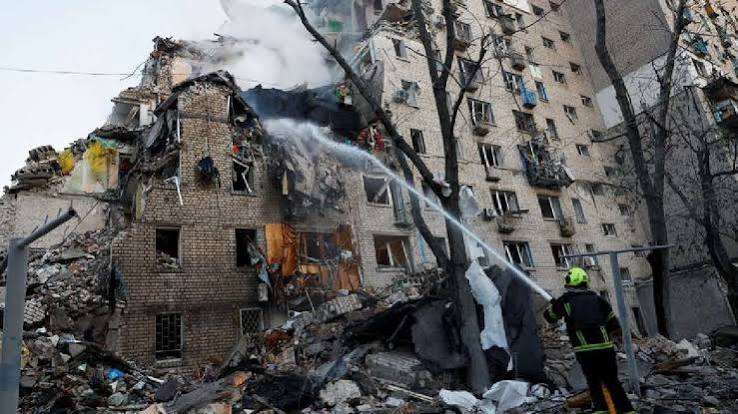
Consider the facts on the ground. For years, Tirah Valley suffered under the brutal control of Khwarij terrorist groups like the TTP that destroyed schools, targeted elders, and imposed a reign of extortion and fear. They didn’t just occupy the land; they weaponised it, embedding themselves within civilian areas to deter a response, betting that the state would hesitate. But when terrorists burn homes and threaten to bomb residential areas, inaction is not neutrality; it is complicity. The resulting displacement is a tragedy, but its cause is terrorism, not state policy. The state’s duty in such a scenario is to temporarily relocate civilians for their own safety, facilitate their return, and support rehabilitation, a process actively underway, and one mandated by international norms.
Under Pakistan’s Constitution, specifically Article 9 and Article 245, the state is legally obligated to protect citizens from armed violence. This isn’t political discretion; it is a constitutional duty. When terrorist groups exploit terrain like Tirah to plan attacks, the state has no option but to act. Internationally, UN Security Council Resolution 1373 legally obligates Pakistan to deny safe havens and dismantle terrorist bases. Calls for ending operations prematurely, as some narratives demand, would place Pakistan in breach of binding international law. You cannot champion international law while demanding a state abandon its counter-terrorism responsibilities in the face of ongoing armed attacks.
The attempt to frame this as an ethnic issue collapses under the slightest scrutiny. Pakistan’s Constitution does not recognise ethnicity as a security criterion. These operations are geography-based, threat-driven, and intelligence-led. To label them “anti-Pashtun” is a legal misrepresentation. Pashtuns are the second-largest ethnicity in Pakistan, serving with distinction in the armed forces, judiciary, and civil service. They have borne the brunt of terrorist violence. The law addresses actions and threats, not identity. The narrative that seeks to divide on ethnic lines forgets a simple fact: when regions merge, minorities join majorities. Pakistan’s integration of the former FATA gave its Pashtun citizens constitutional rights and political representation for the first time, a historic achievement that certain narratives strangely ignore.
There is a dangerous fantasy at play here: the idea that peace can be negotiated in the presence of active, armed groups holding territory. International jurisprudence affirms a state’s right to use force against such non-state actors when threats persist. Dialogue is a post-stabilisation process, not a substitute for security enforcement. You cannot have peace while terrorist infrastructure remains intact; that is not peace, it is a pretence.
Furthermore, we must recognise campaigns that amplify this one-sided narrative for what they often are: an undermining of Pakistan’s sovereignty. Under the UN Charter, internal security matters fall within a state’s domestic jurisdiction. Advocacy that aligns with external agendas and demands an end to lawful security operations strays into the realm of political interference.
So, let’s align the narrative with reality:
The claim is that security operations violate human rights. The reality is they enforce the most basic right: the right to life.
The claim is that civilian areas are off-limits. The reality is that terrorists gain no legal immunity by hiding among homes.
The claim is that displacement equals persecution. The reality is that it is a temporary, regulated protective measure.
The claim is of ethnic targeting. The reality is threat-based enforcement.
The claim is of peace without force. The reality is that lawful force is the prerequisite for sustainable peace.
In the end, Pakistan’s operations in Tirah are constitutionally authorised, internationally lawful, strategically necessary, and ethnically neutral. The real violation of human rights would be allowing terrorism to persist under the false banner of restraint. The people of Tirah have seen through the lies; they are cooperating with security forces, understanding that this fight is for their future. Pashtuns do not oppose security; they suffer most when it fails. Pakistan’s resolve is directed not against its people, but against the armed actors who endanger them all. Sovereignty exercised through law is not militarisation. It is governance. It is, in fact, the state keeping its first and most solemn promise.
The writer is MS Research Scholar at IIUI, a freelance content writer and a columnist.