Najm us Saqib
Absolute power not only corrupts absolutely but also produces results — a dangerous transformation evident across history. In antiquity, power was exercised physically through conquest, enslavement, and tribute, exerting direct control over land, resources, and bodies. It was checked only by rebellion or collapse. Today, absolute power operates through more seamless, systemic channels: the unchallengeable influence of digital platforms, the legal impunity of surveillance states, the sheer force of global capital, and the weaponisation of information to shape reality itself.
The modern aspirant to supremacy no longer needs to declare himself a god-king. As demonstrated by the trajectory of President Donald Trump, dominance can be achieved by controlling the systems that shape public discourse and the legal frameworks that legitimise authority — all in the name of democracy. Absolute power in the digital age aims not merely to crush opposition, but to render it invisible, or complicit in its own subjugation. Indeed, America is being made great again…!
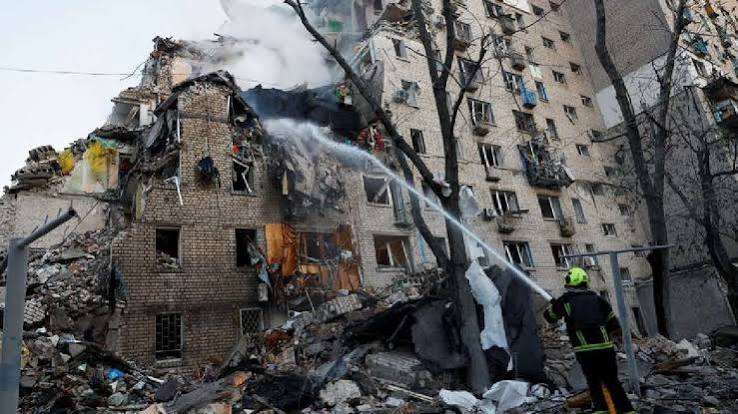
This evolution is mirrored in the deliberate erosion of the very systems designed to contain such power. The United Nations, the long-standing pillar of the post-war rules-based order, is in profound and possibly terminal crisis. Conflicts from Ukraine to Gaza have not tested the system but revealed its paralysis. What was once a post-war compromise has become a kill switch, transforming the body from a forum for collective security into a theatre of functional obsolescence.
The global pattern is instructive. Conflicts in Ukraine, Gaza, the Sahel, and the South China Sea are not failures of diplomacy but proof of its successful neutralisation. Each serves as a live demonstration that the rule of law is subordinate to the rule of power. When the International Court of Justice issues rulings that vanish into the ether of geopolitical disregard, the binding judgements become mere press releases. Such political theatrics teach us a hard lesson: the multilateral sanctuary is closed; you are on your own.
Initiatives like the proposed ‘Board of Peace’ exemplify this decisive shift. Far from a multilateral forum, it represents a conscious architectural effort to replace structures like the UN with a directorate of power. Its draft charter, demanding a hefty financial buy-in, transparently converts diplomacy into a transactional enterprise. The objective is to sideline traditional alliances and dismiss erstwhile partners as secondary. The inclusion of traditional rivals or their silence signals a radical realignment — an endorsement of a world explicitly carved into acknowledged spheres of influence, where aggression is met with strategic silence.
The strategy revolves around ruthless economic statecraft. Tariffs are wielded not merely for gain but as precise instruments of political manoeuvring. Acquiring Greenland or even the entire Arctic serves as a template: security alliances are subordinated to commercial demands, reframing allies as competitors to be leveraged. The calculated chill from Ottawa to Berlin is not a diplomatic misfire but a signal — the future of traditional alliances hinges on acquiescence to a new business logic.
The emerging paradigm, therefore, is one of managed chaos and transactional dominance. The playbook appears deliberate: secure resources, pressurise rivals, and co-opt wealthy nations, while tolerating other powers’ ventures within informally assigned spheres. Prosperity is redefined as continued access to the markets and financial systems of the powerful — trying to create a global economy of choice. Confronting this reality, European powers now reluctantly recognise that the political and security framework underpinning their existence for 80 years is evaporating.
The Board of Peace, in this light, does not seem a path to stability but the formal charter for an age of modern realpolitik. Its tacit acceptance by the other major powers is revealing; it functions not as a genuine forum but as a tool for consolidating a new hierarchy. For aspiring nations — a Pakistan seeking leverage on Kashmir, or a Gulf state protecting its future — joining represents less an endorsement than a grim pragmatism, a choice to stay in the room where decisions are made, however inequitable the terms.
This brings us to the critical nuance: the new system is a contested hierarchy. China does not stand as a simple moral counterweight but as the system’s most potent internal competitor and necessary balance. Its alternative model of state-centric finance presents a rival pole within the same paradigm of civilisational sovereignty and sphere-of-influence politics. The tension between these poles creates fissures whereby smaller actors can still manoeuvre, albeit at great risk. Hence, the future belongs not to the virtuous but to the agile sovereign who can exploit these fractures.
The question, therefore, is no longer about reforming the UN but about navigating a world where the ancient tools of statecraft have been resurrected under a digital-age veneer. We are witnessing the rise of the Digital Leviathan: a global power system that seeks not to conquer territory outright, but to govern the very conditions of possibility. It projects power unilaterally through tariffs, cyber operations, and forced frameworks, cloaking ancient practices through data flows, network access, and compliance protocols.
A clarification is needed for those anticipating President Trump’s impeachment: a successor may not be able to halt the ongoing eco-political strategy. They may only render it more covert. The game of Monopoly is likely to persist. In Hobbes’ Leviathan, people surrendered rights to an absolute sovereign to avoid chaos. The modern Leviathan is perhaps the most formidable cage humanity has yet built. The world is thus forced into a stark pragmatism, confronting the irony that interdependence has created not equity, but a more efficient and unaccountable dominion — a Digital Leviathan. We are only beginning to hear the new digital lock click decisively into place.
The writer is a former Ambassador of Pakistan and author of eight books in three languages. He can be reached at najmussaqib1960@msn.com
Courtesy