There is a distinction in just war theory that most people instinctively understand but rarely articulate precisely: the difference between pre-emptive and preventive war. It is the difference between striking an enemy who is about to attack you and striking an enemy who might attack you someday. The first can be justified. The second cannot. It is, morally and legally, aggression.
In his landmark work Just and Unjust Wars (1977), moral philosopher Michael Walzer argues that we can, and must, ask whether any given war is just. His argument rests on two pillars. The first is jus ad bellum: the justice of going to war at all. The second is jus in bello: justice in how the war is fought. They are independent of each other. A just cause can be prosecuted unjustly, and an unjust war can be fought with restraint.
On the question of when war is justified, the answer is unambiguous. War is only legitimate in response to aggression, actual or imminently threatened. Just war theory draws a careful, important line between preventive war and pre-emptive war. A pre-emptive strike is morally permissible when the threat is imminent: when the enemy has already decided to strike, is mobilising, and the moment is upon you.
The paradigm case is Israel in June 1967, where Egyptian forces massed on the border with declared intent to destroy. That is legitimate pre-emption. (A side but related note: Walzer, whose ideas I’m drawing on, is himself a Zionist, which makes its implications for today all the more interesting.)
But preventive war, which involves striking a potential future threat before it has materialised, is a fundamentally different thing. Preventive war rests on speculative fears about what an adversary might do, not on imminent hostile action. It violates the rights of the attacked state. It is, in the framework of international law, straightforwardly an act of aggression. And aggression is the crime from which all other war crimes flow.
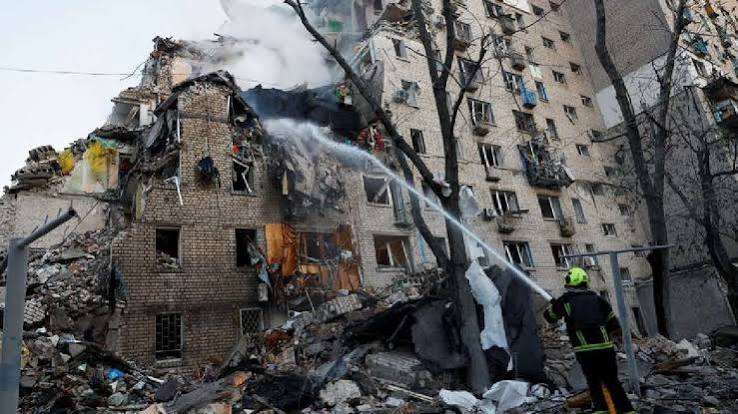
Now apply this to the United States and Israel joint operations (Operation Epic Fury and Operation Roaring Lion) on Iran targeting Tehran, Isfahan, Qom, Karaj, and other cities. Trump announced “major combat operations” with the stated goal of eliminating Iran’s nuclear programme and, more candidly, toppling its government entirely. His words to the Iranian people: “The hour of your freedom is at hand.”
The justification offered was prevention: Iran’s supposed nuclear threat. But here is the problem. The IAEA found no evidence Iran had resumed uranium enrichment.
The Defence Intelligence Agency estimated Iran was at least a decade away from intercontinental missile capability.
The Department of Defence itself assessed that last year’s strikes had set the Iranian nuclear programme back by two years. American and European intelligence officials disputed Trump’s claims. In short: the threat was not imminent. It was speculative, politically inflated, and by the administration’s own prior statements, largely already addressed by previous strikes.