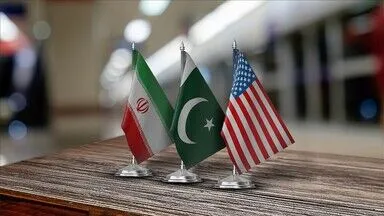
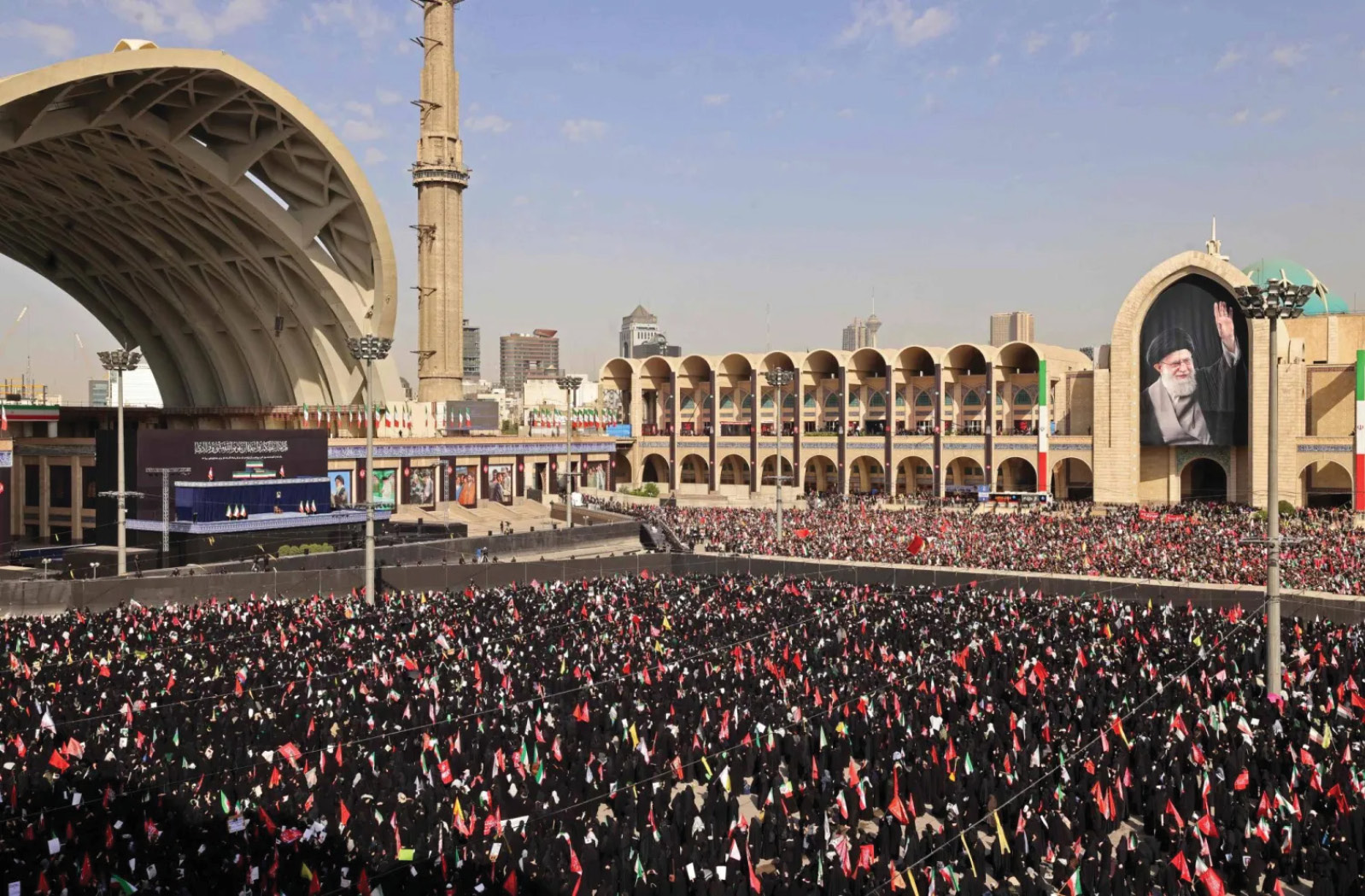
US Secretary of State Marco Rubio offered a striking new justification for Washington’s assault on Iran. The United States, he argued, struck first only after learning that Israel was poised to launch a pre-emptive attack on Iran’s nuclear sites and that Tehran would then retaliate against American forces in the region. “There absolutely was an imminent threat,” Mr Rubio said, adding that Iran had missiles ready to “immediately come after us” if it were hit by Israel. It is impossible for anyone with even the faintest notion of polemology justify this logic as self-defence. What it truly represents is an anticipatory war-by-proxy. Nothing more. Nothing else. The question the administration has not credibly answered is the most basic one. If the US had intelligence that an ally was about to trigger a regional conflagration, why was the first resort not to prevent it–politically, diplomatically, materially–rather than to widen it?
Scepticism has been sharp and notably bipartisan. Senator Mark Warner, the top Democrat on the Senate Intelligence Committee, said launching large-scale operations “particularly in the absence of an imminent threat to the US” raised serious legal and constitutional concerns, and insisted Congress must be fully briefed. Others have raised an equally troubling precedent: if a threat to an ally can be reframed as an “imminent” threat to America, what becomes of the already-fragile constraints on the use of force?
The domestic political fallout suggests the administration is also struggling to carry public opinion. A Reuters/Ipsos poll found only 27 per cent of US adults approved of the strikes. That is not a mandate for a prolonged conflict, and it is not difficult to understand why. After two decades of costly interventions, Americans are weary of open-ended wars and wary of the economic aftershocks that Middle Eastern instability invariably produces.
There is also the question of international legality. Under the UN Charter, force is lawful in self-defence against an armed attack, or when authorised by the Security Council. “Pre-emptive” action has long been contested even under the most charitable reading, and preventive war is widely viewed as unlawful. Pakistan knows, painfully, what happens when wars are entered on inflated premises and vague end-states. The post-9/11 War on Terror consumed Pakistani lives and social cohesion for years on end. As big powersredraw lines, mid-tier states that do not define their interests clearly are pushed into reactive corners. Pakistan cannot afford that.
It must remain anchored to principles that protect its interests: territorial sovereignty, non-intervention, restraint in the use of force, and peaceful settlement of disputes. Iran’s Foreign Minister Abbas Araghchi, condemning what he called “a war of choice on behalf of Israel,” dismissed the notion of an Iranian “threat.” The phrase may be politically charged, but it captures a deeper unease. Wars justified through elastic definitions of imminence and launched in anticipation rather than response have a habit of expanding beyond their intentions.