Rakhshanda Mehtab
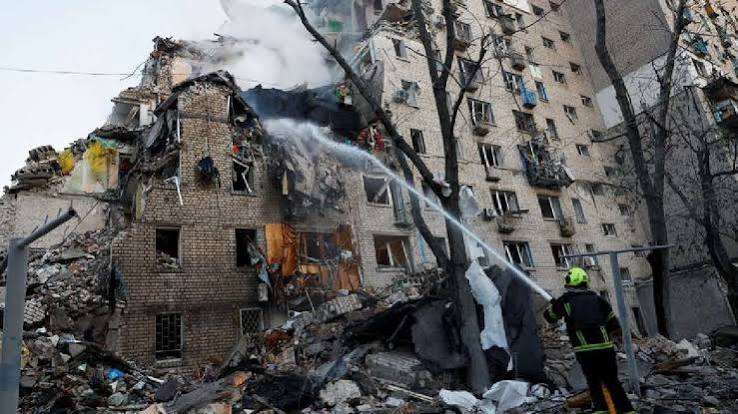
The Taliban regime across the border has mastered the art of sending two things into Pakistan. The first is suicide bombers, dispatched to kill and destroy in our cities. The second is suicide drones, launched to hover over our homes and spread fear. Two exports. Both designed to terrorize.
There are moments in a nation’s journey when patience ceases to be a virtue and becomes a liability. Pakistan recently arrived at such a moment. And when it did, it responded not with emotion, but with precision.
Consider the sequence of events carefully. For an extended period, terrorist groups have operated from sanctuaries inside Afghanistan, using that territory to plan and execute cross-border attacks against Pakistan. The evidence has been consistent. The warnings have been repeated. The response from Kabul has been inadequate.
So when Pakistan launched its recent air operations inside Afghanistan, it did so based on credible intelligence and after exhausting other avenues. The targets were not chosen at random. They were terrorist hideouts, training facilities, logistics hubs, and operational centers used by groups responsible for shedding Pakistani blood. The distinction matters. These were precision strikes directed at those who wage war against Pakistan, not at Afghan civilians or populated areas. That is not aggression. That is the right of any sovereign nation to defend itself.
Now observe how the other side responded. Instead of taking action against the terrorist networks operating from its soil, the Taliban regime chose a different path. It launched improvised drones toward civilian areas inside Pakistan. The quality of these drones was poor, their accuracy questionable, and they caused no significant damage. But that is hardly the point. The intent was to spread fear among ordinary Pakistanis going about their lives. The intent was to create panic where there should be peace.
Herein lies the fundamental contrast. Pakistan struck terrorist infrastructure with restraint and precision. The Taliban responded by targeting civilians with whatever crude means they could muster. One approach reflects a responsible state actor. The other reveals a mindset comfortable with intimidation and indifferent to human life.
This pattern did not emerge in a vacuum. The Taliban regime has consistently provided a permissive environment for groups like the TTP, allowing them to operate, recruit, and launch attacks against Pakistan. Afghan territory has become a staging ground for cross-border terrorism, and those responsible for sheltering these networks continue to look the other way. Symbolic drone provocations cannot hide this reality. They are theatrical gestures designed to distract from the uncomfortable truth that the Taliban regime has positioned itself at the center of regional instability.
Pakistan’s position is straightforward and has been communicated clearly. It cannot allow its civilians, its territory, or its sovereignty to remain under constant threat from militant proxies operating from Afghan soil. There are limits to what any nation can endure, and those limits have been reached.
If the Taliban leadership continues to protect terrorist networks rather than dismantling them, Pakistan will have no choice but to expand its counterterror operations. This means targeting not just the terrorists themselves, but the infrastructure that sustains them: the training centers, the command structures, the logistical networks, the leadership elements that enable this ecosystem to function. These are not threats. These are statements of fact about what self-defense requires.
Let us be honest about what is at stake. A regime that shelters terrorists, exports violence, and destabilizes its neighbors is not merely a security challenge for one country. It is a threat to regional peace and to the basic human security of millions who simply want to live their lives without fear. The instability generated by such patronage networks does not respect borders. It spreads. It infects. It destroys.
Pakistan has shown restraint. It has shown patience. It has shown precision. What it has not shown is weakness. And there is a difference between being patient and being passive. That difference is now clear for all to see.
The path forward will be determined by choices made in Kabul. If the Taliban regime chooses to act against terrorist networks, peace remains possible. If it continues down the current path, protecting those who attack Pakistan and using drones to frighten civilians, then further action becomes unavoidable. No nation can be expected to absorb attacks indefinitely while the perpetrators enjoy sanctuary just across the border.
In the end, this is about something more fundamental than geopolitics. It is about whether a people can sleep peacefully in their homes. It is about whether children can go to school without looking at the sky. It is about whether a nation has the right to exist without constantly defending itself against proxies armed and sheltered by its neighbors.
Pakistan has answered that question with clarity. It will defend itself. It will protect its people. And it will continue to act with the precision and restraint that distinguishes a responsible state from those who send crude drones toward civilian populations. The contrast could not be more stark. And the implications could not be more clear.
The writer is MS Research Scholar at IIUI, a freelance content writer and a columnist.