Defeat on the Scoreboard, Promise on the Field
Islamabad
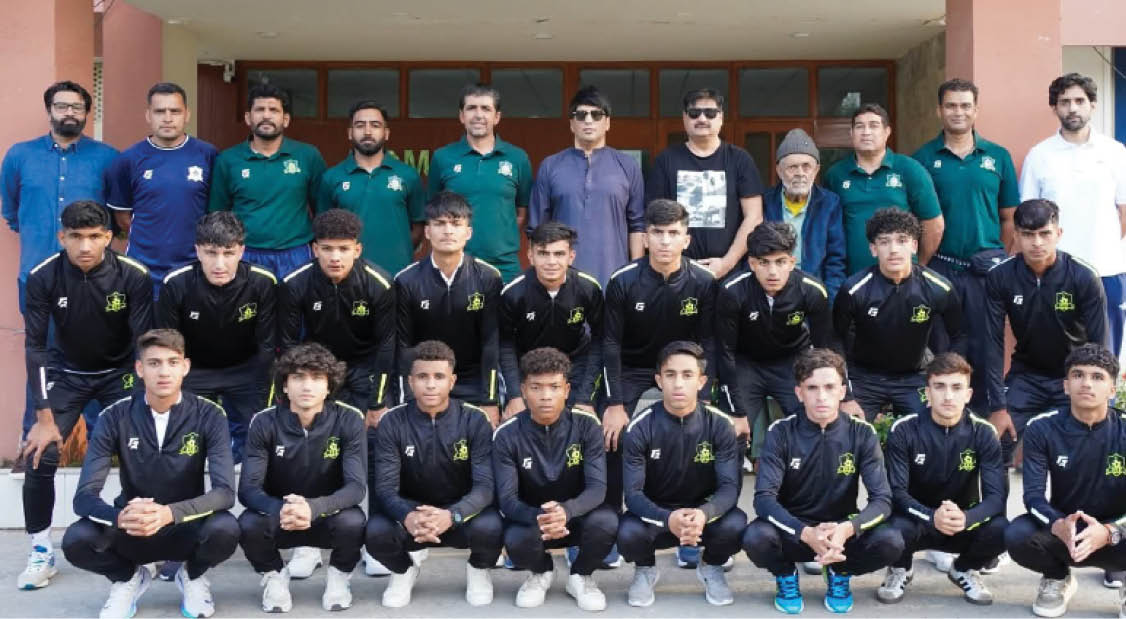
Sometimes, the scoreboard reflects defeat, but the real victory lies in the struggle witnessed on the field. The recently held UEFA Development Under-16 Tournament in Kazakistan proved to be exactly that kind of experience for Pakistan—a journey where results told one story, but performance revealed a far more encouraging future.
For Pakistan, this tournament was not merely a competition; it emerged as a lesson, an exposure, and a ray of hope. While the results may not have gone in Pakistan’s favor, a deeper analysis of the matches highlights a team that displayed resilience, discipline, and a defensive structure capable of laying the foundation for future success.
It is important to acknowledge that the national U-16 team had very limited preparation time. The players endured a long and exhausting journey to Kazakistan and were forced to take on the host team with minimal rest. Unsurprisingly, Pakistan suffered a 1-4 defeat in that opening match. However, this result cannot be viewed in isolation, as fatigue, travel conditions, and lack of preparation all played a significant role.
What followed, however, was both impressive and encouraging. The Pakistani players showed remarkable improvement in their subsequent matches, standing firm against stronger and more experienced sides. Although the forwards struggled to convert chances into goals, the defensive unit proved resilient, denying opponents the freedom to dominate. Notably, no team managed to score more than two goals against Pakistan in the remaining fixtures, and one match even ended in a draw.
This performance becomes even more significant when compared to other teams in the tournament, particularly Russia, which secured dominant victories with large margins. While their technical superiority, fitness, and coordination were evident, Pakistan’s young players demonstrated courage and tactical awareness despite limited resources and preparation time—an achievement that deserves recognition.
The role of the coaching staff was equally commendable. Head coach Essa Khan and assistant coach Mohammad Arshad, both former national captains, utilized their experience and tactical insight to shape the team into a disciplined unit within a short span. Mohammad Arshad’s coaching credentials were already evident when he guided PAF to a historic triumph at the 35th National Games after decades. His influence was once again visible in Kazakistan, where the team remained composed under pressure and competed in every match with determination.
It must be understood that players are not developed overnight. Their growth requires months and years of consistent effort, proper guidance, and structured training. If Pakistan aims to establish itself on the global football stage, the focus must shift toward grassroots development. School-level academies should be introduced to nurture young talent, ensuring not only technical training but also physical fitness, proper nutrition, and access to modern facilities.
Pakistan Football Federation President Mohsin Gilani must take this opportunity to build on the progress shown by this team. Retaining the same coaching staff and providing the squad with at least three to four months of continuous training could transform this potential into tangible success. Additionally, a structured program to introduce football training at the school level is essential for long-term development.
Pakistan is not lacking in talented coaches or former international players. What is needed is a system that recognizes their abilities and integrates them into player development programs effectively.
Following the Kazakistan tour, it is also the responsibility of the Pakistan Football Federation and the Pakistan Sports Board to formally acknowledge and encourage both the team and the coaching staff. Such recognition would not only boost morale but also reinforce a culture of support and professionalism in the sport.
In conclusion, Pakistan’s tour of Kazakistan should not be seen as a tale of defeat, but as a journey of learning and growth. If the lessons from this experience are utilized wisely, this very team has the potential to become a source of national pride in the years to come.