After several weeks of delay, US President Donald Trump and Chinese President Xi Jinping are scheduled to meet in Beijing this week with tariffs on the table, Taiwan in the background, technology controls in the bloodstream and Iran pressing against the edges of the conversation. Yet the real question remains harsh: can the world’s two largest powers still bargain without making smaller states pay the premium?
Thankfully, it does not enter this moment alone. Its relationship with China is not a short-lived affair and has survived wars, diplomatic isolation, economic fragility and the routine suspicion with which Western capitals have often treated Islamabad. Since 2013, Chinese investment linked to CPEC has crossed $65 billion, which is tantamount to a hard strategic bet on Pakistan’s future relevance.
The trouble is not the friendship. The trouble is Pakistan’s own habit of underusing it. A serious state would have converted CPEC’s first phase into export power by now. It would have filled special economic zones with factories, used Chinese supply-chain pressure to attract relocation, pushed agriculture into value-added exports and made Gwadar a commercial instrument rather than a recurring promise in speeches.Local event listings
No qualms about China’s interest. Chinese investment linked to the wider BRI infrastructure in Pakistan has been reported at more than $65 billion, while Pakistan last year announced $8.5 billion in China-linked agreements, including $7 billion in MoUs and $1.5 billion in joint ventures across agriculture, renewable energy, electric vehicles, health and steel. Chinese solar technology has helped change Pakistan’s energy map, with module imports jumping from 3,500MW in 2022 to 16,600MW in 2024. Cheap Chinese panels have done more for ordinary Pakistani rooftops than years of energy sermons from donors.
That is why the next phase of Pakistan-China friendship must be more ambitious. Islamabad should ask Beijing for industrial relocation, mineral processing, seed technology, textile upgrading and above all, an assured market access. It should also protect Chinese workers with the seriousness due to a partner that has absorbed risk on our soil.
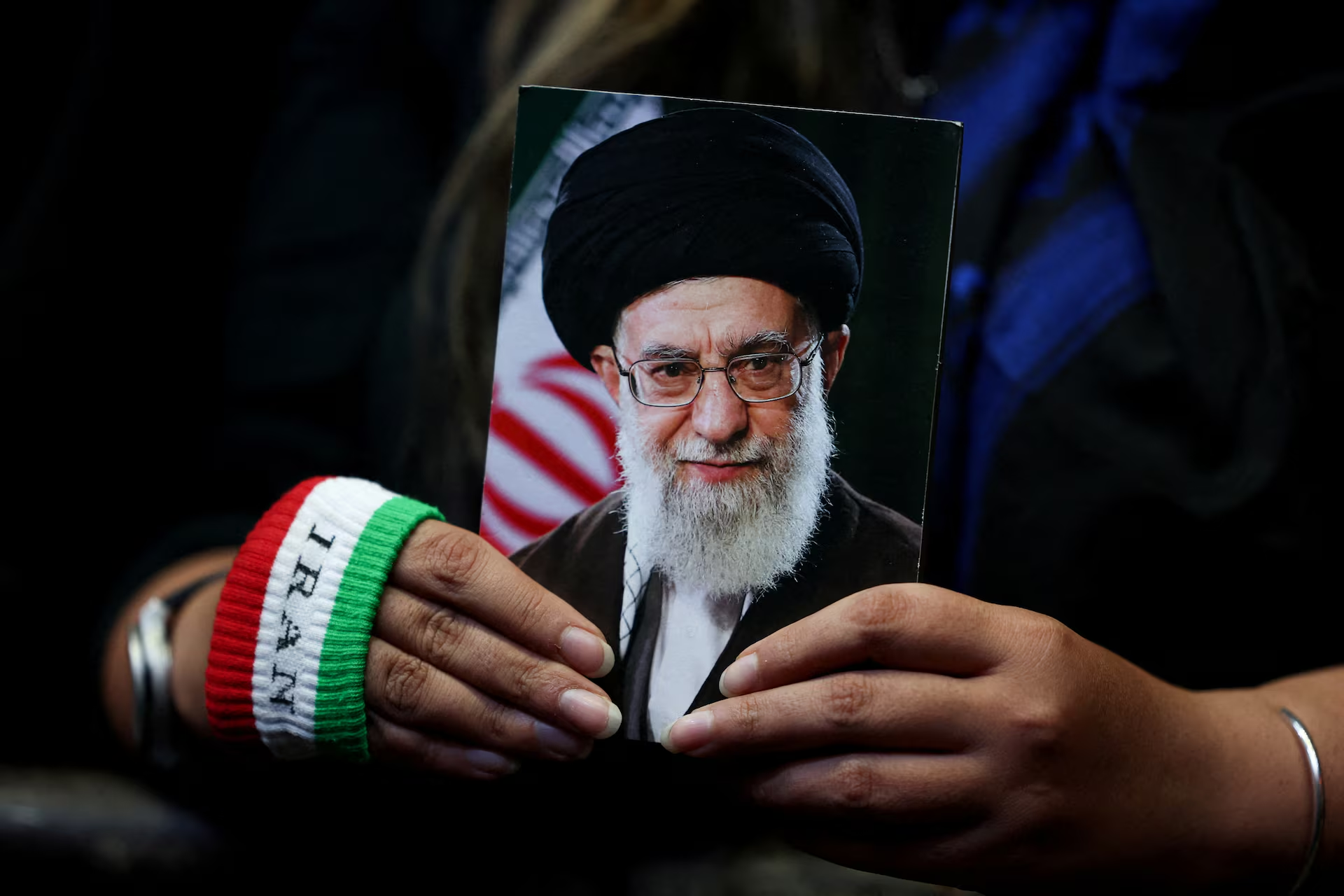
The US-China summit also touches on Iran. Pakistan’s mediation has given Islamabad rare diplomatic weight at a time when instability threatens fuel prices. If China can press Tehran and Trump wants a deal before facing Xi, Pakistan should work with Beijing to push de-escalation that keeps the region from another manufactured catastrophe. Beijing has the economic weight, Tehran’s ear and a direct stake in energy stability, while Islamabad has proximity and credibility with Iran, working channels with Washington and the lived memory of what regional wars do to fragile economies. Used together, these assets can still conjure a narrow miracle before the doomsday clock begins to toll across the Gulf.