Qamar Bashir
When the United States entered into direct military confrontation with Iran in late February 2026, it did so with full knowledge that the battlefield would not be North America, nor would the economic shock primarily devastate the American mainland. The war theatre would be the Gulf itself–the territory, airspace, ports, oil routes, and infrastructure of America’s Arab allies. More importantly, much of the financial burden associated with maintaining this military architecture would ultimately be absorbed by the Gulf states hosting the very bases used to project American power.
From the outset, Washington mobilised an enormous military machine across the region. Carrier Strike Groups 3 and 12 were moved into operational positions, advanced missile-defence batteries were activated, and approximately 50,000 U.S. troops spread across at least 19 military locations in the Gulf were placed on heightened readiness. Major operational hubs such as Al Udeid Air Base, Camp Arifjan, and the U.S. Fifth Fleet headquarters in Naval Support Activity Bahrain became the nerve centres of military coordination.
But while the Pentagon projected military strength, the financial mathematics of the conflict revealed a very different reality. Reports emerging during the first phase of the conflict estimated that U.S. military operations were costing between $890 million and $1 billion per day. In just the first 100 hours, expenditures reportedly reached approximately $3.7 billion. By early May 2026, cumulative operational costs were estimated to have crossed $60-70 billion. These costs included naval deployments, fuel consumption, aerial sorties, missile interceptions, intelligence operations, logistics, and rapid replenishment of depleted weapons stockpiles.
The most alarming aspect for American military planners was not merely the money being spent, but the speed at which strategic inventories were being consumed. Reports indicated that the United States had used nearly half of some of its most expensive missile stockpiles during the confrontation. Replenishment timelines for advanced interceptors and precision-guided systems were estimated at up to four years due to production bottlenecks and industrial limitations. Modern warfare had exposed an uncomfortable truth: even the world’s largest military-industrial complex struggles to sustain prolonged high-intensity conflict against a technologically capable adversary.
Yet the deeper irony of the war was this: despite these staggering numbers, the Gulf states themselves were still expected to absorb a substantial portion of the broader operational and infrastructural burden.
For decades, Washington’s military footprint in the Gulf has operated through an interconnected system of host-nation financing, infrastructure sharing, arms purchases, and sovereign investment recycling. Gulf governments provide land, utilities, strategic access, construction financing, logistics corridors, and maintenance support for American installations. Qatar alone historically covered roughly 60 per cent of the costs associated with Al Udeid Air Base, amounting to approximately $650 million in infrastructure support. Saudi Arabia previously paid nearly $500 million to offset the deployment costs of American troops stationed inside the kingdom.
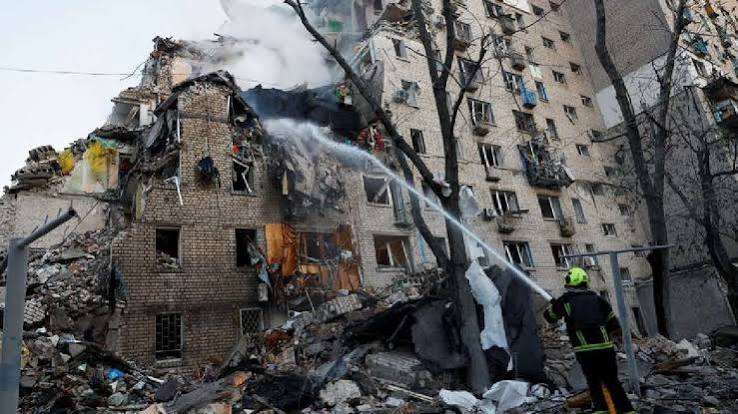
The 2026 conflict intensified this financial dynamic dramatically. Iranian retaliatory strikes reportedly caused approximately $800 million in damage to U.S.-operated facilities during the first two weeks of escalation alone. Reports also suggested that U.S. aerial equipment losses reached as high as $2.8 billion. Yet much of the reconstruction, repair, and operational continuity costs were expected to be negotiated with Gulf host states rather than borne exclusively by Washington.
In practical terms, the Gulf states found themselves paying for the consequences of a war unfolding on their own soil while the United States retained strategic command and global leverage. This is where the geopolitical equation becomes extraordinarily advantageous for Washington.
First, the United States projects military dominance across the Middle East without carrying the entire financial burden alone. Second, Gulf states continue purchasing massive quantities of American weapons to reinforce their own defences. Between 2019 and 2023, Gulf nations accounted for approximately 22 per cent of global arms imports, much of it sourced directly from U.S. defence manufacturers. In May 2026 alone, Washington fast-tracked more than $8.6 billion in new weapons sales to Gulf allies and regional partners. Third, instability in the Strait of Hormuz indirectly benefits American energy exporters. Washington understood from the beginning that any escalation with Iran would threaten or partially restrict traffic through the world’s most important oil chokepoint. The disruption of Gulf energy routes naturally drives global consumers to seek alternative suppliers. As Gulf exports become politically risky or operationally uncertain, American oil and liquefied natural gas gain a competitive advantage in Asian, African, and European markets.
Thus, while Gulf states suffer from higher insurance premiums, shipping disruptions, aviation risks, and investor anxiety, the United States simultaneously expands energy influence, increases defence exports, and reinforces its strategic leverage.
This explains why many analysts increasingly describe the arrangement as a “cost externalisation model.” The geopolitical benefits remain concentrated in Washington, while much of the geographic exposure and economic shock remains localised within the Gulf.
The contradiction is especially painful for Gulf governments because the same military bases intended to provide protection have now become potential targets. Iranian officials repeatedly warned that states facilitating military operations against Iran could face retaliatory strikes.