At the Shanghai Cooperation Organisation’s security councils’ meeting, Russia’s Sergei Shoigu put hard numbers to what Pakistan has been saying for years: Afghanistan has once again become a dangerous sanctuary. His warning was blunt. Between 18,000 and 23,000 militants from more than 20 outfits are operating inside Afghanistan. Around 3,000 belong to Islamic State. Foreign fighters, including Uyghur, Tajik and Uzbek militants, have reportedly slipped in from Syria. Last year alone, the Islamic State carried out 12 major attacks, killing 40 soldiers and 25 civilians.
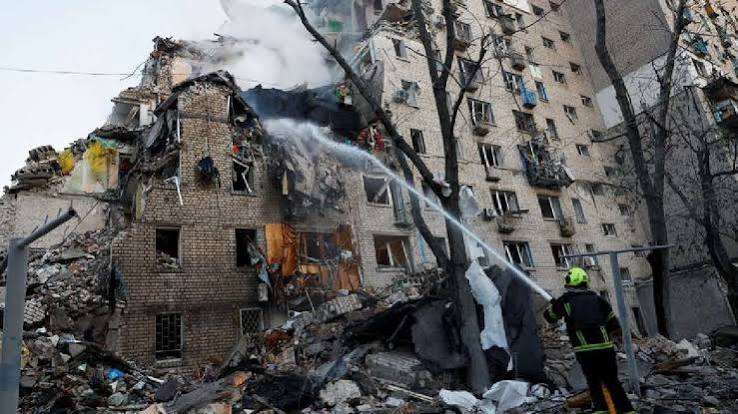
For Pakistan, these numbers carry the smell of burnt police posts in Khyber Pakhtunkhwa, the sound of funeral prayers in Bannu and Lakki Marwat, and the tired anger of a country that has heard Kabul’s assurances too many times before the next attack lands. Taliban spokesmen may repeat that Afghan soil will not be used against any country, but the ground tells a different story altogether.
The Afghan Taliban want the privileges of statehood without the discipline of statecraft. They seek trade, aid, access, recognition and diplomatic courtesy, yet behave as if counterterrorism is a favour to be granted at leisure. Kabul cannot police women’s clothing, girls’ education, media speech and public morality with iron severity, and then plead helplessness before armed groups roaming its territory. That argument has gone stale. The threat is also travelling through another old Afghan curse: narcotics. Mr Shoigu’s remarks pointed to a drug economy changing shape. Poppy cultivation may have declined on paper, but around four million Afghans remain tied to narcotic crops because poverty has swallowed the countryside whole. Meanwhile, methamphetamine production is growing. More than 30 tonnes were seized along Afghanistan’s borders in 2025, and UN assessments have warned that synthetic drugs are becoming a fresh business model under Taliban-ruled Kabul. Meth is cheaper to hide, easier to move and harder to uproot than poppy fields. It gives militant and criminal networks a new bloodstream.Regional news alerts
Pakistan’s response cannot be built on anger alone. Slogans have had their day. Islamabad needs a cold, documented and relentless policy. Every Afghanistan-linked attack should be investigated, mapped and placed before friendly capitals with irrefutable evidence. The state should also push for an SCO-backed verification mechanism on Afghan soil wherein synthetic drug routes and precursor chemicals must be traced with Iran, China, Russia and Central Asian states before meth becomes the new heroin.
There is no quarrel with the Afghan people, who have suffered too much and too long. The quarrel is with a regime that wants legitimacy while allowing disorder to spill into every neighbour’s courtyard. If Kabul wants to be treated as a state, it must first stop behaving like a shelter for everyone else’s war.