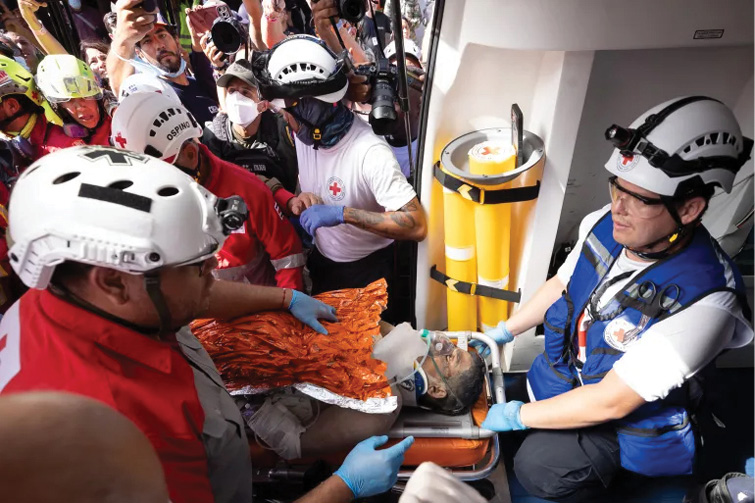
Russian drones and missiles struck Ukrainian cities on Tuesday, killing at least ten people and wounding around a hundred. The barrages hit Kyiv and Dnipro, sending fireballs above high-rise buildings and forcing residents into subway stations for shelter, with four killed and 58 injured in Kyiv alone. Six more died, and 36 were wounded, in Dnipro, while a child was among ten people hurt in Kharkiv. These numbers, as gruesome as they are, risk blending into the grim routine of a war now entering its fifth year.
What makes this attack especially disturbing is not only the scale of violence but the way it exposes the failure of conflict prevention. Kyiv had warned of a “massive strike” and urged its defenders to remain on alert. Yet warnings are not prevention, especially when wars become a predictable cycle of attack, retaliation and condemnation.
Pakistan’s Permanent Representative to the United Nations, Ambassador Asim Iftikhar Ahmad, addressed this complacency during Monday’s General Assembly debate on strengthening mediation. “Conflicts are not inevitable. They are often the result of diplomacy delayed, dialogue denied, and disputes left to fester,” he told delegates, reminding them that the UN’s first responsibility is not only to respond after wars erupt but “to prevent them before they consume lives, regions and generations.”
The longer the Russian?Ukrainian war grinds on, the more opportunities the world squanders to stop its momentum. Each missile that slams into a Ukrainian apartment block is a failure not only of Moscow’s obligations under international law but of collective diplomacy to impose a political solution before escalation becomes the norm.
Pakistan’s recent experience shows that, no matter how grim the outlook, mediation can still make a difference. During her recent visit to Islamabad, European Union foreign policy chief Kaja Kallas called Pakistan a “major regional power” and praised its role in mediating between the US and Iran. This appreciation is no longer confined to one capital or one diplomatic statement, as the country’s role as a responsible facilitator is being acknowledged across all corners.
At the same time, Kallas cautioned that short-term de-escalation was not enough. Talks, she noted, must address Iran’s nuclear stockpile and other critical issues if lasting stability is to be achieved. Her acknowledgement underscored a larger truth: proactive mediation is often quiet, unglamorous and slow, but it can avert regional catastrophes.
The same urgency must now be brought to Ukraine, Sudan, Myanmar and most painfully, Gaza. If it is to mean anything, mediation must be rooted in civilian protection, international law and the political courage to speak before the next city burns.
When Russian missiles slam into Ukrainian cities, condemnation is necessary but insufficient. The world does not need more eloquent statements after the dead are counted. It needs determination to make such attacks impossible.