This month marks five years since Kabul plunged into a chaotic frenzy and Taliban fighters entered the Afghan capital virtually unopposed, two decades after their removal by US-led forces. They arrived carrying assault rifles and rocket launchers as well as a catalogue of promises: security would be restored, political opponents would be forgiven, women’s rights would be respected within their interpretation of Islamic law and Afghan territory would not be permitted to threaten other countries.
The less said about how dramatically they broke those promises, the better. The Taliban has, in essence, created a theocratic police state; driven women and girls from education and much of public life; crushed political dissent and failed to convince Afghanistan’s neighbours that armed groups are no longer operating from its territory.
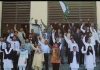
A UN monitoring report recently described the TTP as one of the largest terrorist groups operating from Afghanistan, challenging Taliban claims that terrorist organisations have no meaningful footprint in the country. Against all this, the sight of former Afghan army commander Lieutenant General Sami Sadat, in military uniform beneath Afghanistan’s republican tricolour, carries great significance. In announcing an armed campaign against the Taliban and appealing for international political and material support, he is attempting to demonstrate that the constitutional order overthrown in August 2021 has not entirely surrendered its claim to the country. Afghanistan United Front has now announced Operation Muharib. Since Kandahar and Helmand belong to the political and military heartland from which the Taliban built its power, even limited resistance there challenges the regime’s preferred portrayal of opposition as an exiled enterprise. The announcement also coincides with a discernible increase in anti-Taliban activity. The newly-formed Sepahian-e Mihan briefly overran the Yaftal-e Payeen district headquarters in Badakhshan last month, in what was reported as the first temporary loss of an Afghan district centre by the Taliban since its return to power. General Sadat is therefore launching more than a military campaign. He is attempting to revive a political proposition that the Taliban may possess Kabul, its ministries and the weapons abandoned during the withdrawal, yet it does not possess an electoral mandate or the freely expressed consent of the Afghan people. A regime that has enjoyed years without a serious nationwide challenger has used that breathing room not to moderate or rebuild constitutional institutions, but to codify repression. This passage of time did not even come close to producing the more pragmatic Taliban once anticipated by foreign diplomats. It has produced a more deeply entrenched version of the same order. Yet those realities cannot exempt the new front from scrutiny. Afghanistan has already paid too high a price for leaders who announced liberation before demonstrating political inclusivity. The AUF must show that it is more than a collection of former officers operating from abroad. Above all, it must convince Pashtuns, Tajiks, Hazaras, Uzbeks, women and younger Afghans that it seeks a reformed constitutional order rather than the restoration of the patronage system that collapsed in 2021.