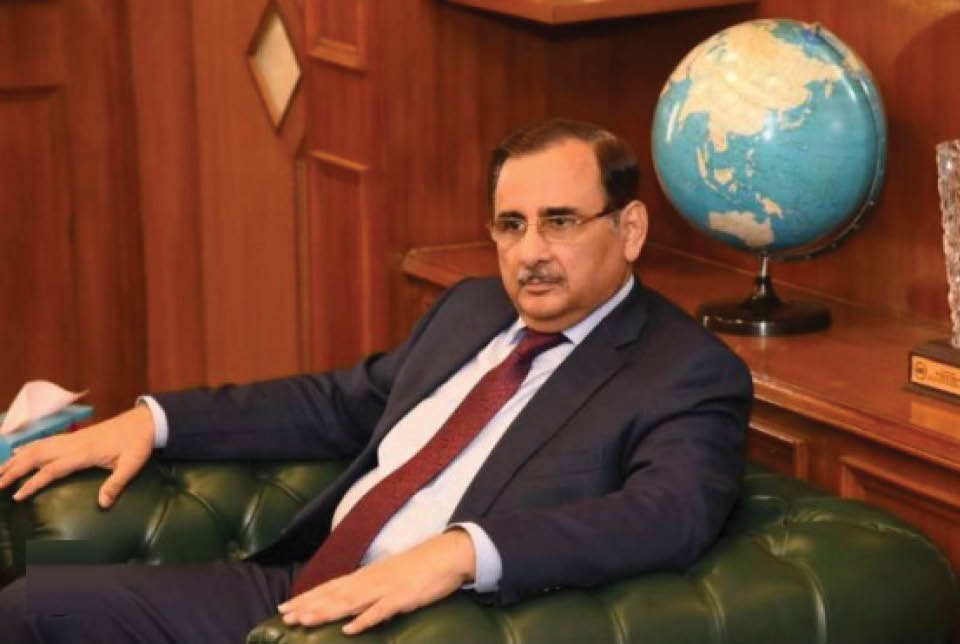
Anjum Nisar calls for urgent review of capacity payments, affordable electricity
LAHORE
The Businessmen Panel (BMP) of the Federation of Pakistan Chambers of Commerce and Industry (FPCCI) has urged the government and the National Electric Power Regulatory Authority (NEPRA) to reconsider the proposed recovery of around Rs34 billion from electricity consumers, warning that another increase in power tariffs would further aggravate the difficulties being faced by trade, industry and households.
The demand comes amid a public hearing conducted by NEPRA on the petition submitted by the Central Power Purchasing Agency-Guarantee (CPPA-G) on behalf of electricity distribution companies (Discos) for the second quarterly tariff adjustment of calendar year 2026. The Discos have sought recovery of about Rs33.78 billion from consumers for the April-June period, mainly on account of capacity charges and other adjustments.
Former FPCCI president and BMP Chairman Mian Anjum Nisar has consistently maintained that Pakistan’s businesses cannot become competitive in regional and international markets while electricity remains excessively expensive.
He has repeatedly called for reducing the cost of energy, restructuring the power sector and preventing the burden of inefficiencies from being transferred to consumers.
According to the latest NEPRA proceedings, the proposed adjustment could increase electricity tariffs by around Rs1.34 per unit for three months if the entire amount is approved. Industry representatives, however, have warned that the effective impact on consumers could be considerably higher when taxes and the expiry of existing relief are taken into account.
The issue has become particularly concerning for industrial consumers, who are already struggling with high production costs, weak demand, expensive financing and intense competition in international markets.
BMP believes that increasing electricity prices under such circumstances could discourage investment, restrict industrial expansion and undermine efforts to promote exports.
The latest adjustment is largely linked to capacity charges. Distribution companies reported a decline in electricity sales during the April-June period, with several companies attributing the reduction partly to increased solarisation, lower agricultural consumption and other factors. The decline in electricity demand has consequently increased the per-unit burden of fixed capacity-related costs.
Industry representatives have also questioned the logic of imposing load-shedding on paying consumers while simultaneously recovering capacity-related costs from them. During the NEPRA hearing, representatives of distribution companies acknowledged that load-shedding was being carried out in some areas despite the presence of consumers who regularly paid their electricity bills.
BMP has previously warned that such policies create a damaging cycle in which expensive electricity reduces consumption, lower consumption increases the per-unit burden of fixed costs, and higher tariffs subsequently further suppress industrial and commercial demand. The panel has therefore advocated fundamental reforms rather than repeated tariff adjustments.
Mian Anjum Nisar has in earlier statements criticised the transfer of power-sector inefficiencies, theft and mismanagement to consumers through tariff adjustments. BMP has also demanded relief from excessive taxes and charges imposed on electricity and called for the replacement or restructuring of expensive generation arrangements.
The proposed adjustment also comes at a time when the government is attempting to encourage greater industrial consumption through an incremental power consumption package.
Under the package, additional industrial electricity was offered at Rs22.98 per unit against an average tariff of around Rs40 per unit. NEPRA members have now questioned whether the package has produced the intended results and whether its impact is contributing to the latest tariff pressures.
Power Division officials have defended the package, arguing that industrial consumption has generally improved. Industrial representatives, however, have maintained that part of the increase resulted from industries shifting from captive power generation to the national grid after changes in the policy governing captive power plants.
The controversy has highlighted the structural weakness of Pakistan’s power sector, where declining demand, high fixed costs, capacity payments, transmission and distribution losses and expensive generation continue to place pressure on consumers.
BMP has stressed that the solution cannot simply be another increase in electricity bills. The panel has called for measures aimed at reducing generation costs, improving transmission and distribution efficiency, controlling losses, rationalising taxes and ensuring that consumers pay for electricity on a sustainable and competitive basis.
The business community has also expressed concern that higher electricity prices could fuel inflation by increasing the cost of manufacturing, transportation, services and other economic activities. For export-oriented industries, higher energy costs could further weaken Pakistan’s competitiveness against regional economies offering comparatively cheaper electricity.
Mian Anjum Nisar has previously argued that Pakistan needs regionally competitive energy tariffs if it wants to expand exports and attract fresh investment. BMP has also maintained that affordable energy is essential for industrial growth and employment generation.
The panel has therefore urged NEPRA to carefully examine the Rs33.78 billion revised claim before allowing its recovery from consumers and to ensure that costs arising from inefficiencies or structural weaknesses are not automatically passed on to electricity users.
BMP has further called for a comprehensive restructuring of the power sector, arguing that long-term economic growth cannot be achieved through repeated tariff increases. The panel believes that reducing the cost of electricity, improving governance and eliminating unnecessary capacity-related costs would provide greater relief to consumers while strengthening industrial activity.