Pakistan’s young population could become its greatest national strength if properly equipped: minister
ISLAMABAD
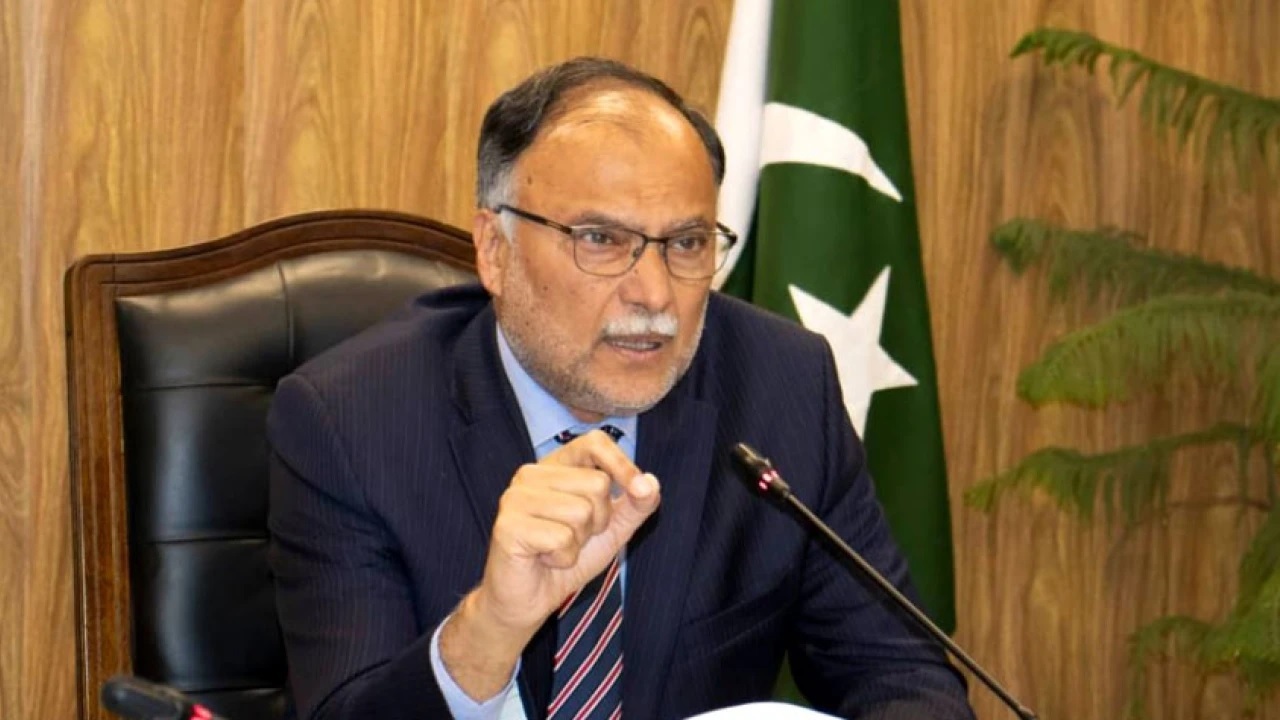
Federal Minister for Planning, Development and Special Initiatives Professor Ahsan Iqbal on Sunday said that Pakistan’s defence in the 21st century could no longer be viewed merely in terms of protecting geographical borders.
A strong economy, advanced technology, skilled human capital, energy and water security, effective institutions and national unity have become equally important pillars of national security, he said while addressing a Defence Day ceremony as chief guest.
Ahsan Iqbal paid rich tribute to the martyrs and Ghazis, saying the sacrifices of those who laid down their lives for Pakistan and their families would remain an enduring debt of the nation. “A martyr does not sacrifice his life alone; his entire family makes a sacrifice in the name of the homeland,” he said.
Ahsan Iqbal said that the nation had foiled the enemy’s designs in 1965 through unity, resolve and sacrifice, but the nature of warfare had since changed.
“Alongside land, air and sea frontiers, cyber space, artificial intelligence, unmanned systems, space technology, electronic warfare and the information domain had emerged as new fronts of national defence”.
He said Pakistan must become a creator rather than merely a consumer of technology by developing indigenous capabilities in artificial intelligence, cyber security, space sciences, robotics, quantum technology and other emerging fields.
Universities, research centres, defence institutions, scientists, engineers and the private sector, he added, should be brought together in an integrated national ecosystem of research and innovation.
The minister termed economic sovereignty an essential component of national security, saying a strong and sustainable national defence could not be built on a weak economy.
“Pakistan’s next major national struggle is the struggle for economic sovereignty, and its sustainable path is export-led economic growth,” he said.
He said the country needed to move away from an economic model dependent on debt and consumption towards one based on production, productivity, investment, innovation and exports.
Ahsan Iqbal said increasing exports should be treated as a national mission rather than the responsibility of the Ministry of Commerce or exporters alone. Clear, measurable export targets for major sectors should be set and monitored at the highest level with the same seriousness given to fiscal and revenue targets, he said and added, “A nation that sells higher-value products and services to the world gains greater economic and strategic influence in the global system”.
The minister presented a seven-point national strength and stability framework, linking Pakistan’s defence requirements with its economic, technological and social priorities.
The first priority, he said, was defence and technological superiority, requiring Pakistan to maintain its conventional and strategic capabilities while building indigenous strength in AI, cyber security, space technology, unmanned systems, robotics and other emerging technologies.
The second was an export emergency programme, under which exports should become a national economic priority, with sector-specific targets and regular monitoring at the highest level of government.
The third pillar was human capital development. Every child, he said, must have access to education, every young person should acquire modern and employable skills, and the country’s talented youth should be given opportunities in science, research, technology and innovation.
He said that Pakistan’s young population could become its greatest national strength if properly equipped, adding that education, skills, healthcare and research were not merely social-sector investments but investments in national security.
The fourth priority was energy, water and food security. Pakistan must reduce dependence on imported energy, promote local and renewable sources, improve water-use efficiency and make climate-resilient agriculture and food security integral parts of long-term national planning.
The fifth was “production in Pakistan”, aimed at promoting local manufacturing of products the country could competitively produce and linking industry, agriculture, minerals and technology with global production and trade chains.
The sixth priority was institutional and administrative reform, with merit, accountability, data-driven decision-making, policy continuity and effective implementation becoming core standards of governance. The seventh and final pillar was national unity. Political differences, he said, should not be allowed to turn into national division, while misinformation, hate speech and attempts to undermine public trust in national institutions must be countered.
“These seven points are not the agenda of any single ministry, government or institution; they should become Pakistan’s national agenda,” he said.
Ahsan Iqbal stressed that national development must be taken beyond electoral cycles, saying no country had become a major economic or technological power without continuity in long-term policies. Pakistan needed a durable national consensus on its fundamental economic, defence and development objectives.
He said that modern hybrid warfare could exploit fake news, disinformation, hatred, political and social divisions and distrust in institutions to weaken a state. “We may belong to different political parties, provinces, languages and schools of thought, but Pakistan is our common identity. Political differences are the beauty of democracy, but national division weakens our collective strength,” he said.