ISLAMABAD
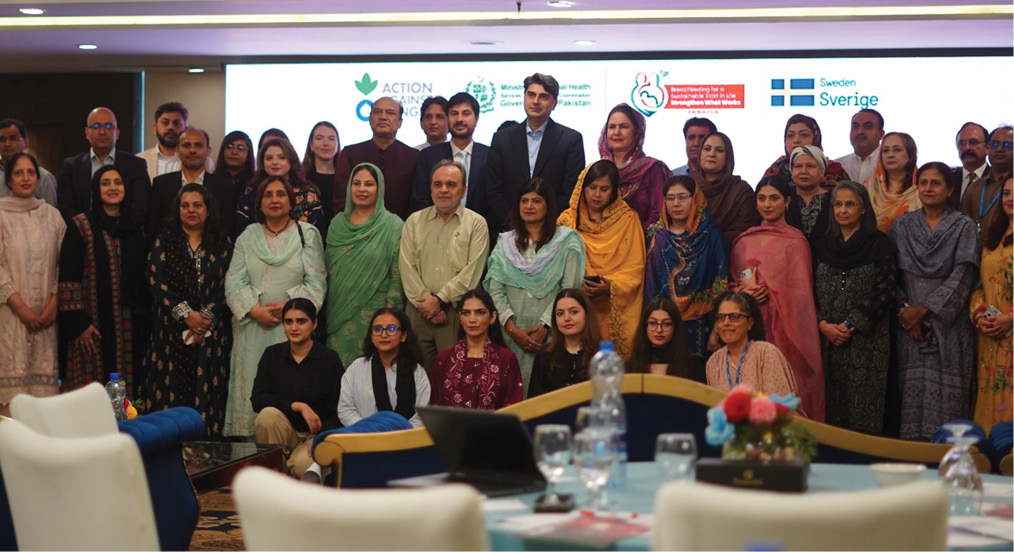
Marking World Breastfeeding Week 2026, Action Against Hunger (ACF) Pakistan, in collaboration with the Ministry of National Health Services, Regulations and Coordination (MoNHSR&C), convened a high-level Advocacy Dialogue for Strengthening Breastfeeding Protection, Promotion and Support in Pakistan under the global theme, “Breastfeeding for a Sustainable Start in Life: Strengthen What Works.”
The event brought together senior government officials, parliamentarians, United Nations agencies, development partners, academia, healthcare professionals, and civil society organizations to reaffirm a shared commitment to creating an enabling environment where every mother is empowered and supported to breastfeed, ensuring healthier children, stronger communities, and a more resilient future for Pakistan.
The dialogue was graced by Dr. Malik Mukhtar Ahmad Bharath, Minister of State for National Health Services, Regulations and Coordination, as the Chief Guest, alongside distinguished guests including Dr. Shaista Jadoon, Member National Assembly, Ms. Asia Naz Tanoli, Member National Assembly, and Mr. Jocelyn King, Second Secretary, High Commission of Canada to Pakistan.
Opening the event, Mr. Muhammad Aamir, Country Director, Action Against Hunger Pakistan, reaffirmed Action Against Hunger’s commitment to addressing malnutrition through integrated, evidence-based, and sustainable solutions.
“At Action Against Hunger, we believe that every child deserves not only to survive, but to thrive. Breastfeeding is one of the most powerful way to improve child survival, strengthen maternal health, and break the intergenerational cycle of malnutrition.
It is far more than a nutrition intervention, it is a source of healthier families, stronger communities, and a more sustainable future. By strengthening what already works through partnerships, evidence-based policies, and community-led action, we can ensure that every mother receives the support she needs and every child has the best possible start in life,” said Mr. Muhammad Aamir.
He further highlighted that Action Against Hunger’s work in Pakistan extends beyond emergency response by strengthening health systems, improving maternal and child nutrition, integrating WASH, food security and livelihoods, climate resilience, and community engagement to address the root causes of hunger and malnutrition.
Delivering the opening remarks, Dr. Nusrat Haider (Director Nutrition), Ministry of National Health Services, Regulations and Coordination, emphasized the Government of Pakistan’s commitment to improving maternal and child nutrition and strengthening policies that promote and protect breastfeeding nationwide.
In his keynote address, Dr. Malik Mukhtar Ahmad Bharath, State Minister for National Health Services, Regulations and Coordination, underscored the importance of breastfeeding as a national public health priority and reaffirmed the government’s commitment to strengthening policy implementation, expanding breastfeeding-friendly workplaces, enhancing community awareness, and ensuring the effective enforcement of the International Code of Marketing of Breast-milk Substitutes.
The programme featured a technical presentation by Ms. Shiza Hameed, Deputy Head of Programs – Health & Nutrition, Action Against Hunger Pakistan, who presented evidence on Maternal Malnutrition in Pakistan, highlighting critical nutrition challenges, emerging trends, and policy priorities to improve maternal and child health outcomes.
Dr. Shahzad Ali Khan, Vice Chancellor of the Health Services Academy (HSA), shared insightful research and evidence on the implementation of the Breast-milk Substitutes (BMS) Code of Conduct research by Gallop along with key findings from the Punjab Multiple Indicator Cluster Survey (MICS).
The presentation highlighted the importance of protecting, promoting, and supporting optimal infant and young child feeding practices through strengthened policy implementation and public awareness. The discussion emphasized that the BMS Code in Pakistan plays a critical role in regulating the marketing and promotion of breast-milk substitutes, ensuring that families receive accurate, unbiased information and that breastfeeding is not undermined by inappropriate commercial practices. Effective enforcement of the Code, combined with supportive health systems and community engagement, is essential for improving child nutrition and health outcomes.
In line with World Breastfeeding Week advocacy, Dr. Shahzad reaffirmed the need to create an enabling environment where every mother can initiate breastfeeding early, exclusively breastfeed for the first six months, and continue breastfeeding alongside complementary feeding up to two years and beyond. Strengthening compliance with the BMS Code, investing in caregiver support, and promoting evidence-based infant feeding practices are key actions to safeguard the health and well-being of mothers and children across Pakistan.
Members of the National Assembly, including Dr. Shaista Jadoon, and Ms. Asia Naz Tanoli, shared their perspectives on advancing breastfeeding through stronger legislation, parliamentary engagement, and sustained political commitment.
The advocacy dialogue featured two interactive panel discussions bringing together leading experts from government, academia, international organizations, and the development sector.
The first panel, “Strengthening the Enabling Environment for Breastfeeding: Policy, Legislation and Accountability for Sustainable Impact,” . The panelist were Mr. Naeem Akhtar, Deputy Director, Nutrition & Climate Change at MoNHSR&C, Mr. Qamar Din Tagar, Head of Program, Action Against Hunger Pakistan, Dr. Naureen Nishtar (WHO), Ms. Farha Naz, Country Director, GAIN Pakistan, Dr. Hannah from IRF, and Mr. Irfanullah from Nutrition International highlighted that breastfeeding is a vital public health and nutrition investment with long-term health, social, and economic benefits for children, mothers, families, and the country. The panel emphasized the need for strengthened family-friendly and workplace policies, including maternity protection, breastfeeding breaks, lactation spaces, and childcare facilities, to enable mothers to continue breastfeeding. Panelists also stressed stronger enforcement of the International Code of Marketing of Breast-milk Substitutes (BMS), greater accountability, and action against commercial influences that undermine breastfeeding practices. The discussion further underscored the importance of robust monitoring, evaluation, and accountability mechanisms to translate breastfeeding policies into effective implementation and measurable outcomes. The panel concluded with a call for coordinated multi-sectoral efforts to create an enabling environment that protects, promotes, and supports breastfeeding across Pakistan for sustainable impact.
The second panel, “Strengthening What Works: Scaling Proven Breastfeeding Interventions Across Health Systems and Communities,” The panelist were Dr. Syeda Rashida Batool (DHO ICT), Mr. Muhammad Aamir (Country Director, Action Against Hunger Pakistan), Dr. Ayesha Kawish (Public Health Expert), Dr. Syeda Batool Mazhar (Gynecologist, Society of Obstetricians and Gynaecologists of Pakistan–SOGP), and Dr. Nuzhat Yasmeen (Consultant Pediatrician, Kulsum International Hospital) discussed the critical need to scale proven breastfeeding interventions across health systems and communities to improve maternal and child health outcomes. The panel highlighted key barriers to early initiation and exclusive breastfeeding, emphasizing the importance of quality breastfeeding support during childbirth, strengthened antenatal and postnatal counselling, and continued community-based support for mothers. Panelists stressed the need to promote evidence-based breastfeeding practices, address myths and misinformation, and utilize media platforms for public awareness and advocacy. The discussion also underscored the integration of breastfeeding support into routine maternal, newborn, and child health services, supported by robust monitoring, evaluation, and accountability mechanisms to ensure effective implementation and measurable results. The panel concluded by calling for stronger multi-sectoral collaboration to translate evidence-based interventions into practice and sustain breastfeeding support at scale across Pakistan.
Throughout the dialogue, participants emphasized that improving breastfeeding outcomes requires coordinated action across sectors, including stronger health systems, supportive workplace policies, increased investment in nutrition, effective legislation, and greater community awareness.
The event concluded with a collective call to strengthen partnerships among government institutions, parliamentarians, development partners, healthcare professionals, academia, civil society, and communities to accelerate progress towards improved maternal and child nutrition.
As a global humanitarian organization committed to ending hunger and addressing its root causes, Action Against Hunger Pakistan reaffirmed its commitment to working alongside the Government of Pakistan and development partners to strengthen health and nutrition systems, scale evidence-based interventions, and build resilient communities where every mother receives the support she deserves and every child has the opportunity to grow, thrive, and reach their full potential.