Malik M. Ashraf
Last Wednesday the state department of the USA in a statement announced the imposition of sanctions against the National Development Complex and three commercial entities that according to it are engaged in the development of the missile programme of Pakistan. Then on Thursday Deputy National Security Advisor Jon Finer went a step further and made a shocking statement at a think-tank the Carnegie Endowment for International Peace that nuclear-armed Pakistan was developing long-range ballistic missile capabilities that eventually could allow it to strike targets well beyond South Asia including United States, making it an emerging threat to the United States.
Pakistan while strongly rejecting the new sanctions and the statement of the Deputy Security Advisor has rightly called the move ‘unfortunate and biased’ warning that such policies have dangerous implications for the strategic stability of the South Asian region and beyond. It has further maintained that the latest installment of sanctions defies the objective of peace and security by aiming to accentuate military asymmetries. Pointing out the double standards by the US in this regard it has been pointed out that while claiming strict adherence to non-proliferation norms, licensing requirements for advanced military technology to other countries have been waived off in the past. Such double standards and discriminatory practices not only undermine the credibility of non-proliferation regimes but also endanger regional and international peace and security.
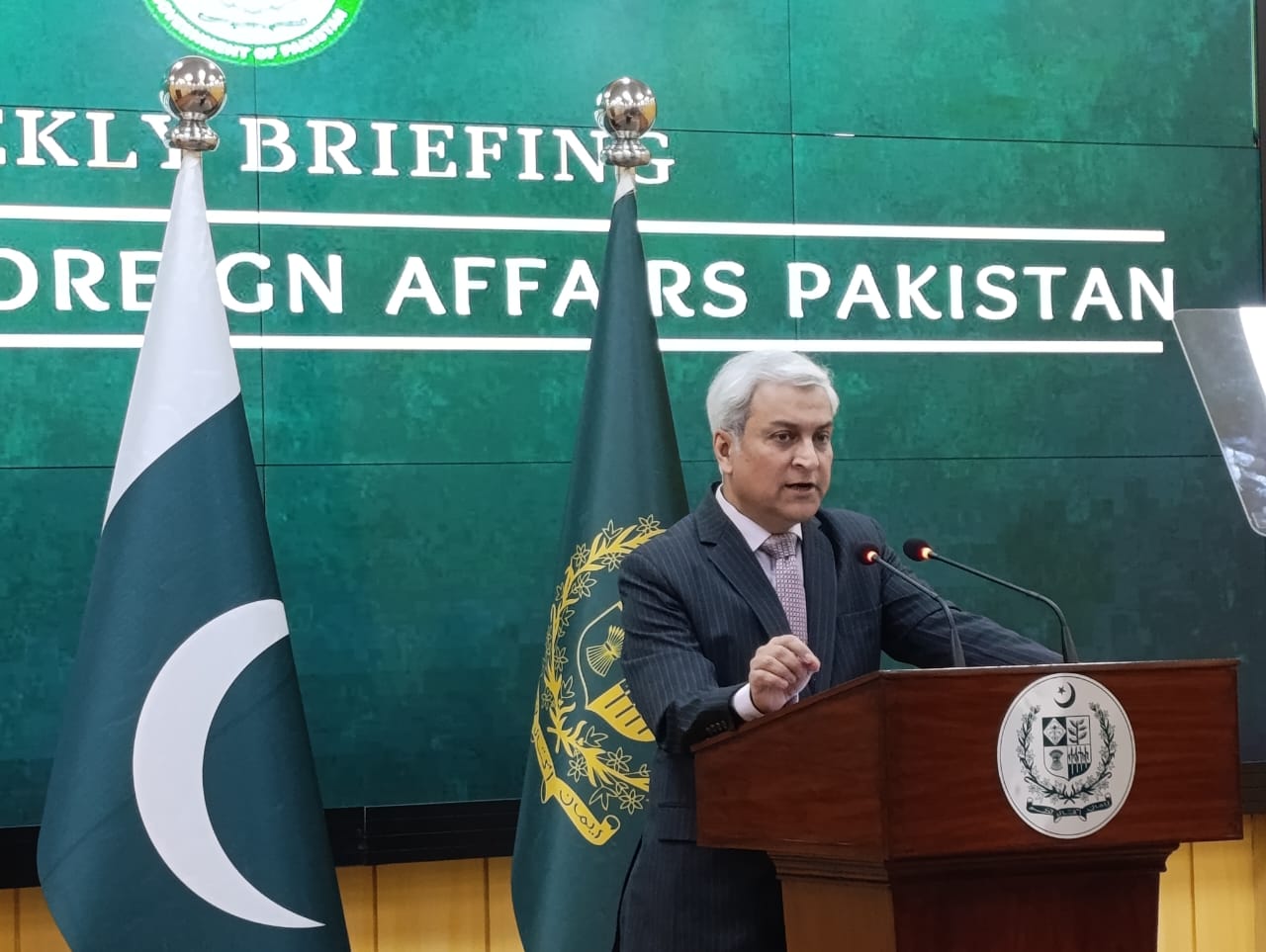
Responding to the apprehensions expressed by the Deputy Security Advisor the foreign office said “We wish to reiterate that Pakistan’s strategic capabilities are meant to defend its sovereignty. The alleged threat perception from Pakistan’s missile capabilities and delivery means, raised by the US official, are unfortunate. These allegations are unfounded, devoid of rationality and sense of history. Pakistan’s strategic program and allied capabilities are solely meant to deter and thwart a clear and visible existential threat from its neighbour and should not be perceived as a threat to any other country. Such irrational assumption of hostile intent from Pakistan by any other country, including the US, is perplexing as well as illogical”
The foregoing discourse represents a befitting stance by Pakistan in regard to the rationale and context of its nuclear and missile programme as well as a strong repudiation of the double standards by the US in this regard and the assumed threat perception to US targets.
The reality is that the US knows all these things but looks at it from the perspective of her own strategic interests. Its strategic interests in the region are aligned with Indian strategic objectives necessitating a discriminatory approach.
While expecting other nations to strictly abide by the non-proliferation Treaty and crying hoarse from every convenient roof-top to announce her credentials in this regard the US is guilty of applying the NPT provisions selectively keeping in view its commercial and strategic global interests. Its allies like UK and France also adhere to similar policies.
The US-India Civil Nuclear Agreement is a classic example of a violation of NPT by the US. It is aimed at promoting its strategic interests in this region and propping up India as a regional super power to act as a counter-weight to the burgeoning Chinese influence in the region and beyond. To have this agreement become operational, the US made amendments in its Atomic Energy Act of 1954, and facilitated IAEA agreement with India in which the later agreed to separate its civil and military nuclear facilities and to place all its nuclear facilities under IAEA safeguards and also manoeuvered grant of an exemption from the Nuclear Suppliers Group (NSG) for India. This deal introduced a new aspect to the international non-proliferation efforts. The grant and implementation of the waiver from NSG to India which allowed her access to civilian nuclear technology and fuel from other countries made India the only country outside the umbrella of NPT to carry out nuclear commerce with the rest of the world.
As against it US is not prepared to extend the same treatment to Pakistan and instead has been putting pressure on it to curtail and even cap its nuclear and missile program which it perforce had to initiate in response to the nuclear threat from India. The US particularly has been pressurizing Pakistan to sign NPT and withdraw its opposition to FMCT without addressing its legitimate security concerns. The refusal by Pakistan to succumb to these unreasonable demands by the US and its allies in the face of their discriminatory approach to the nuclear issue and disregard for its security concerns is absolutely right and justified. Pakistan believes in the non-proliferation of the nuclear arsenal and has been supporting the objectives of the NPT even though it has not signed the Treaty for justifiable reasons.
India has been feverishly engaged in boosting its nuclear capability as well as building up conventional weapons with the support and encouragement of US and its allies, posing an ever-increasing threat to the security of Pakistan The belligerent posture adopted by the Modi regime and the Indian paradigm of ‘cold start’ deserve a matching response by Pakistan.
Azerbaijani plane that crashed near Aktau lost control systems before entering Kazakh airspace: Top official
No country can compromise its security. The missile programme of Pakistan designed to produce short-range missiles capable of carrying small nuclear warheads is part of a defensive mechanism designed to discourage India from committing any indiscretion. It is yet another deterrent to forestall the possibility of even a limited war between the two countries.
The US and the Western countries instead of coercing Pakistan to abandon its nuclear and missile programme must make efforts for the resolution of the Kashmir dispute between India and Pakistan in conformity with the spirit of the UN resolutions. Once the Kashmir issue is resolved relations with India are normalized and India signs the NPT, Pakistan surely would have no hesitation in signing the NPT and removing its objections to initiation of dialogue on FMCT. One-sided pressure tactics and arm-twisting are not going to produce desired results. Pakistan is a sovereign and self-respecting country and would never ever take dictation from anyone in regards to its security which remains its top priority and concern in the wake of the prevailing security threats.
The dilemma is that US is an evil superpower bereft of humanitarian considerations, principles enshrined in the UN Charter or any International Covenant and treaty when it comes to its strategic global interests. It is the biggest enemy of peace as it is in one way or the other connected to almost all conflicts around the world. It along with its European allies wants to fashion the world according to their own perceptions to serve their strategic interests. The support that USA and its allies have extended to Israel in carrying out genocide in Gaza is a ranting testimony of their callous and inhumane credentials.
The writer is a freelance columnist. He can be reached at ashpak10@gmail.com.