Islamabad
The Federation of Pakistan Chambers of Commerce and Industry›s Businessmen Panel (BMP) has expressed serious concern over the decline and stagnation in Pakistan›s exports to European markets despite continued access to the European Union›s GSP+ preferential trade facility.
It warned that the country could lose its competitive position in one of its most important export destinations unless immediate and comprehensive measures are taken to revive export growth.
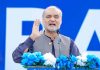
BMP Chairman and former FPCCI President Mian Anjum Nisar said the latest export figures were a matter of concern for policymakers and the business community, particularly at a time when Pakistan needed to substantially increase foreign exchange earnings, strengthen its external account and achieve sustainable economic growth through higher exports.
According to official data compiled by the State Bank of Pakistan, Pakistan›s exports to European countries declined by 0.18 percent to $9.089 billion in FY2025-26, compared with $9.106 billion in the preceding fiscal year.
The performance is particularly worrying because Pakistan continues to enjoy preferential access to the European market under the GSP+ scheme, which provides significant tariff advantages to eligible Pakistani products.
Anjum Nisar said that the marginal decline in overall exports reflected the growing challenges confronting Pakistani exporters, including rising production costs, expensive energy, costly financing, increasing competition from regional economies and the lack of sufficient diversification in the country›s export basket.
He said the situation required an urgent review of Pakistan›s export strategy, as simply retaining preferential market access was not enough.
The government and private sector would have to work together to improve productivity, reduce the cost of doing business, encourage value addition and aggressively explore new markets and product categories.
The BMP chairman pointed out that exports to northern Europe also recorded a decline of 1.31 percent, falling to $741.985 million in FY26 from $751.783 million in FY25. At the same time, exports to southern Europe increased by 3.35 percent to $3.206 billion from $3.102 billion, while shipments to eastern Europe rose by 3.36 percent to $801.71 million from $775.63 million.
He said the increase in exports to some European markets was encouraging but insufficient to offset weaknesses in other major destinations. Exports to Spain, for instance, increased by 5.18 percent to $1.562 billion during FY26 from $1.485 billion a year earlier, demonstrating that there remained considerable potential for Pakistani products if the country adopted a focused and market-oriented export strategy.
The BMP leadership also expressed concern over Pakistan›s export performance in the United Kingdom, where shipments declined by 0.55 percent to $2.148 billion in the post-Brexit period. The development, it said, highlighted the need for Pakistan to strengthen its trade and economic engagement with both the European Union and the UK through proactive trade diplomacy and improved market access.
Mian Anjum Nisar said Pakistan could no longer afford to depend heavily on traditional textile exports and should move rapidly towards diversification and value addition. He stressed the need to promote engineering goods, information technology, pharmaceuticals, processed food, sports goods, surgical instruments, footwear, leather products and other high-value sectors capable of generating greater foreign exchange earnings.
He said exporters were already struggling with high electricity and gas tariffs, elevated financing costs, tax-related uncertainties, delays in refunds and frequent changes in government policies. These factors, he added, were directly affecting the competitiveness of Pakistani products in international markets.
The BMP chairman urged the government to formulate a long-term and consistent export policy in consultation with the private sector. He said export-oriented industries needed competitive energy prices, affordable credit, timely tax refunds and a predictable regulatory framework to compete with regional rivals.
He also called for more effective utilization of the GSP+ facility, saying Pakistan should use preferential access to the European market as an opportunity to expand its export base rather than relying on a limited number of traditional products. Greater emphasis, he said, should be placed on value addition, technology adoption, quality improvement, branding and compliance with international standards.
Mian Anjum Nisar further stressed that the evolving international trade environment required Pakistan to remain alert to increasing competition. European markets were becoming more competitive as other countries negotiated or expanded preferential trade arrangements, while global geopolitical tensions and disruptions in international shipping could further increase costs and create uncertainty for exporters.
He said the European Union›s increasing focus on human rights, labour standards, press freedom and political rights also made continued compliance essential for Pakistan. The government, he added, must maintain constructive engagement with European authorities and ensure that all relevant commitments were effectively implemented to safeguard the country›s preferential market access.
The BMP urged the government to strengthen the Trade Development Authority of Pakistan (TDAP), improve commercial diplomacy and organize targeted trade promotion campaigns in major European markets. Pakistani trade missions, it said, should play a more proactive role in identifying buyers, facilitating business-to-business contacts and helping local exporters enter new market segments.