“It cannot be the case that the fate of the country is decided by a handful of businessmen,” says PPP chief
LONDON
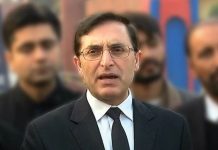
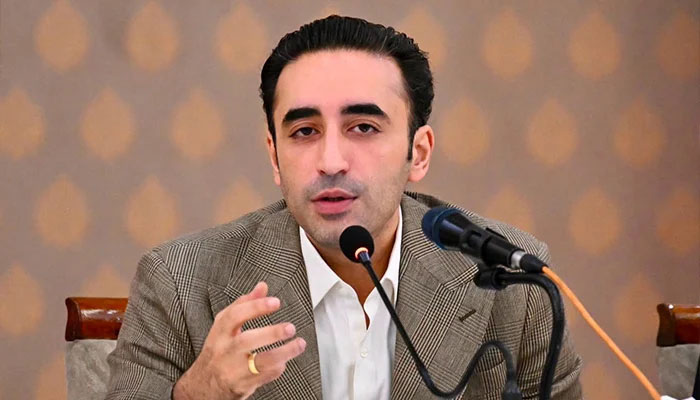
Pakistan Peoples Party (PPP) Chairman Bilawal Bhutto-Zardari has challenged Interior Minister Mohsin Naqvi to take his criticism of Pakistan’s political and governance “collapsed” system to parliament, saying the country’s fate cannot be decided by “a handful of businessmen” at business forums.
Speaking to the media in London, Bilawal said Naqvi had every right to express his views, but if he believed that the system had failed, then the issue must be debated in the National Assembly to establish why it had failed and what could be done to fix it. “It cannot be the case that the fate of the country is decided by a handful of businessmen,” the PPP chairman said, insisting that questions about the weaknesses and failures of Pakistan’s system belonged to elected representatives.
Bilawal also took a pointed swipe at Naqvi over his absence from the lower house, saying: “Mr Mohsin Naqvi does not come to the National Assembly very often, so instead of business forums, he should come to parliament.” The PPP chairman said he was personally prepared to debate the issue with any federal minister or government representative on the floor of parliament.
Bilawal said problems, faults and weaknesses within Pakistan’s political system were neither new nor something that could be addressed through slogans. There should be an open debate on the causes behind the system’s failures and the solutions required to address them, he added. Responding to a question whether Naqvi was speaking for someone else through his recent statements, Bilawal said: “Mr Mohsin Naqvi is speaking for himself, and I speak for myself.”
On the intensifying debate over the creation of new provinces, Bilawal said the PPP’s position had not emerged overnight and had remained consistent for a considerable period. He cited Gilgit-Baltistan, Punjab and Sindh to argue that the views of the people should be reflected through their elected representatives and provincial assemblies.
Bilawal warned against presenting the creation of new provinces as a cure-all for Pakistan’s deep-rooted economic and political crises. “You cannot simply say that by creating new provinces, you will solve the problems of political instability, poverty, unemployment, and the tsunami of inflation,” he said.
Bilawal rejected suggestions that the PPP was preparing to walk away from cooperation with the federal government, saying talks between the PPP and Pakistan Muslim League-Nawaz (PML-) representatives were continuing. “At present, we are fully engaged with the federal government,” he said.
He sharply criticised PTI’s strategy of boycotting parliamentary bodies, committees and elections, arguing that such a course was damaging not only to PTI and the opposition but also to parliament itself. “I believe PTI’s decision to boycott all bodies, all committees, and elections is not only wrong for PTI and wrong for the opposition, but it is also not good for parliament as an institution,” he said.