Dispensing justice and rule of law are hallmark of a civilised society, says Imran while talking to prominent scholars
ISLAMABAD
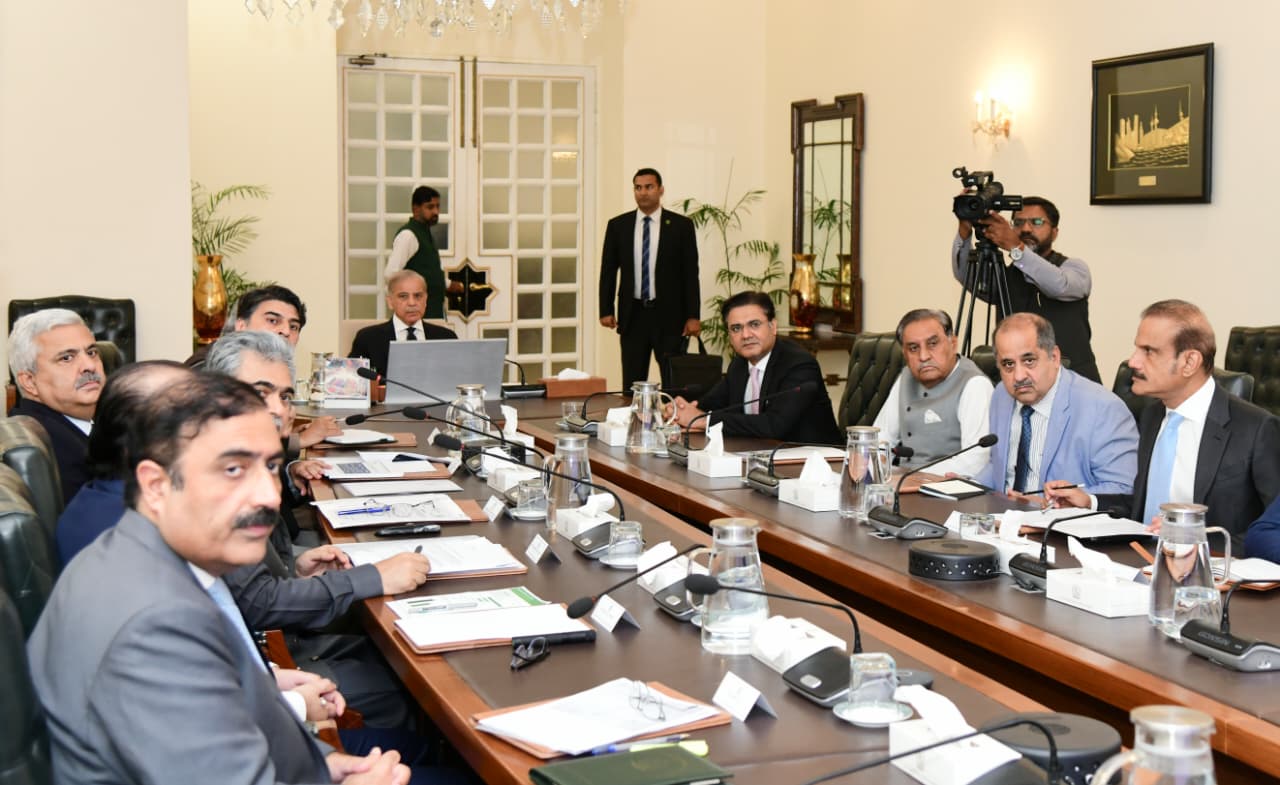
Speaking to a number of eminent Muslim scholars online, Prime Minister Imran Khan said on Saturday that many nations were destroyed owing to discrimination between powerful and weak segments in their societies.
Dispensing justice and rule of law are the hallmark of a civilised society, he said. “Only countries where rule of law is established can survive and flourish,” he added.
PM Imran said that Holy Prophet Hazrat Muhammad (PBUH) raised the level of ethics and morality of the society to make Muslims a great nation.
The premier said that the Holy Prophet (PBUH) emphasised on the implementation of rule of law in Riyasat-e-Madina, adding that “only those societies prosper who have a rule of law without any discrimination”.
Imran Khan said that those who follow the teachings and footsteps of the Hazrat Muhammad (PBUH) will be prosperous as the Holy Prophet (PBUH) is Rehmatul-ill-Alameen.
The prime minister urged Islamic scholars to play their due role in creating awareness about the holy steps of Hazrat Muhammad (PBUH) among the youth so they can follow them in their lives.
Prominent Muslim scholars endorse PM’s views
Speaking on the occasion, the scholars stressed upon the inculcation of core moral and ethical values in society as enunciated by the Holy Prophet (PBUH), which they stressed transformed the fate of lowly Arab people into world leaders.
Prominent scholars including Sheikh Abdullah bin Bayyah, Dr Timothy Winter/Abdal Hakim Murad, Dr Seyyed Hossein Nasr, Dr Recep Senturk, Dr Osman Bakar and Dr Chandra Muzaffar, responded to questions about different aspects of the Sunnat of Holy Prophet (PBUH) and their need with respect to contemporary challenges posed to the Muslim youth and society.
The dialogue was held by Rehmatul-lil-Alameen Authority.
During the course of the conversation, the scholars endorsed PM Imran Khan’s observation that a society could not thrive and achieve prosperity without rule of law and justice, the basic principles which were strictly practised by the Holy Prophet (PBUH) and his companions in Riasat-e-Madina.
Dr Seyyed Hossein Nasr, University Professor of Islamic Studies at George Washington University, responding to the prime minister’s query, said that in the last century, Muslims Ummah faced certain changes.
He stressed that the Sunnat of Holy Prophet (PBUH) should be followed as the Uswa of Prophet (PBUH) had large meanings and the model of Riasat-e-Madina was critical for the revival of Muslim society.
Dr Nasr maintained that Islam through the Sunnat of the Holy Prophet (PBUH) spread the message which transformed the sturdy-hearted Arabs.
“The Holy Prophet (PBUH) presented the message of Allah, to an audience that gave their whole thoughts to it and spend their lives to achieve them,” he added.
“Madina was the first Islamic society and it was a golden period of Islam, the foundation of which was laid down by the Holy Prophet (PBUH). That period remained ideal for us and we have to learn from it,” he opined.
American scholar Shaykh Hamza Yusuf said that the Holy Prophet (PBUH) raised the values of ethics first, then justice and rule of law served as basis for a culmination of civilised society.
He said that ethics and morals did not come from a vacuum, these qualities included honesty, modesty and integrity etc.
“The Prophet (PBUH) was the physician of the hearts. The people around him were called (Ashabs) companions,” he added.
He said the treatment of all ills in society had been identified in the Quranic teachings which provided solutions to these ills. He also stressed that people in power and authority must embody the key ethics which should be a part of their character.
Dr Yusuf said for the first time, the Quranic teachings gave the idea of brotherhood. He said there might be certain issues in an Islamic society, but the existence of strong values like family system and brotherhood should be focused on and emphasised as a guiding beacon for the youth.
Scholar Dr Timothy Winter/Abdal Hakim Murad of the Cambridge UK shared his experience of visiting the Al-Quds and said that it was the spiritual alchemy that the Holy Prophet (PBUH) infused among his followers enabling them to build an ideal society and beautiful buildings around the world.
He said that it was too difficult to put into words the vast aspects of the life of the Holy Prophet (PBUH).
Dr Murad highlighted that Muslims should not comply with the Sunnat robotically.
Dr Chandra Muzaffar, a Malaysian intellectual, taking part in the dialogue, endorsed the prime minister’s viewpoint that there could be no two different sets of law for the powerful and the weak.