The higher education sector of Pakistan is witnessing gradual strengthening and growing global visibility, as Pakistani universities have made significant and sustained progress in securing representation in leading international university rankings, including Times Higher Education (THE) and Quacquarelli Symonds (QS).
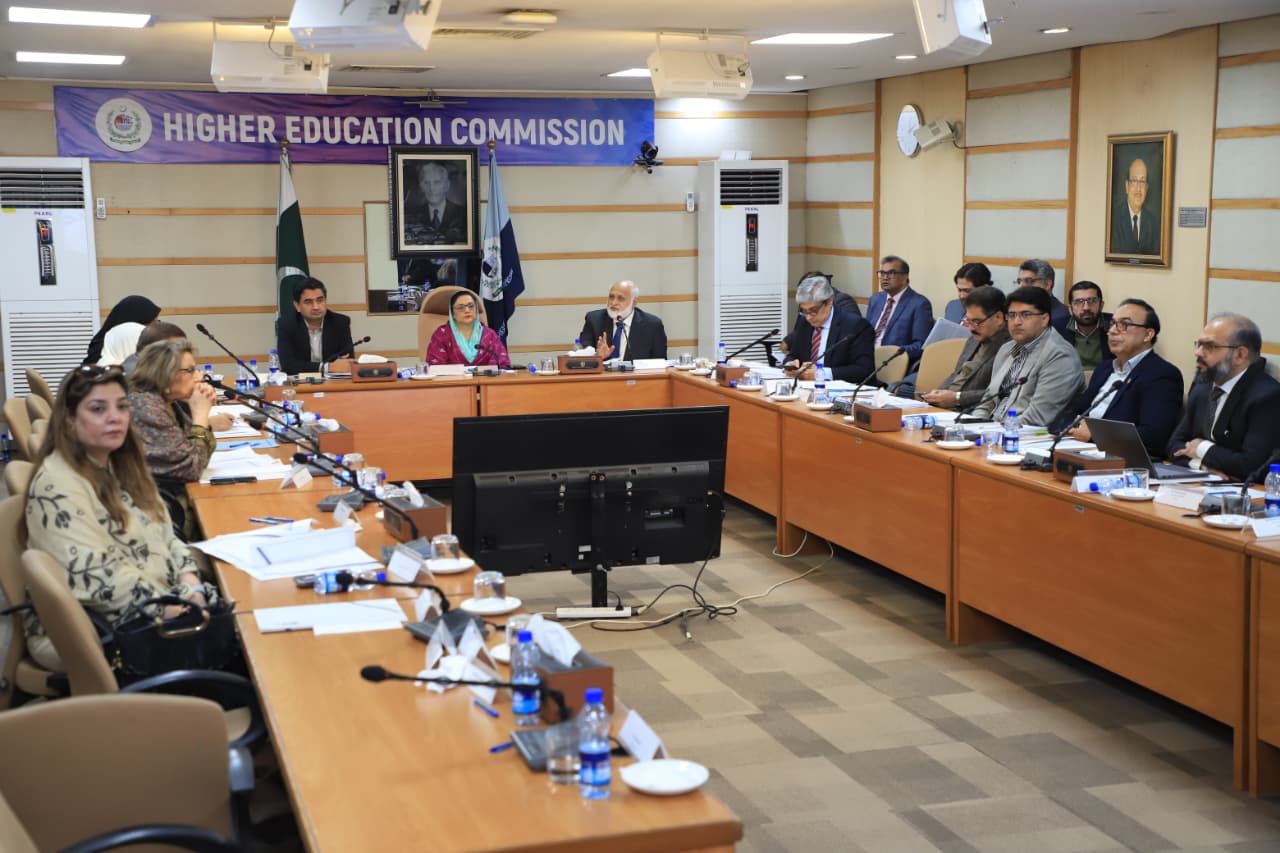
This was highlighted by Chairman Higher Education Commission (HEC) Pakistan Dr. Niaz Ahmad Akhtar while briefing the National Assembly’s Standing Committee on Federal Education and Professional Training during its 27th meeting, held at the HEC Secretariat on Tuesday.
Sharing a comparative overview, he said that the number of Pakistani universities featured in the QS Asia University Rankings increased from 29 in 2020 to 83 in 2026.
Similarly, Pakistan’s representation in the Times Higher Education (THE) Asia Rankings has grown from 14 universities in 2020 to 48 in 2026.
He added that the number of Pakistani universities featured in the THE World University Rankings has increased from 14 in 2020 to 56 in 2027, while representation in the QS World University Rankings has risen from seven universities in 2020 to 18 in 2027.
He informed the committee that two Pakistani universities have secured places among the world’s top 500 institutions in the QS World University Rankings 2027, while 12 have entered the top 1,000. In the THE World University Rankings 2026, 22 Pakistani universities were placed among the top 1,000 institutions globally, he added.
He emphasised that HEC viewed international rankings as an important indicator of global visibility, academic reputation, research performance, graduate employability and international engagement.
However, he stressed that the ultimate objective was not merely to improve ranking positions but to achieve sustainable improvements in academic quality, institutional performance and international competitiveness.
He observed that Pakistan’s higher education sector possesses considerable human resource potential, however financial constraints remain a major challenge.
He also informed the committee about the HEC committee on international university rankings constituted to develop a coordinated national approach, familiarise institutions with ranking methodologies and guide them in identifying performance gaps and improvement priorities.
The Chairman also briefed the committee on HEC’s broader initiatives for the uplift of the higher education sector.
He said around 20 task forces had been constituted to examine priority areas and submit their recommendations for improvement. He also underlined HEC policy formation and review initiatives relating to undergraduate education, transnational education, liberal arts education, dual, double and joint degree programmes, computing education, curriculum transformation and the integration of Artificial Intelligence into academic programmes.
He also highlighted HEC’s scholarship programmes and international partnerships, including the Pak-US Knowledge Corridor, Fulbright and DAAD scholarships, Quaid-i-Azam Memorial Scholarships, and the Stipendium Hungaricum Programme.
He also referred to the Allama Iqbal Scholarships for international students, academic partnerships with Chinese institutions and technology companies, and the HEC Global Scholar Network Portal, initiated to connect Pakistani scholars abroad with academics and researchers in Pakistan.