Damascus
As soon as the anti-regime forces arrived in Damascus and freed the country from Bashar Assad, Israel began its attacks. The pretext Israel uses is that it is conducting a “preemptive strike” to prevent strategic weapons from reaching the hands of “terrorists.” However, what Israel fails to realize is that a demilitarized Syria is far more dangerous to Israel than a Syria with a strong army.
While the world was taken by surprise by the sudden escape of Assad, and the anti-Assad forces were trying to establish themselves in Damascus, Israel carried out 480 airstrikes. At least 350 strikes involved manned aircraft. The strikes targeted airfields, anti-aircraft batteries, missiles, drones, fighter jets, tanks, and navy vessels. Israeli attacks reached Damascus, Homs, Tartus, Latakia, and Palmyra. A Syrian colleague in Damascus said that on the night of Dec. 9, airstrikes on the capital did not stop.
Israel is taking pride in conducting a “successful” operation. The success of the Israeli attack depends on how it is evaluated. Of course, Israel was successful in destroying the Syrian military capability in no time and faced no real resistance. However, what kind of success can this bring to Israel? Strategically, none.
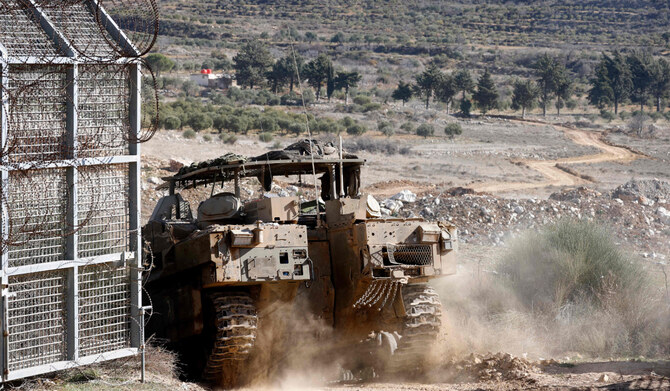
Israel was able to conduct a genocide in Gaza, and literally destroy Gaza and get away with it. Hence, it is not strange that Israel destroys the Syrian army and faces no repercussions. Israel also advanced ahead of the current buffer and took new territory. Of course, it faced no opposition. The army collapsed and the rebels are all in Damascus. Israel conducted an incursion in Quneitra and took Mount Hermon, a meeting point for Palestine, Syria, and Lebanon.
For Israel, the fall of Assad means a breaking of the Iranian crescent that links Iran to Iraq, Syria, and to Lebanon. There are two views in Israel today. One says that now that Iran is weakened, it is the time to establish hegemony over the region, hence the claim of Israeli Prime Minister Benjamin Netanyahu that Israel will “change the face of the Middle East.” Another view suggests that the Assad regime collapsed because Al-Hashd Al-Sha’abi and Hezbollah were sidelined. Hence, it is better not to provoke them.
The attack on Syria without any provocation or casus belli should ring alarm bells in all countries of the region. Israel attacked Syria just because it does not like the new man in charge. If this sets a precedent, what will prevent Israel from hitting other countries? In this respect, Israel has created increased animosity and increased suspicion.
Is that to the benefit of Israel? Not really. However, the Israeli leadership is afflicted with the arrogance of power. It cannot see the repercussions of its actions.
In Israel’s twisted logic, it did pacify Syria, so whatever leadership comes, Syria cannot conduct any aggressive action against Israel. Israel had a tacit agreement with the Assad regime whereby Syria could never be used to stage attacks on Israel. With Assad gone, Israel does not know the intentions of the new government. Hence, Israel took this illegitimate step and attacked Syria without being provoked.
Israel’s main concern with Syria was that it presented a corridor to deliver arms to Hezbollah. Hezbollah has been severely damaged. To reconstitute itself it needs to get new shipments via Syria, especially since the new ceasefire agreement makes sure that a US general has control of Beirut airport. This is far-fetched. The opposition that recently took power looks at Hezbollah as the enemy. Regardless of the interest of Israel, the rebels would not let arms go through Syria to Lebanon. Hence, there was no need to bomb Syria and create unnecessary animosity with the nascent state.