The Government of Japan has announced a grant of 21 million Japanese Yen (around $142,500) to support a tuberculosis screening project in Islamabad, Rawalpindi and Chakwal, with the goal of providing medical screening services to 20,000 people each year.
The initiative will equip a mobile health unit with modern screening facilities to improve access to early diagnosis and basic healthcare services for communities with limited access to medical care.
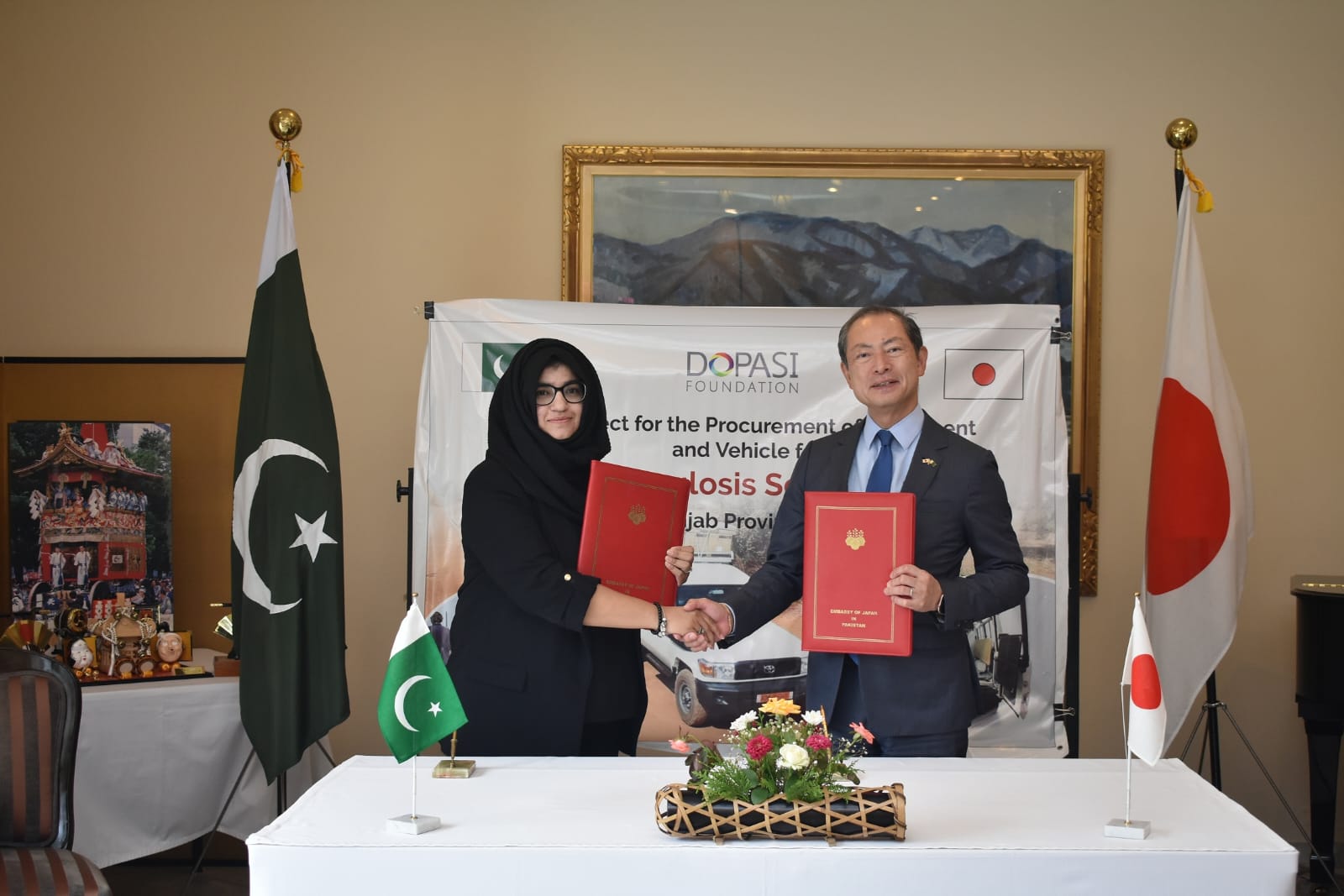
The funding is being provided under Japan’s Grant Assistance for Grassroots Human Security Projects (GGP) Program. A grant agreement was signed on September 1, 2026, at the Embassy of Japan in Islamabad between Japanese Ambassador Akamatsu Shuichi and a representative of the Dopasi Foundation.
The project, titled “The Project for the Procurement of Equipment and Vehicle for Tuberculosis Screening in Two Districts of Punjab Province and Islamabad City,” focuses on expanding healthcare outreach and strengthening early disease detection. The initiative will support the purchase of medical equipment and a specialized vehicle designed for field-based health services.
The Dopasi Foundation, a Pakistani humanitarian organization with more than 200 staff members, has been working in healthcare and community support programs across the country. Through the Japanese grant, the foundation will deploy a fully equipped Mobile Health Unit in Islamabad, Rawalpindi and Chakwal.
The mobile unit will offer a range of healthcare services, including digital chest radiography, tuberculosis screening, family planning counseling and basic health examinations. These services will target daily wage workers, women and families who often face difficulties in accessing healthcare facilities.
The project also includes support from Toyota Tsusho Corporation and Fujifilm, which have contributed to the development of a specially equipped Land Cruiser fitted with a compact X-ray system and artificial intelligence technology for tuberculosis screening.
The companies will also help establish a local maintenance system and provide technical training to ensure effective use of the equipment and long-term operation of the service.
According to project estimates, the initiative will deliver screening and diagnostic services to 20,000 individuals annually. Health officials expect the program to improve early detection of tuberculosis and other health conditions while reducing healthcare access barriers faced by vulnerable populations.
Speaking at the signing ceremony, Ambassador Akamatsu Shuichi said that protecting individual lives remains a central principle of Japan’s development cooperation efforts.
He noted that access to early diagnosis and basic healthcare services plays an important role in saving lives and reducing vulnerability among families.
The Government of Japan reaffirmed its commitment to supporting local non-governmental organizations in Pakistan through grant assistance programs aimed at improving healthcare and community welfare.
Officials expressed hope that the project would contribute to stronger public health services while further deepening cooperation and friendship between Japan and Pakistan.