DLP Report
PESHAWAR
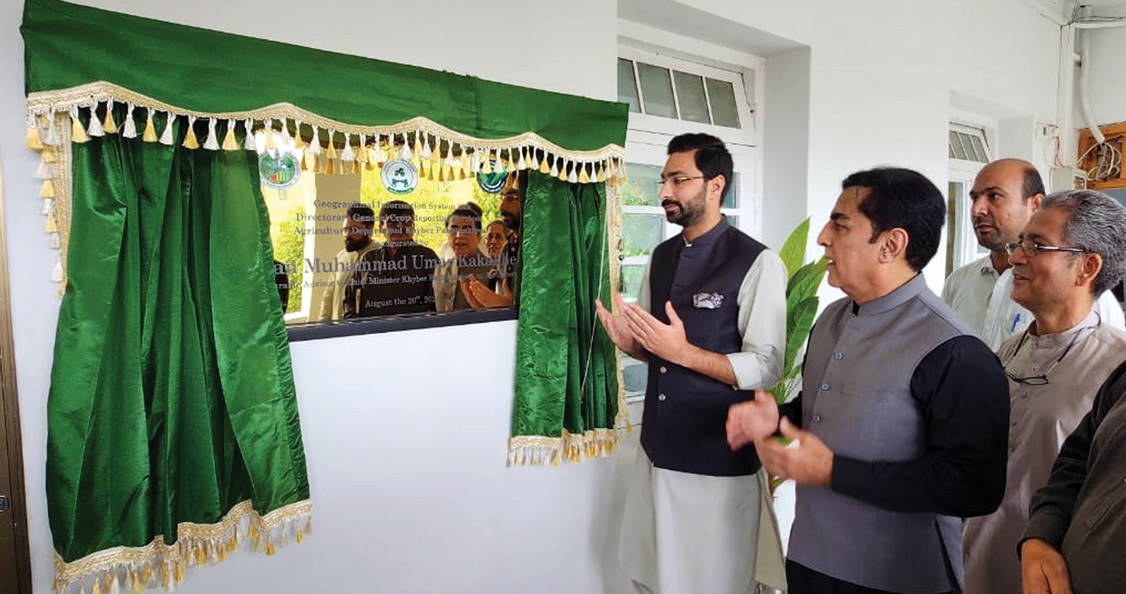
The Khyber Pakhtunkhwa government has launched a Geographic Information System (GIS) laboratory in Peshawar to improve crop estimates, strengthen agricultural planning and assess the impact of climate change and extreme weather events on the province’s agriculture sector.
Advisor to Chief Minister on Agriculture Mian Muhammad Umar inaugurated the facility at the Directorate General Crop Reporting Services on Wednesday and inspected its various sections.
Officials briefed the adviser on the objectives of the laboratory, its working mechanism and the use of modern geographic information technology in crop reporting and agricultural planning.
Director General Agriculture Extension Dr Naveed, Director Soil and Water Conservation Samiullah and other officials were present.
Speaking on the occasion, Mr Umar said the use of modern technology and scientific methods was essential for strengthening the agriculture sector.
He said advanced technologies would help the department prepare more accurate estimates of crop production and enable timely assessment of agricultural losses caused by climate change and extreme weather events.
The adviser also directed officials to ensure registration of farmers at Farmers Model Farm Services Centres to improve their access to agricultural services.
He stressed the need for regular coordination between agricultural officers and farmers and called for measures to improve the performance and quality of services provided through the centres.
Director General Crop Reporting Services Syed Altaf Ahmed Shah gave a detailed briefing on the newly established laboratory.
He said the facility had been established under the Food Security Support Project Khyber Pakhtunkhwa with support from the Asian Development Bank.
According to him, GIS technology would strengthen the capacity of Crop Reporting Services to estimate the production of major and minor crops, fruits and vegetables cultivated across the province.
He said the laboratory had been equipped with modern equipment and staffed by professional personnel, enabling the Agriculture Department to perform crop reporting and related tasks more efficiently, rapidly and scientifically.
Mr Umar said the information generated through the GIS laboratory would be valuable for provincial planners, policymakers and other relevant authorities.
He said reliable and timely agricultural data would help the government make better and more result-oriented decisions on food security and agricultural planning.
The adviser said the provincial government was giving special attention to modern technology and research in the Agriculture Department to improve services for farmers and address emerging challenges facing the sector, particularly those linked to climate change and extreme weather.