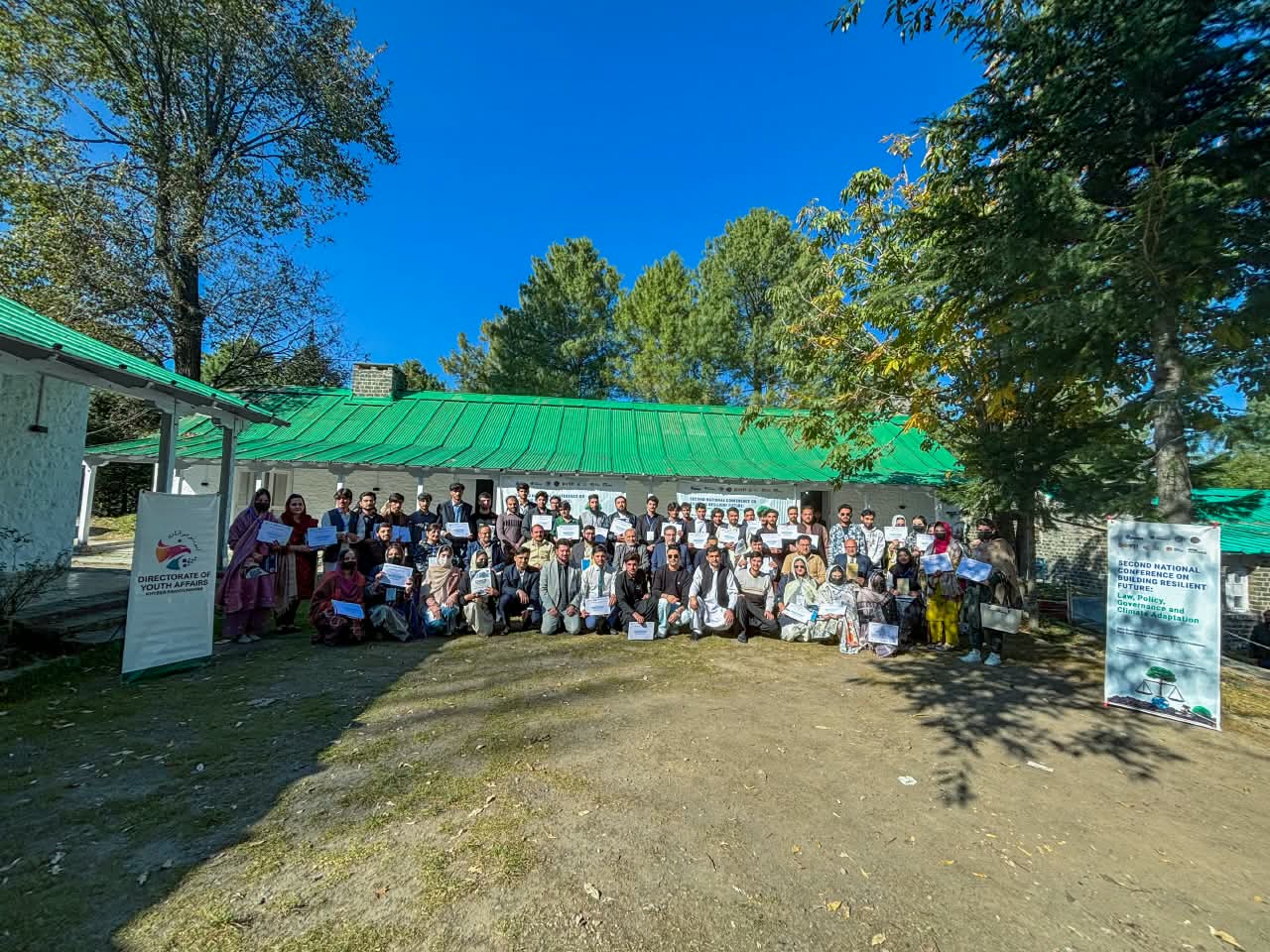
Baragali, 29th October to 1st November – The Department of History, University of Peshawar*, in collaboration with *The Natives, University of Swat, CHRCD, University of Peshawar and the Directorate of Youth Affairs, Government of Khyber Pakhtunkhwa*, successfully organized a one-day conference titled *“Building Resilient Future-II: Law, Policy and Governance in Climate Adaptations.”*
The conference aimed to bring together scholars, policy experts, legal professionals, and youth to deliberate on pressing challenges of climate change and to explore legal, policy and governance frameworks for effective climate adaptation in Pakistan, with special focus on Khyber Pakhtunkhwa.
*Prof. Dr. Husnul Amin, Vice Chancellor, University of Swat*, graced the occasion as the *Chief Guest*. In his address, he emphasized the urgent need for youth-led climate action and the integration of local knowledge with policy reforms to build a climate-resilient Pakistan. He appreciated the collaborative efforts of the organizing institutions and commended the active participation of youth.
The conference featured extensive academic deliberations, where a total of *16 research papers* were presented by scholars, researchers and young climate activists. The papers covered themes including climate justice, environmental law, governance gaps in climate policy, community-based adaptation, and the role of youth in resilience building.
A total of *80 youth* from different universities participated in the conference and engaged in interactive Q&A and policy dialogue sessions.
At the closing ceremony, the *Chairman, Department of History, University of Peshawar*, presented the key suggestions and recommendations of the conference. The recommendations included:
1. Strengthening local climate governance and implementation of climate laws at district level.
2. Integrating climate education into youth development programs.
3. Encouraging youth-led research and community-based adaptation initiatives.
4. Enhanced collaboration between academia, government departments, and civil society for policy advocacy.
The organizers thanked all the collaborators, especially the Directorate of Youth Affairs, Khyber Pakhtunkhwa, for supporting youth engagement in climate discourse and making the conference a success.
The event concluded with the distribution of certificates among paper presenters and participants.