ISLAMABAD
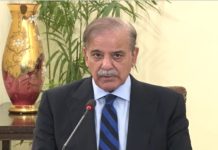
Caretaker Prime Minister Anwaar ul Haq Kakar has said Pakistan is expected to attract an investment of sixty to seventy billion dollars in a span of three to five years.
Talking to senior journalists and anchorpersons in Islamabad, he also mentioned that apart from this, there are also pledges and promises of additional investments the country can receive totaling nearly the same amount.
Replying to a question, the prime minister said the government was considering various options to provide relief to the people. Citing the example of the $700 billion worth of Reko Dik gold and copper reserves, the prime minister said the country had huge potential of natural resources that would change the fate of the people of Pakistan.
“We took the initiative of SIFC to realize this potential and we are going towards the right direction so far as the scientific methods and financial models are concerned,” he remarked. He said the SIFC was the whole of the government project and there was no hidden in it.
“This is a transparent intervention that has already been initiated and has the overall potential of $5 to $6 trillion. The prime minister highlighted that Pakistan had huge land that could be used for agriculture purpose and could serve half of the Asian population’s food requirements.
He added that the country had also enough water to irrigate the barren land across the country. Likewise, he said IT, tourism and defence production had also huge potential that would be tapped for socio-economic development of the country.
PM Kakar maintained that although the core responsibility of the caretaker government was to facilitate elections across the country, in the meantime it would also try to improve the taxation mechanism and address other economic challenges.
Replying to another query, the prime minister said economic migration was not a new phenomenon and people were leaving the country for a better future and they would also contribute to Pakistan’s economy in future. Therefore, he said, it should not be considered a brain drain.
Advising the media to propagate hope among the masses, he said there was no chance of a sudden collapse of the country’s social structure and all professionals, doctors, nurses, and the society overall were functioning at an absolutely normal pace.
He said the government minutely looked into the problem of inflated electricity bills and would come up with a solution within next 48 hours. To a question, he clarified that the Pakistan army, navy and air force were not using a single free unit of electricity and their bills were paid from the allocated financial budget.
While employees of WAPDA were using free electricity units and their usage would be rationalized, especially of the higher grade officers some of them were getting huge quantity of free electricity, he added.
He said perception should not be that the government would take any strict measures causing difficulties for the people. He pointed out that the power sector had been a very challenging issue since the 1990s and the governments of that time signed agreements with independent power producers to overcome loadshedding which proved costly for consumers.
Over the years, he said, the generation and transmission system of electricity was flawed and the government had to deal with serious issues of line losses, power theft, high circular debt, use of expensive imported fuel and capacity payments to electricity companies.
“These issues cannot be ignored by just closing eyes. We need to diagnose treatment for the disease.” He made it clear that the government would fulfill its agreements with the international financial institutions.