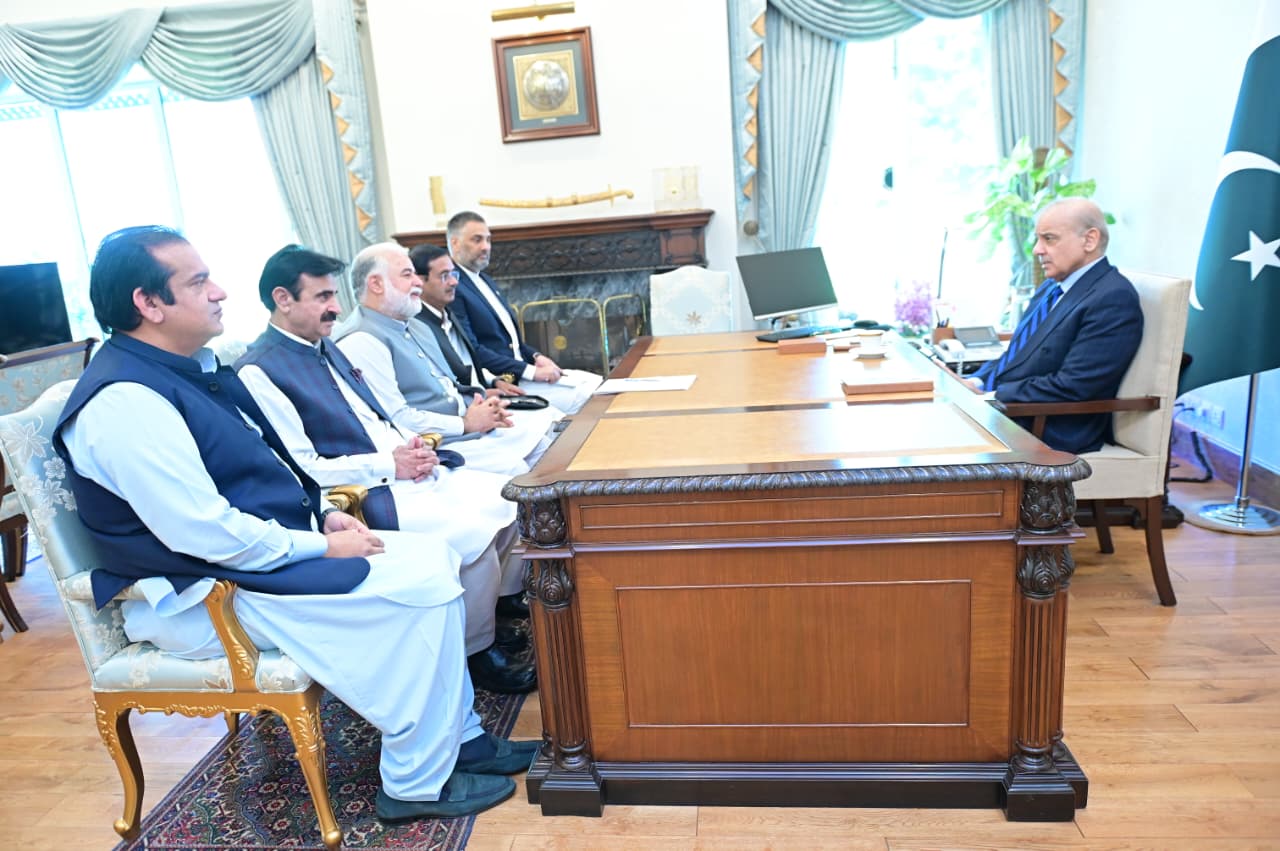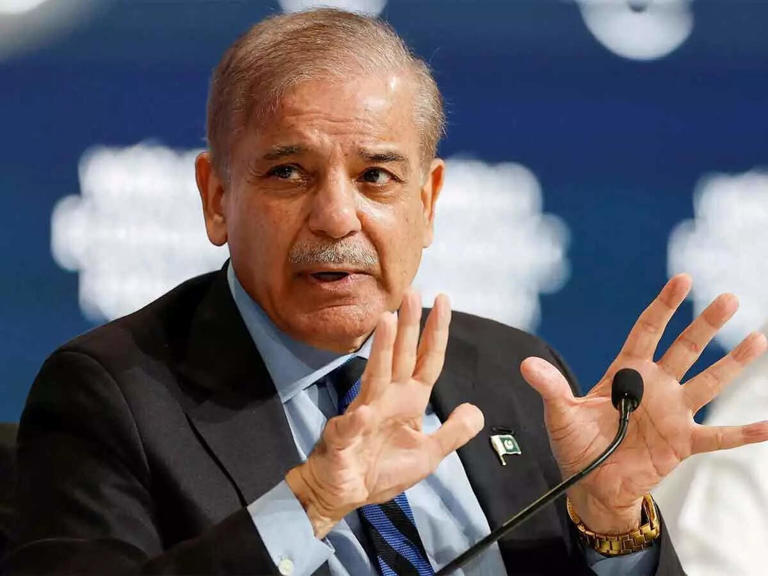
Prime Minister Shehbaz Sharif is scheduled to undertake an official visit to the Islamic Republic of Iran and the Republic of Turkiye from July 3-5, Foreign Office spokesperson, Tahir Andrabi said on Thursday.
The spokesperson, at the weekly press briefing, said that the prime minister would travel to Iran first to participate in the funeral ceremony of the late Supreme Leader, Ayatollah Sayyid Ali Khamenei.
He said that the prime minister would convey condolences on behalf of the people and the government of Pakistan to the Iranian leadership and the bereaved families while reaffirming solidarity with the brotherly nation in their hour of profound grief.
He told the media that the prime minister would be accompanied by Deputy Prime Minister and Foreign Minister Senator Mohammad Ishaq Dar, and other cabinet ministers and senior officials.
Later, Prime Minister Shehbaz Sharif would proceed to Istanbul, Turkiye, at the invitation of the President of Turkiye, Recep Tayyip Erdogan, where he would hold discussions on the entire gamut of bilateral relations with a special focus on giving impetus to bilateral trade and investment cooperation between the two brotherly countries. The leadership meeting would also reflect on issues concerning regional peace and security, he added.
During his stay in Istanbul, the prime minister would also address a business conference being hosted by Pakistan to spotlight Pakistan’s trade and investment potential in priority areas, including the SEZs, energy, trade, Information Technology, and privatisation sectors.
“The conference will bring together leading Turkish businessmen and investors alongside senior officials, dignitaries, and other distinguished participants from the business community,” spokesperson Andrabi said.
He said that the prime minister’s visit to Iran and Turkiye reflected Pakistan’s deep-rooted historical, cultural, and fraternal ties with the two brotherly nations.
The Foreign Office spokesperson also highlighted Pakistan’s ongoing diplomatic efforts to facilitate dialogue between Iran and the United States following the recent tensions in the Gulf region.
He said Pakistan, in coordination with Qatar, had engaged with both the Iranian and United States (US) negotiating teams in Doha to advance implementation of the Islamabad Memorandum of Understanding (MoU), building on understandings reached at the Lake Lucerne Summit. The spokesperson pointed out that the talks made positive progress on various aspects of the MoU, with both sides agreeing to continue discussions. The next round of talks was expected to take place after the funeral of the late Iranian Supreme Leader. He said Pakistan would continue to play a facilitative and mediatory role alongside Qatar.
The spokesperson said Deputy Prime Minister and Foreign Minister Senator Mohammad Ishaq Dar also remained engaged in extensive diplomatic consultations during the week, holding telephone conversations with the foreign ministers of Saudi Arabia, China, Bahrain, Iran, the United Kingdom and the European Union’s High Representative for Foreign Affairs and Security Policy.
The spokesperson reiterated Pakistan’s rejection of India’s decision to place the Indus Waters Treaty in abeyance, describing the move as illegal, unilateral and without any basis.
Referring to a seminar on the treaty held in Islamabad, he said participants called for upholding the agreement and rejected the weaponisation of water. He maintained that water could not be used as a tool of coercion and accused India of attempting to use terrorism allegations as a pretext to obstruct Pakistan’s lawful share of the Indus waters.
The spokesperson also announced the safe arrival in Karachi of the 22 Iranian crew members rescued from an interdicted vessel, adding that Pakistan had now facilitated the repatriation of more than 70 Iranian nationals.
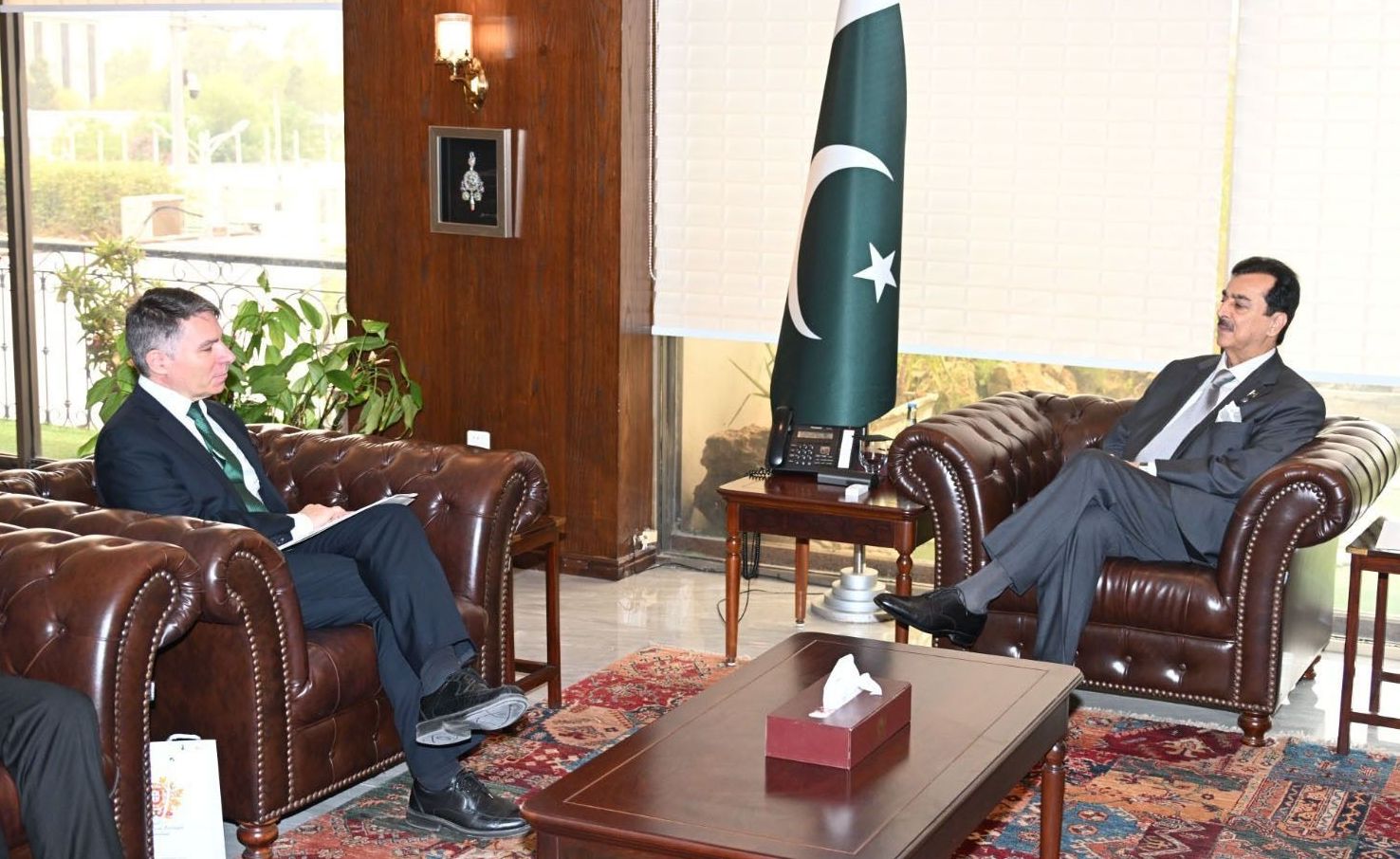
He said UN Special Envoy to Combat Islamophobia, Miguel Angel Moratinos called on Deputy Prime Minister Ishaq Dar during his visit to Islamabad, where Pakistan reaffirmed its support for finalising the United Nations (UN) Action Plan to Combat Islamophobia.
On security, the spokesperson said Pakistan remained committed to eliminating terrorism following recent intelligence-based operations in Khyber Pakhtunkhwa and Balochistan. He said strong demarches had been issued to the Afghan authorities over the Karachi terrorist attack, reiterating Pakistan’s concerns over the use of Afghan soil and nationals in terrorist incidents inside the country.
The spokesperson also announced Pakistan’s formal participation as a permanent member of the International Olive Council, describing it as an important milestone for promoting olive cultivation, exports and international cooperation in the sector.
He further said Pakistan had shared a list of Pakistani prisoners with India and would continue diplomatic efforts for their early release and repatriation. Responding to Indian allegations regarding a gurdwara in Pakistan, he said authorities had halted unauthorised work on the building, cancelled the tenancy and ensured remedial measures, while rejecting India’s criticism and urging it to address the treatment of religious minorities within its own borders.
Responding to a question, the spokesperson said Pakistan would welcome the United States’ engagement on peace and security in South Asia, saying Pakistan had a strong legal and political position on key issues, including counter-terrorism, the Indus Waters Treaty and the Jammu and Kashmir dispute. He said Pakistan was confident in the strength of its case and would welcome any engagement by countries seeking to promote dialogue between Pakistan and India.
On recent counter-terrorism operations, the spokesperson said intelligence-based actions launched after the Karachi terrorist attack were based on credible and carefully developed intelligence. He said security forces targeted hideouts of the banned Jamaat-ul-Ahrar and other militant groups, killing 29 terrorists belonging to various outfits. He added that Pakistan’s campaign against terrorism would continue with full force until the threat was eliminated.
Replying to another question, the spokesperson said the World Bank remained an important partner for Pakistan and continued to play a positive role under the framework of the Indus Waters Treaty.
Regarding Azad Jammu and Kashmir (AJK), he said constitutional matters relating to the region should not be confused with the internationally recognised right to self-determination of the Kashmiri people. He said any constitutional changes undertaken through the legislative process in AJK were separate from Pakistan’s principled position on the Jammu and Kashmir dispute.
Responding to a query about audit observations concerning the Ministry of Foreign Affairs, the spokesperson said the ministry had taken note of the audit objections and remained committed to addressing them. He said the Foreign Office had an effective internal and external audit mechanism and assured that all audit observations would be dealt with in accordance with the prescribed procedures.