Riaz Begum
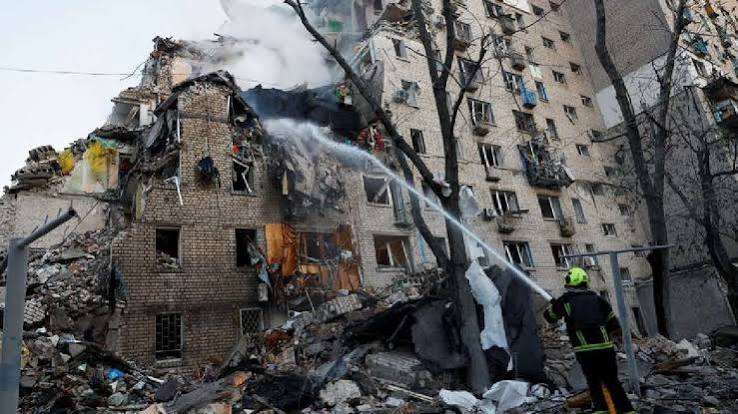
The images and videos of Ravi are heart-wrenching. Entire villages are underwater. Families are clinging to boats carrying only a fraction of what they own. Children are displaced from homes that may never be habitable again. Farmers watch helplessly as their crops are submerged. This is more than a flood. This is a reminder of the consequences of carelessness within policy frameworks and the unyielding political desire caused ordinary people to drown in their own suffering. Nature always passes judgment, and the judgment is merciless.
The most unfortunate part about this situation is that it was predicted. The Honourable Justice Shahid Karim of the Lahore High Court identified the Ravi Riverfront Urban Development Project as unlawful and unsustainable. He pointed out something that many politicians seem to overlook: the project did not have a legal master plan, the conscription of agriculture and floodplain land was unconstitutional, and the so-called development was nothing but a political show. He grasped the concept that disrupting the Ravi’s natural ecosystem would have catastrophic consequences down the road, and today, floodwaters serve as evidence that his warnings were not the cries of an obstructionist judge, but counsels of foresight.
But what went wrong? Instead of appreciating the wisdom of the Honourable High Court, the Government of the day rushed to approach the Honourable Supreme Court. In what appeared to be a hasty appeal, a bench led by Justice (Retd) Ijaz ul Ahsan dismissed Justice Shahid Karim’s order and granted a stay which, at least partially, permitted the continuation of certain activities of the project. What was lauded at that moment as a triumph of “development” has, in the unfolding narrative, been unmasked as a “triumph of politics over reason, expediency over wisdom, and arrogance over law.” While the stay order may have aligned with political timelines, the enduring and tragic reality is that the burden of the decision rests on the shoulders of millions of innocent citizens.
The impacts of The Justice Shahid Karim’s work are very telling. He is one of the very few Judges from Pakistan who has persistently regarded the environment, not as peripheral issues, but as central to existence, health, and survival. The Honourable Judge has held a view that clean water, pollution, urban planning, and even to the extreme of controlling smog is not to be used as a reason to sacrifice the environment for political advantage. His view in the Ravi case is unmistakable: you cannot treat a living river and its floodplains as if they are vacant real estate ready to be liquidated. He understood what most policymakers tried to ignore, that floodplains are not barren wastelands but vital, life-sustaining, and life-protecting sponges during extreme weather, and without these life-sustaining buffers, the floods that are experienced would be catastrophic. His judgment was not against development. It was for development that is lawful, sustainable, and protective, and development that safeguards instead of gambles the future of the people.
Sadly, our leaders seem to favor shortcuts. They want to be celebrated with ribbons and photographs instead of doing actual work. They wish to be politically praised now even if it leads to disaster in the future. The Honourable Lahore High Court had given them a legally and scientifically sound route. Instead, they chose to silence that wisdom with a trip to the Supreme Court, where they were granted the cover needed by the Justice (Retd) Ijaz ul Ahsan’s bench. While the politicians and developers remain dry in their offices and palaces, it is the farmer, the laborer, and the common man who watches their lives drown in water. Is this the development and progress they promised?
The floods of Ravi have spelled out one painful truth. Decisions of national importance should never be influenced by politics. They must be informed by established law, rational thinking, and a visionary, future-oriented perspective. The Honourable Justice Shahid Karim foresaw the crisis and tried to take preventative measures. He did not act out of defiance to progress, but rather out of a commitment to true, lasting progress.
His ruling allowed Pakistan to take a step back, reconsider, and formulate a plan that was both environmentally sound and aligned with the rights of the citizens. Unfortunately, that opportunity was wasted for immediate, politically expedient actions.
It is pertinent to mention that the Honourable Justice Shahid Karim’s reasoning is not the first of its kind to be made on a global scale. There are courts from different countries, such as India, Europe, the United States, and Africa, that have intervened to stop the implementation of projects that are based on environmental and ecological disregard. Through jurisprudence, these courts have tried to protect rivers, forests, and lands from politically motivated destruction. Pakistan too had such a guardian in the Honourable High Court’s decision, and instead of respecting that judgment, we disrespected it. And now, the Ravi has issued his utter condemnation, turning homes, fields, and dreams to ruins and detritus.
The truth is this flood is not just an act of nature. It is a disaster rooted in human actions, exacerbated by the lunacy of individuals who believe that politics can silence nature’s laws and that rivers can be tamed with concrete. During the Honourable Lahore High Court proceedings, we were provided an opportunity to prevent this calamity. It was the Honourable Supreme Court’s stay order that countered that judgment, which effortlessly granted the politicians their want, while simultaneously sealing the fate for those who reside along the Ravi. Today, we are witnessing the outcomes of the rush decisions clocked in delusion and temporary expediency.
The appreciation goes out to Honourable Justice Shahid Karim, not just for his RUDA judgment, but for his relentless and remarkable dedication to the environment. He is an individual who has chosen to speak truth when so many decided to remain quiet, to bend with the political winds, and turn the other way. It is clear that he has made it his mission to do and advocate for environmental protection, which is not an act of charity, but a matter of survival. It is a tragedy in his case that wisdom lost to intoxication of power, and not that he failed to act when he decided to do his duty as an Honourable Judge.
So what now? In the more immediate future, families need relief. Rescue efforts should focus on providing shelter, food, medicine, and safety. But more immediately, Pakistan has to come to terms with this reality; we cannot continue to make politically motivated decisions instead of effective policies. We are required to follow due process, legal frameworks, master plans, environmental and impact assessments, and ignore judicial caution at our peril. We are required to protect our rivers and floodplains as precious assets, not view them as commodities for development. If we do not, this tragedy will repeat, with escalating costs.
The Ravi floods are a mocking reminder that when superiors such as Justice Shahid Karim give directions, it’s not to stall development, but to facilitate it. The Honourable High Court has granted us shelter, and the stay order from the Apex Court took it away. The verdict delivered today is that the water is unyielding and has delivered its verdict, with no mercy, no forgiveness, and no room for justifications.
As I always say, when rationality is drowned for the sake of politics, it is the common man that suffers. That is Ravi’s tragedy today.
The author is an Advocate of the Supreme Court of Pakistan, specializing in corporate tax and arbitration laws, with extensive practice experience in Pakistan, UAE, and Qatar.